
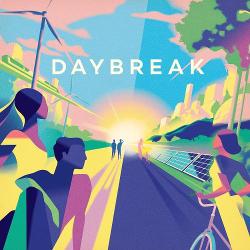
2023 · Card Game
Daybreak
Players cooperate as world powers to implement policies and technologies aimed at reducing global greenhouse gas emissions and strengthening societal resilience. On each turn, players deploy measures that lower emissions, invest in adaptation, and respond to humanitarian crises; the game tracks global temperature and population in crisis as shared risk meters. If global temperature rise or human crises exceed critical thresholds, the group loses; if players collectively achieve net-zero emissions while maintaining manageable crisis levels, the group wins.
- Players
- 1–4 best 2
- Playing time
- 60–120 min
- Age
- 10+
- Complexity
- 2.9 / 5
About the game




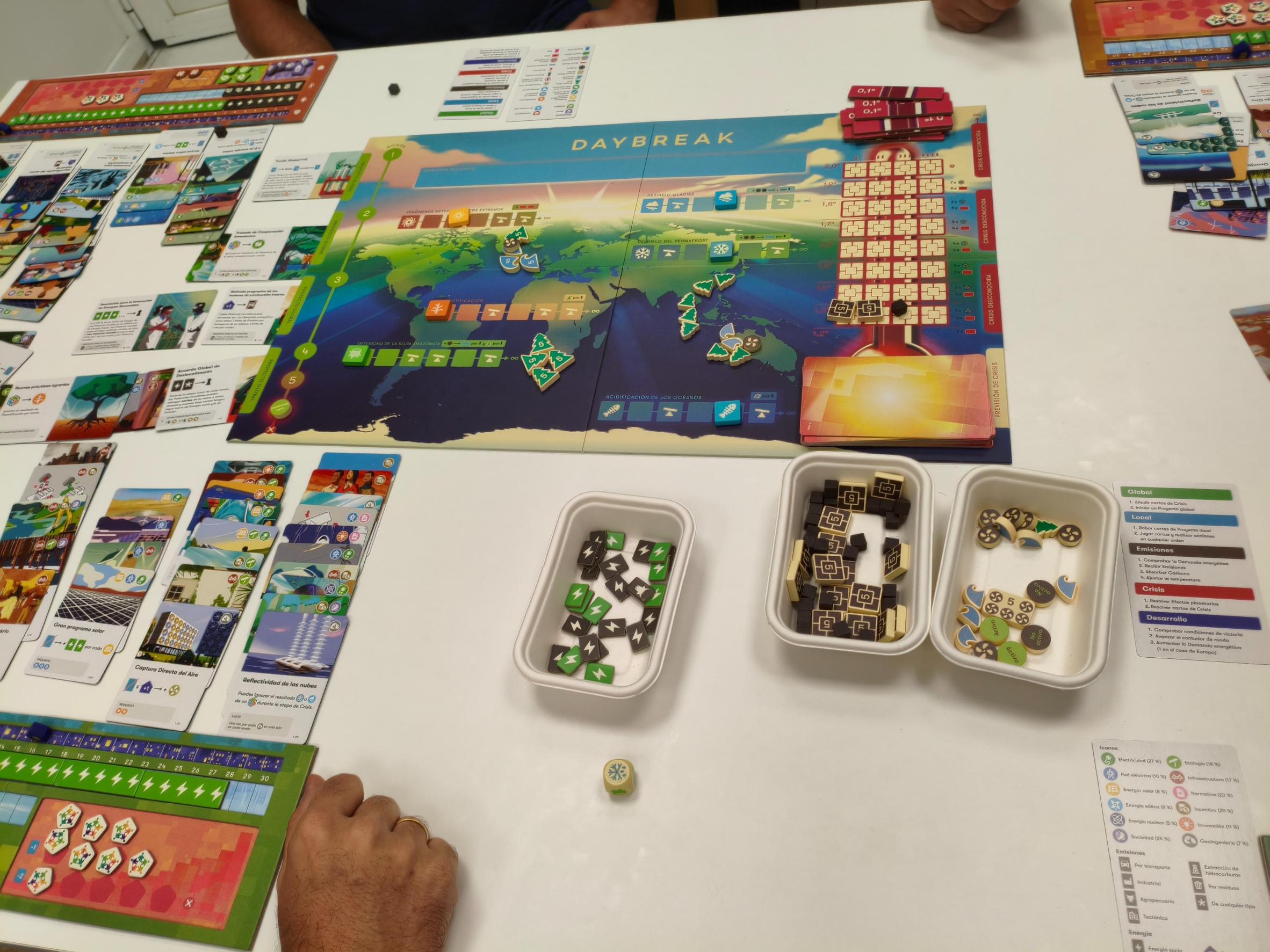
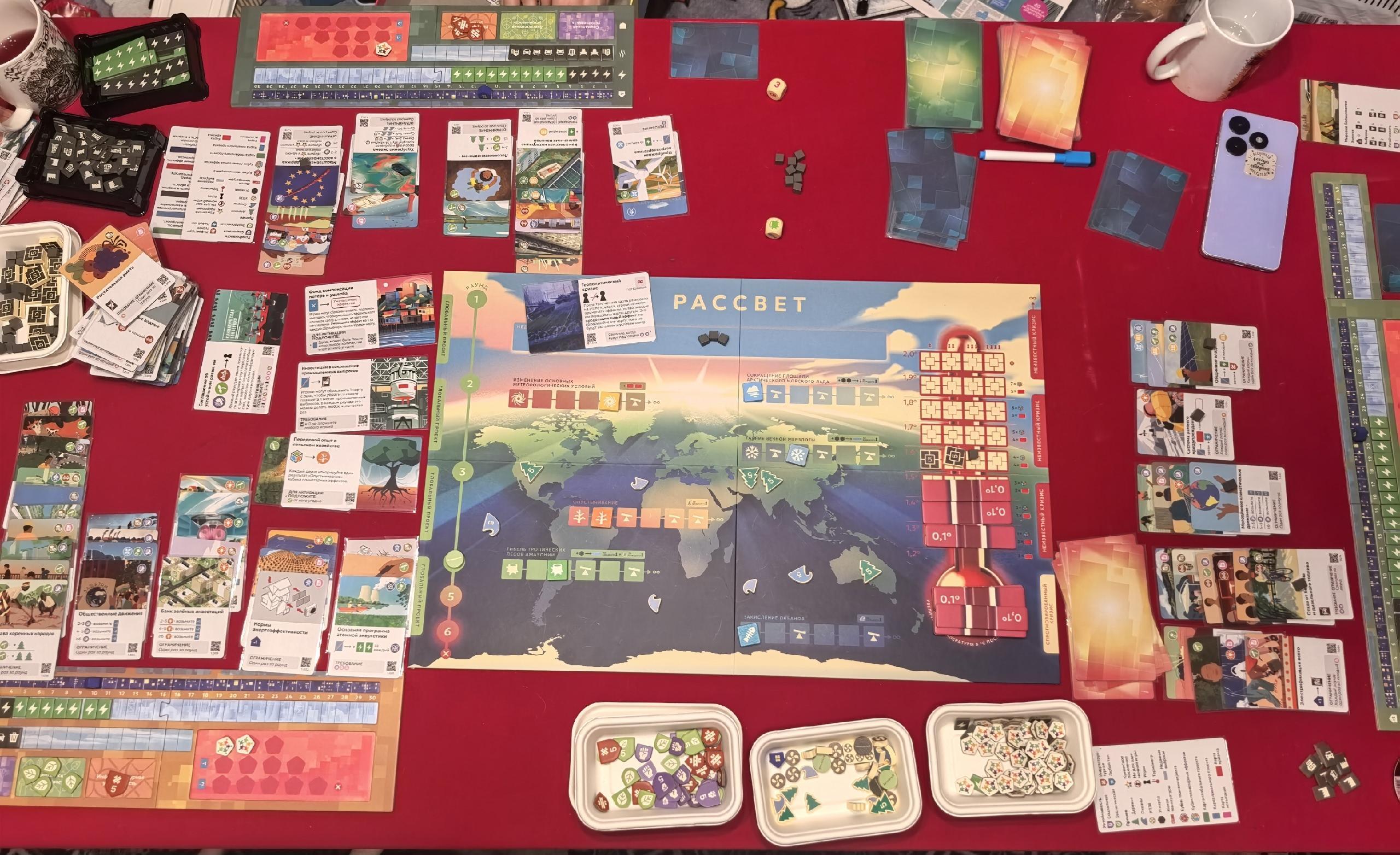
Photos from Ludoya tables
All photos in Ludoya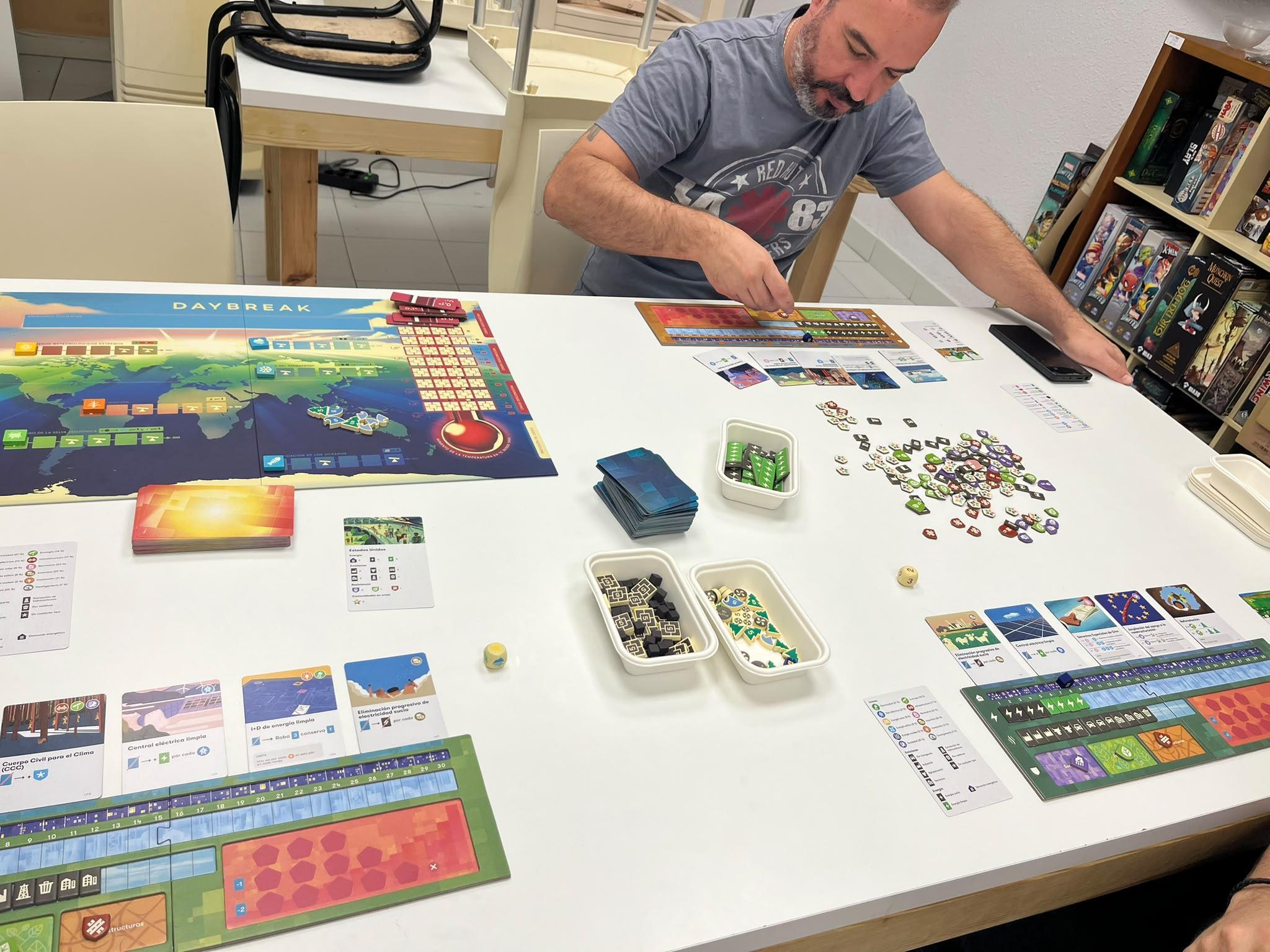
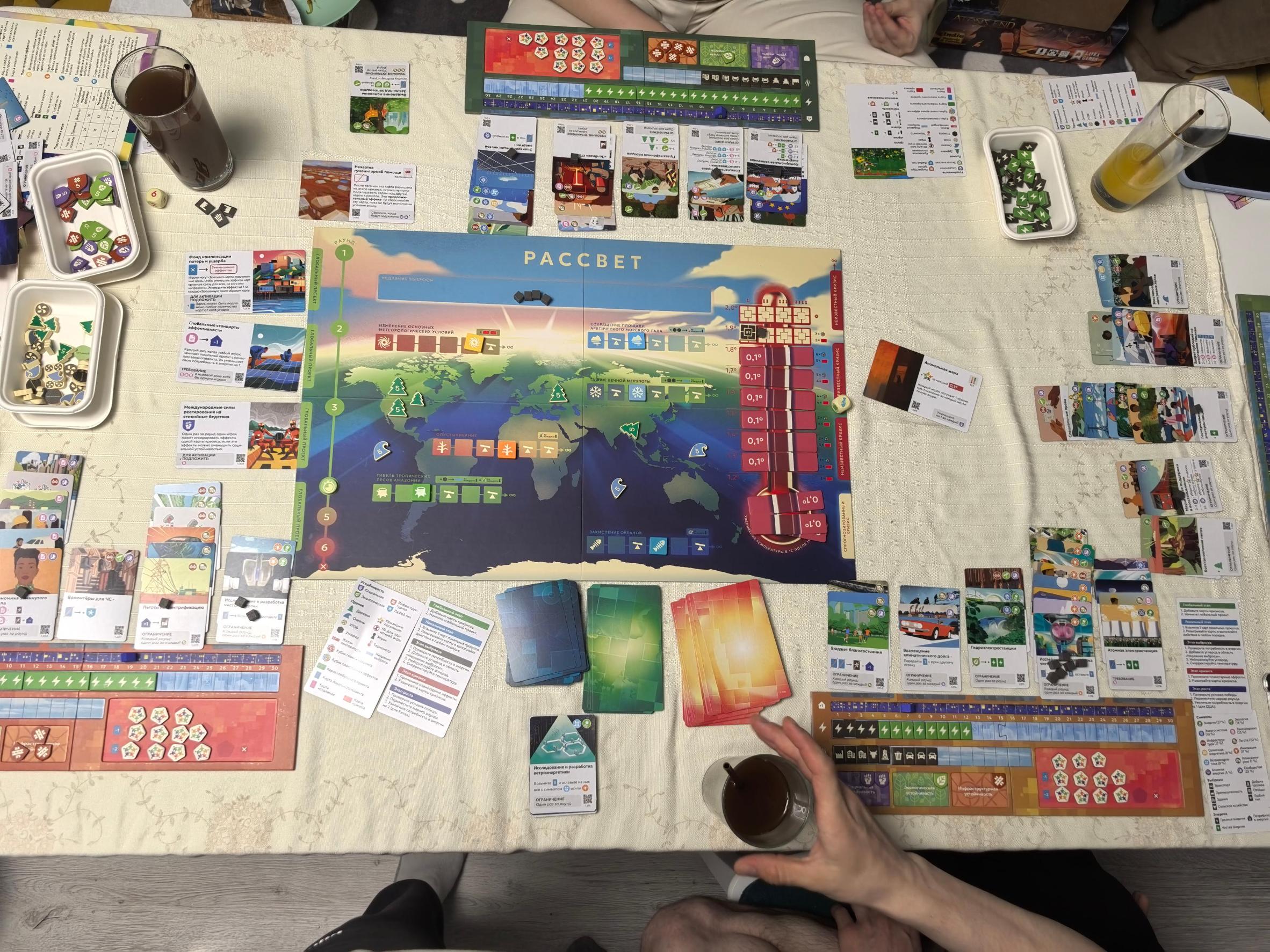
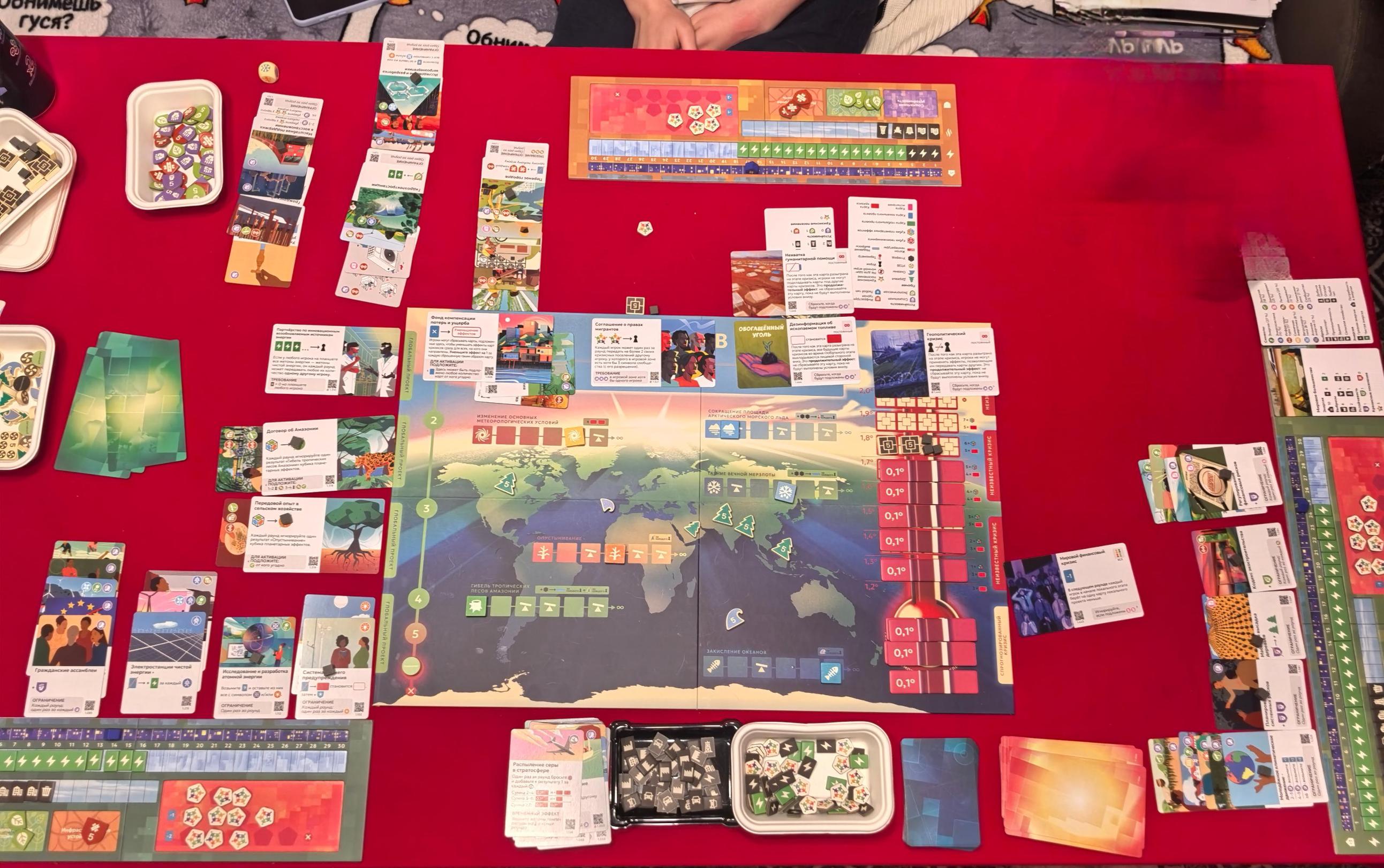
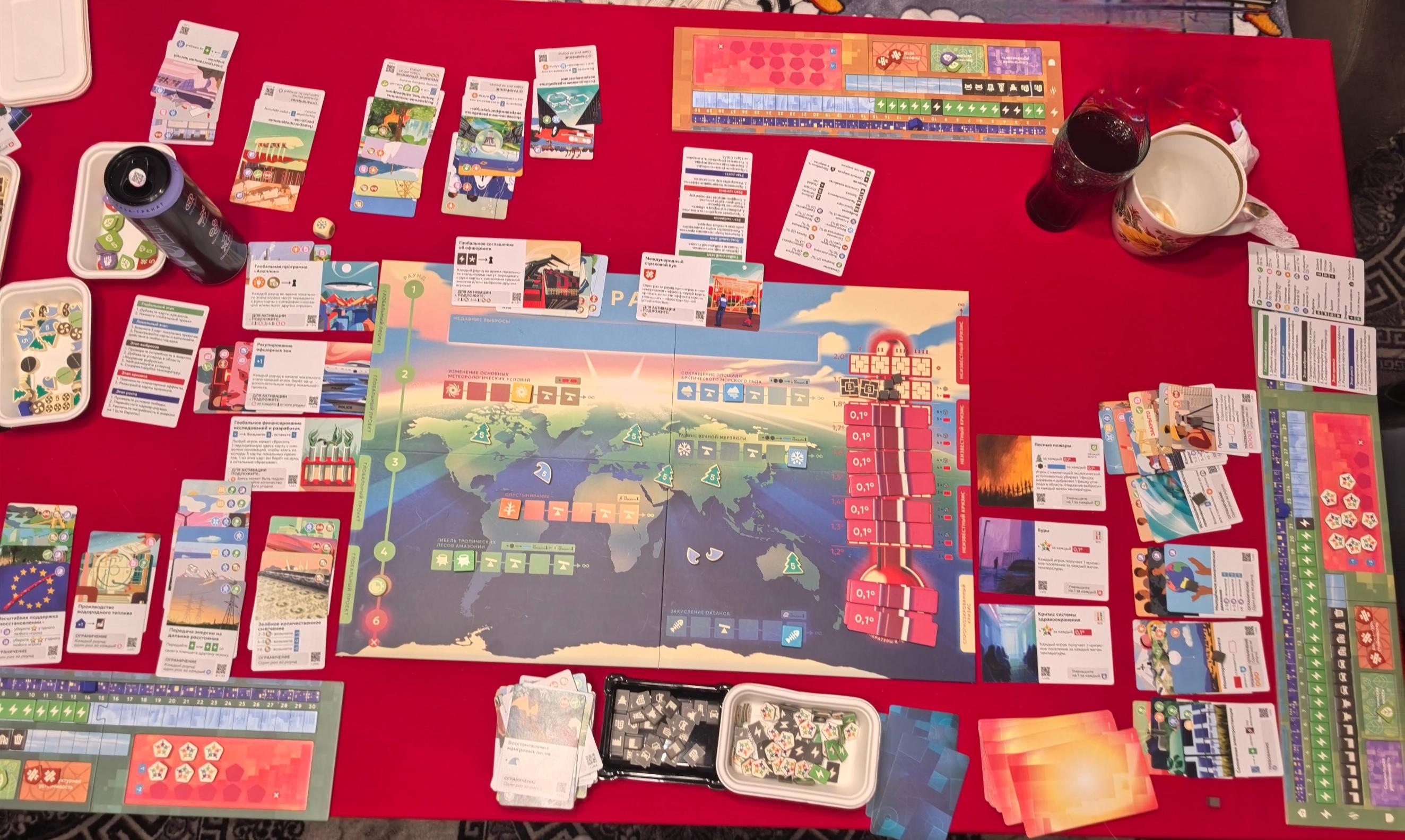
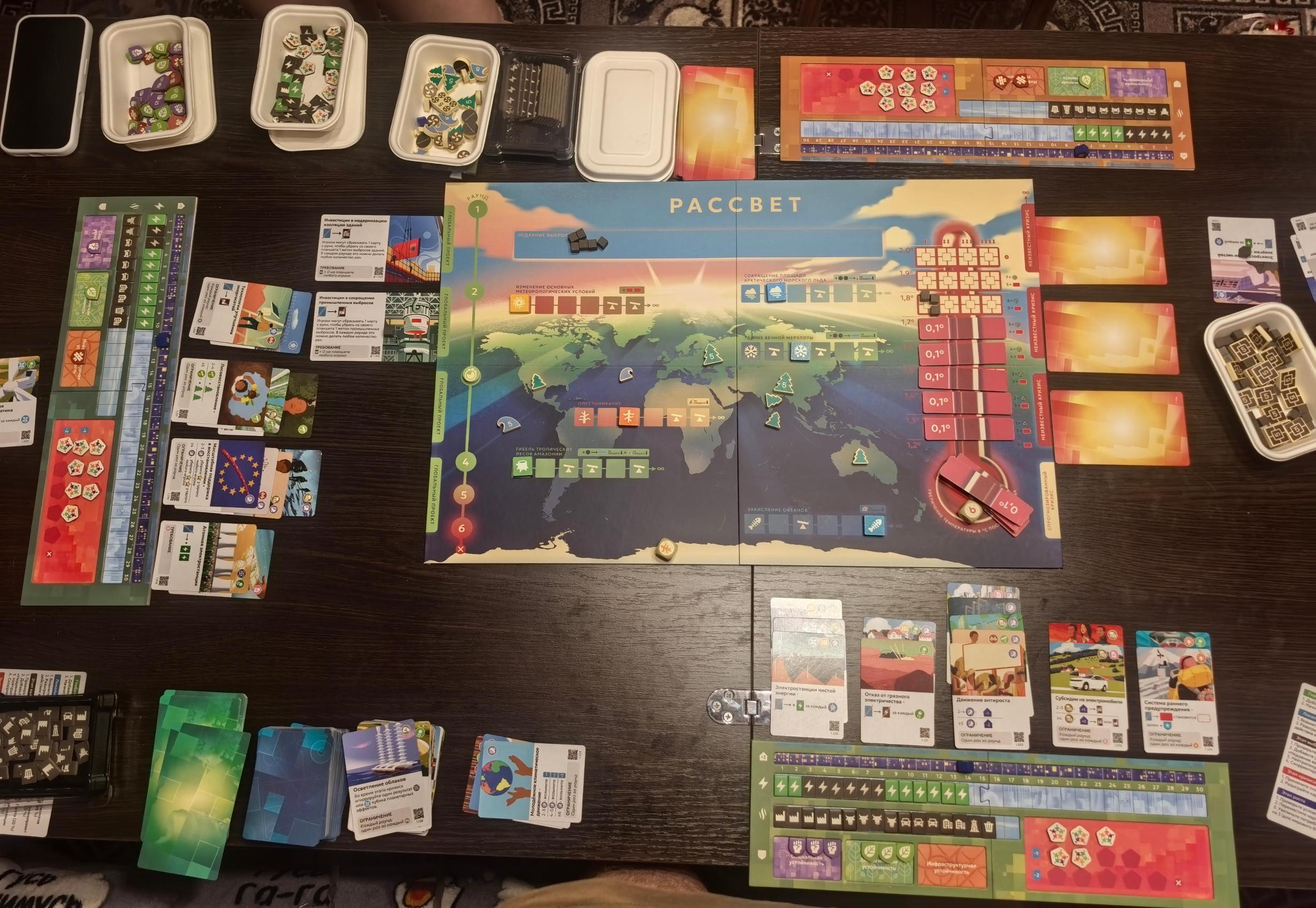
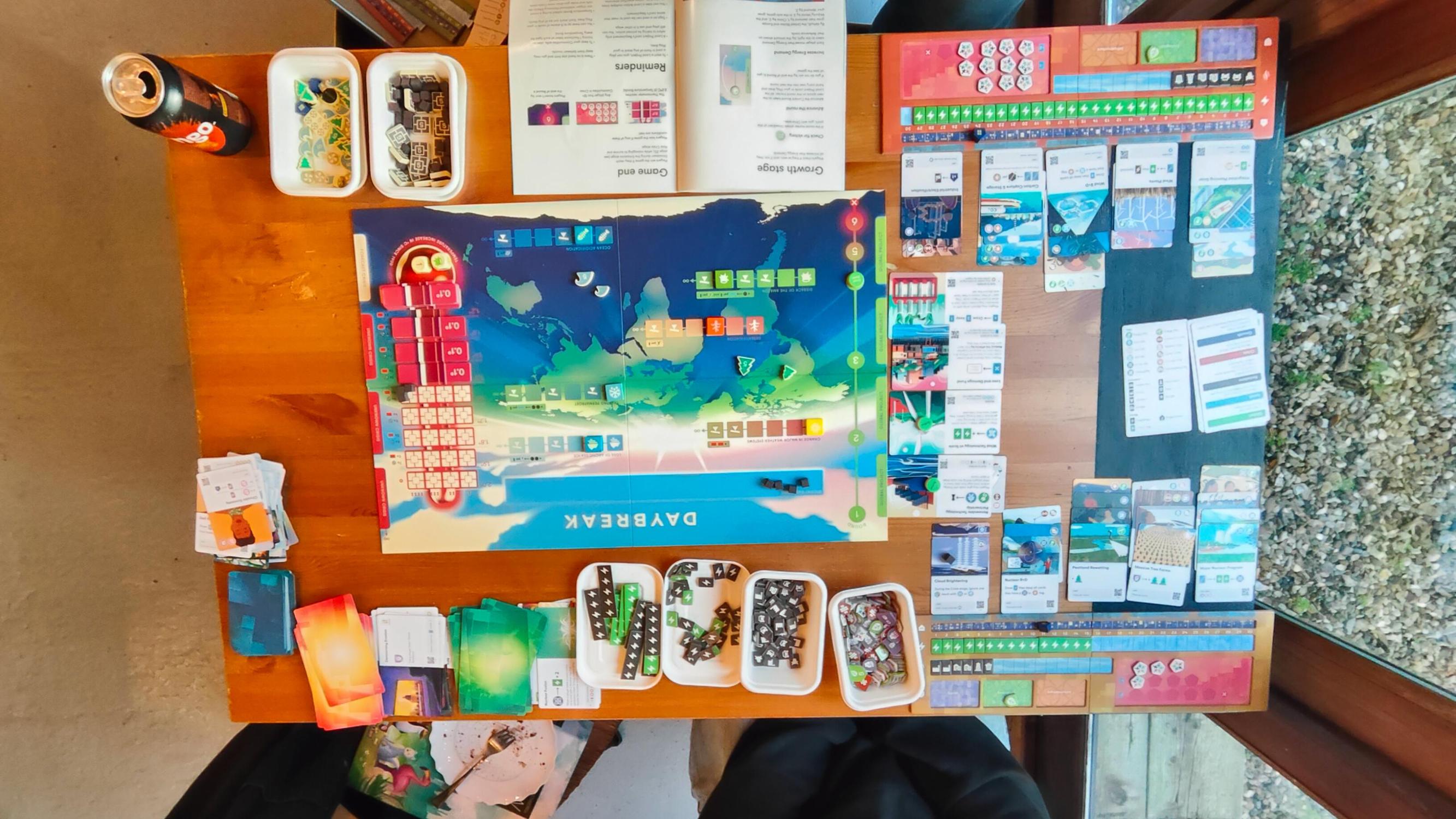
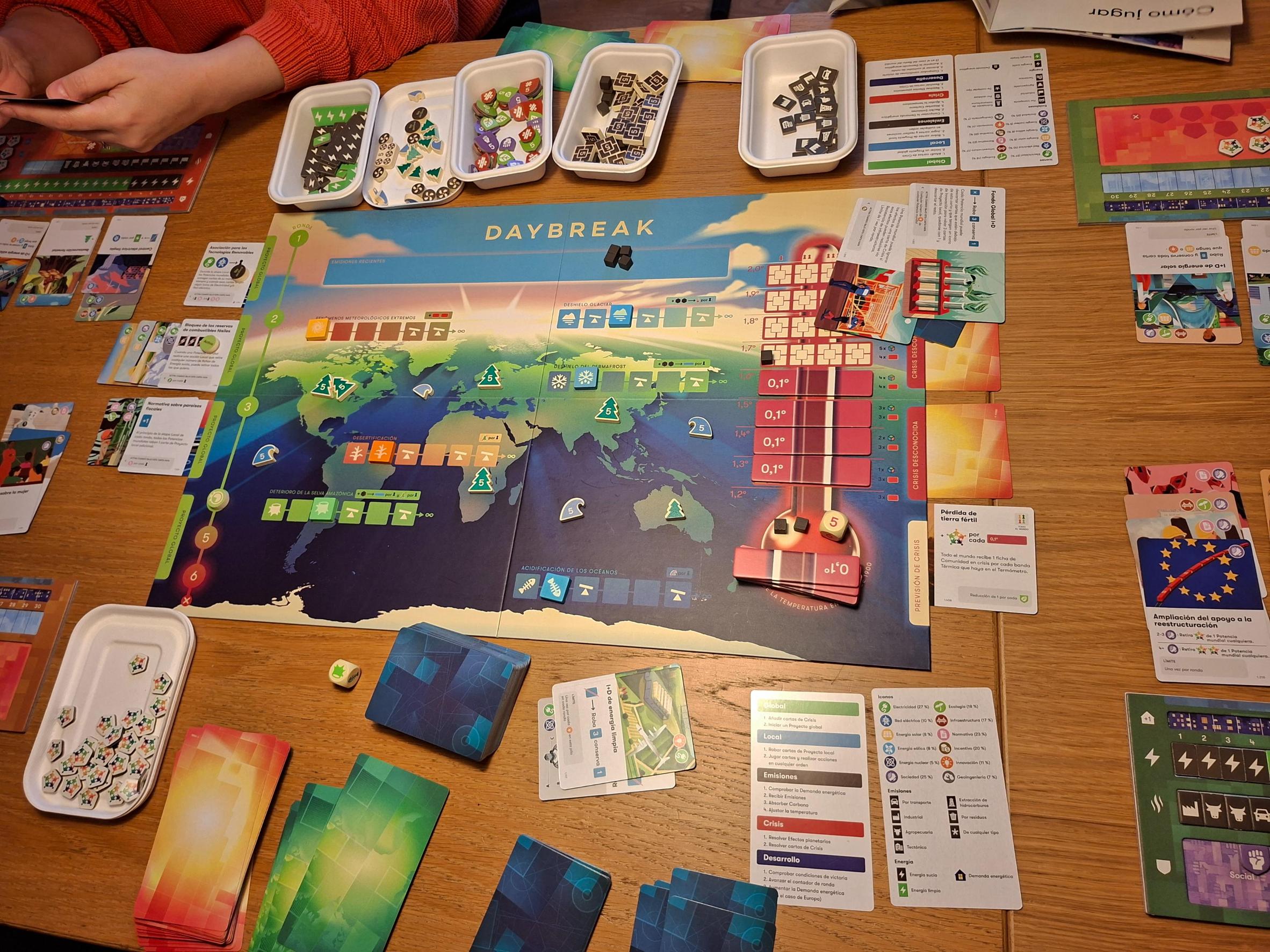
Where to buy it
Shop prices and second-hand copies, checked every day.
On Ludoya's tables
Full stats in Ludoya- 248
- Plays logged
- 234
- Players
- 1h 2m
- Average play
- 61
- In collections
- 38
- On wishlists
- 2
- Pre-ordered
7.7/10
from 32 Ludoya reviews
Rules questions
Answered from the rulebook by Ludoya's rules assistant.
Do we take turns, or do we all play at the same time?
Everyone plays simultaneously; there is no player order. Each round follows five stages in order: Global, Local, Emissions, Crisis, and Growth (p. 10).
If I play a card in front of a stack, can I still use the card underneath it?
No. You can take actions only from the card at the front of a stack, although that card uses the tags of all cards behind it. A newly played front card’s action is available immediately (pp. 11–12).
Do the tags on the card itself count when I use its action?
Yes. An action can use the tags on the front card plus the tags on every card behind it in the same stack. Tucking cards behind a project can therefore make its action more powerful (pp. 6–7, 11).
If I have enough Clean Energy to meet my demand, do my Dirty Energy tokens still produce emissions?
Yes. During the Emissions stage, you count all Dirty Energy tokens, even if Clean Energy lets you meet your demand more efficiently. Your emissions equal your Dirty Energy plus Emissions tokens (p. 13).
When exactly do we win with Drawdown?
You reach Drawdown after sequestering all Carbon in Recent Emissions while uncovered Trees, Oceans, or DAC tokens remain; you then sequester Carbon from the Thermometer and flip the round marker. You win only if you survive the following Crisis stage (pp. 13, 17).
Can we reduce an Unknown Crisis by tucking a card under it?
No. Cards may be tucked under Forecast Crisis cards to reduce their effects, but you may not tuck cards under Unknown Crisis cards. Resilience tokens can still reduce an effect for the targeted player when the Crisis is resolved (pp. 12, 15).





People who own it also own








Free, on web, Android and iOS
Play Daybreak with Ludoya
- Keep it in your collectionTrack your copy and its expansions, lend it to friends, or put it on your wishlist and get told when the price drops.Add it to your collection
- Log every playScores, winners, timers and photos, then your stats: win rate, favourite player count, best score.Log a play
- Settle rules questionsAsk anything about the rules and get an answer from the rulebook, with the page to check it on.Ask the rules assistant
- Find people to play it withClubs, game nights and events near you that bring this game to the table.See events
Game facts (players, playing time, age, credits) from BoardGameGeek.