
For clubs and associations
Run your club without the spreadsheet
Game nights that fill themselves, tournaments that pair themselves, and a games library that knows who borrowed what. Your members sign up from a link, with nothing to install.
Where clubs already are
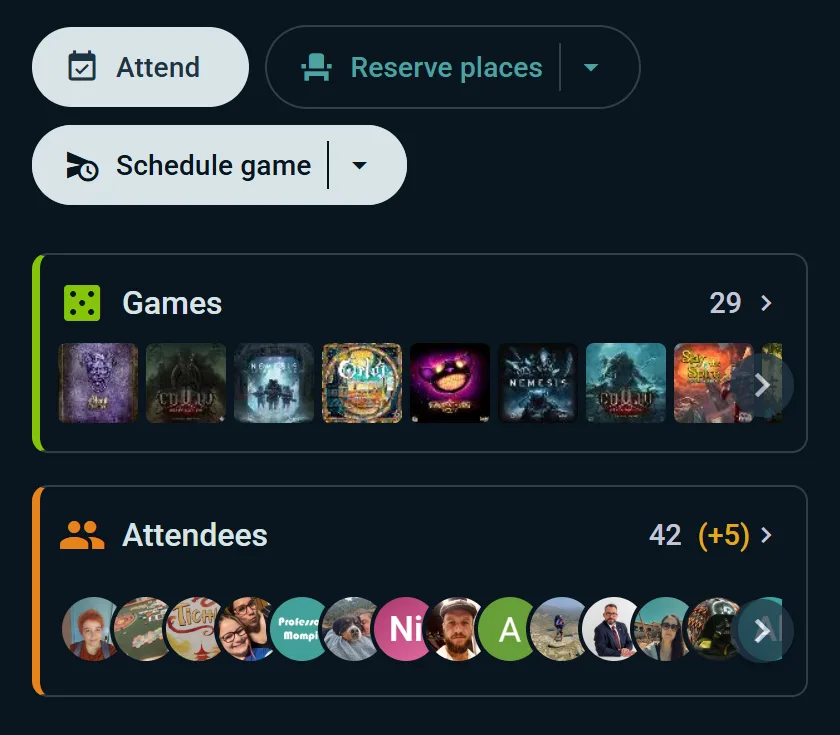
Game nights
Post it once. It fills itself.
Publish the night, cap the seats, and stop refereeing a group chat where the fourteenth person to reply thinks they got in.
- Seats and waitlists. When somebody drops, the next person is in — without you noticing it happened.
- Reminders go out on their own. Nobody has to remember to nudge the group on Wednesday night.
- Recurring nights, set once. Every Thursday, first Saturday of the month. Set the pattern, stop re-creating the same event fifty times a year. Club plan.
- Sub-events for a longer day. A whole Saturday can hold its own timetable of sessions inside it.
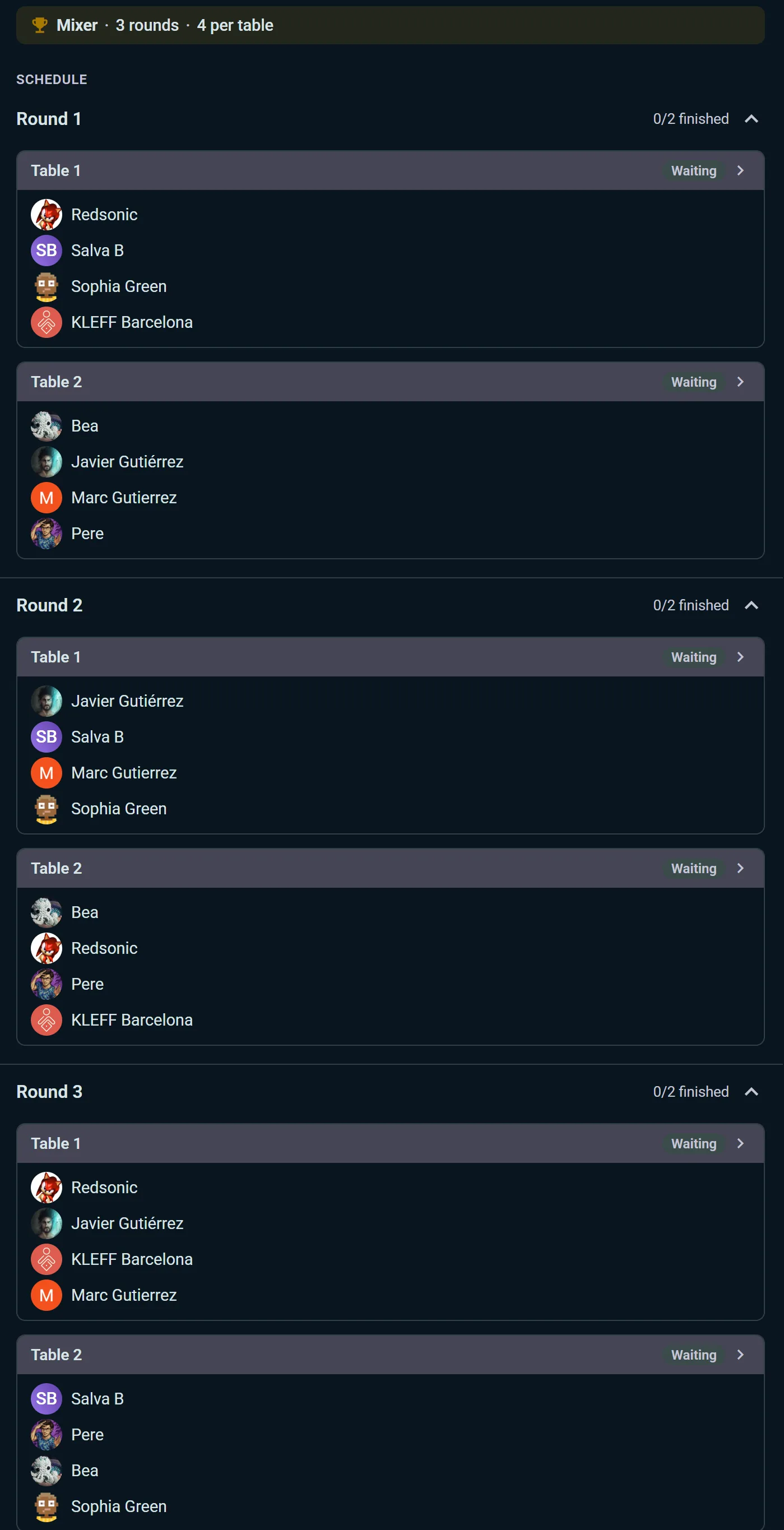
Tournaments
Four formats, and none of them need a spreadsheet
Most tournament software assumes chess: two players, one board. Board games are not that, which is why Swiss and mixer here seat three, four or more per table.
- Swiss. Everyone plays every round, nobody is knocked out, and pairings track the standings as they go.
- Mixer. The schedule is built up front to maximise how many different people you play. Usually the right call for a club night.
- Single and double elimination. A proper bracket, drawn on screen, for when you are crowning someone.
- Tiebreakers that hold up. Placement points, bye points and shared placements are all yours to set before anyone argues about them.
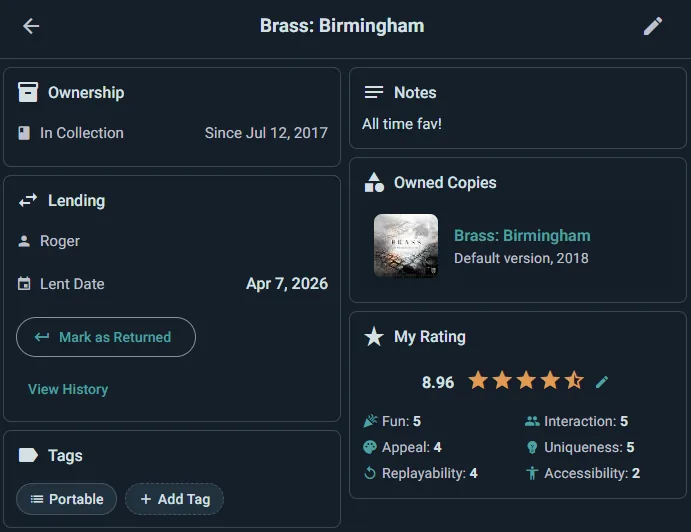
The club shelf
Know where the club’s copy of Brass is
A shared collection your members can browse, with lending tracked — so the game that has been at someone’s house since March is a fact, not a rumour.
- One collection, many owners. Club-owned games and members’ games can sit on the same shelf, marked as what they are.
- Lending, tracked. Who has it, since when, and whether it is due back on Thursday. Club plan.
- Members can plan around it. They can see what will be in the room before they turn up.
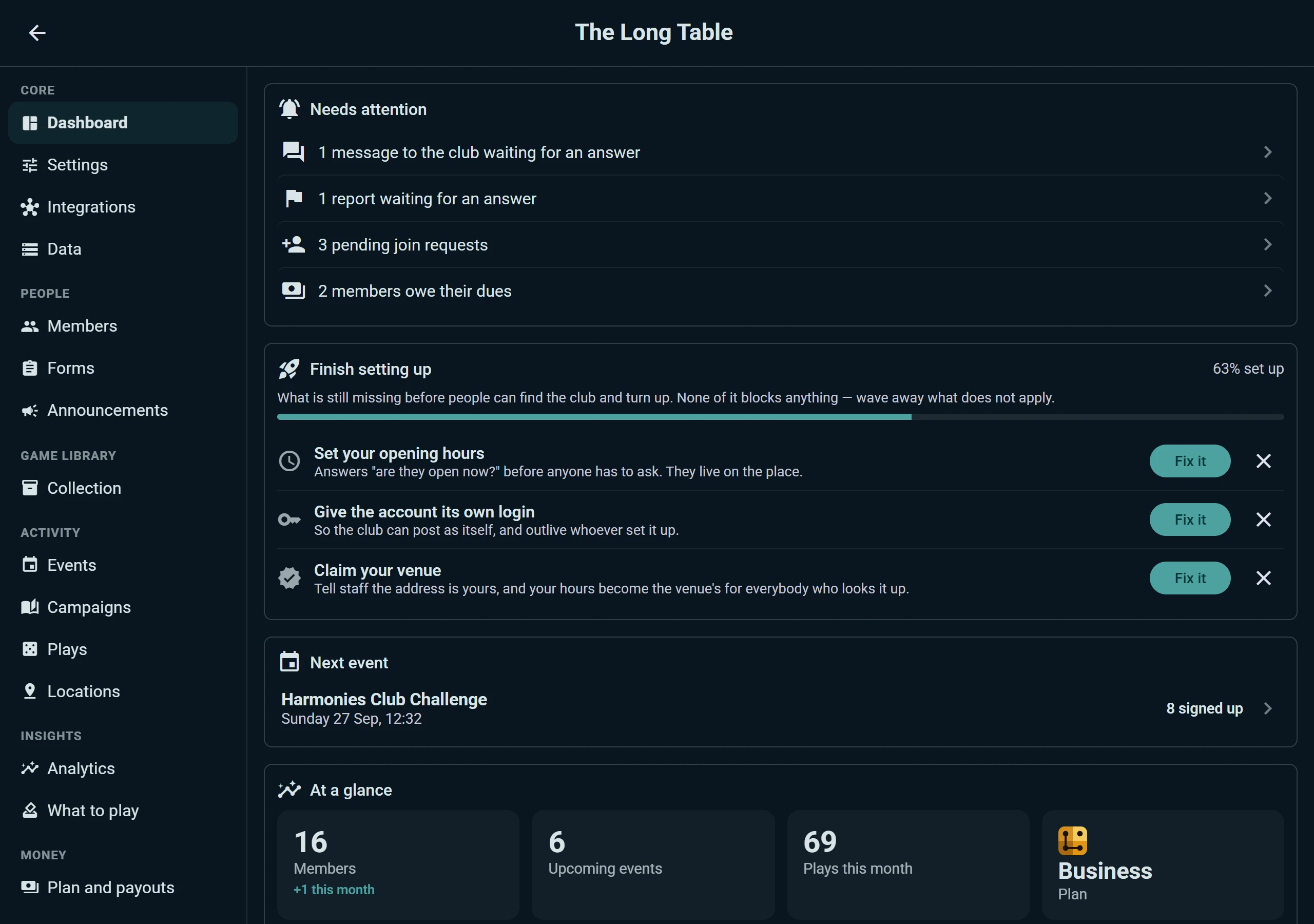
The club console
Everything the committee does, on one screen
Members, join requests, dues, events, the library, announcements and who may do what: one console, and the first page tells you what is waiting on you today.
- Needs attention. Unanswered messages to the club, reports, join requests and overdue dues, each one a click from where you deal with it.
- Members and their tiers. Honorary, member, youth: a ladder with its own dues and borrowing limits, and a filter for who owes. Club plan.
- One shared inbox. Messages to the club are answered as the club, and marked handled, so two admins never reply twice.
- Permissions in one table. Who can post, host, schedule or run the loans desk, per role and per tier.
Where your club already talks
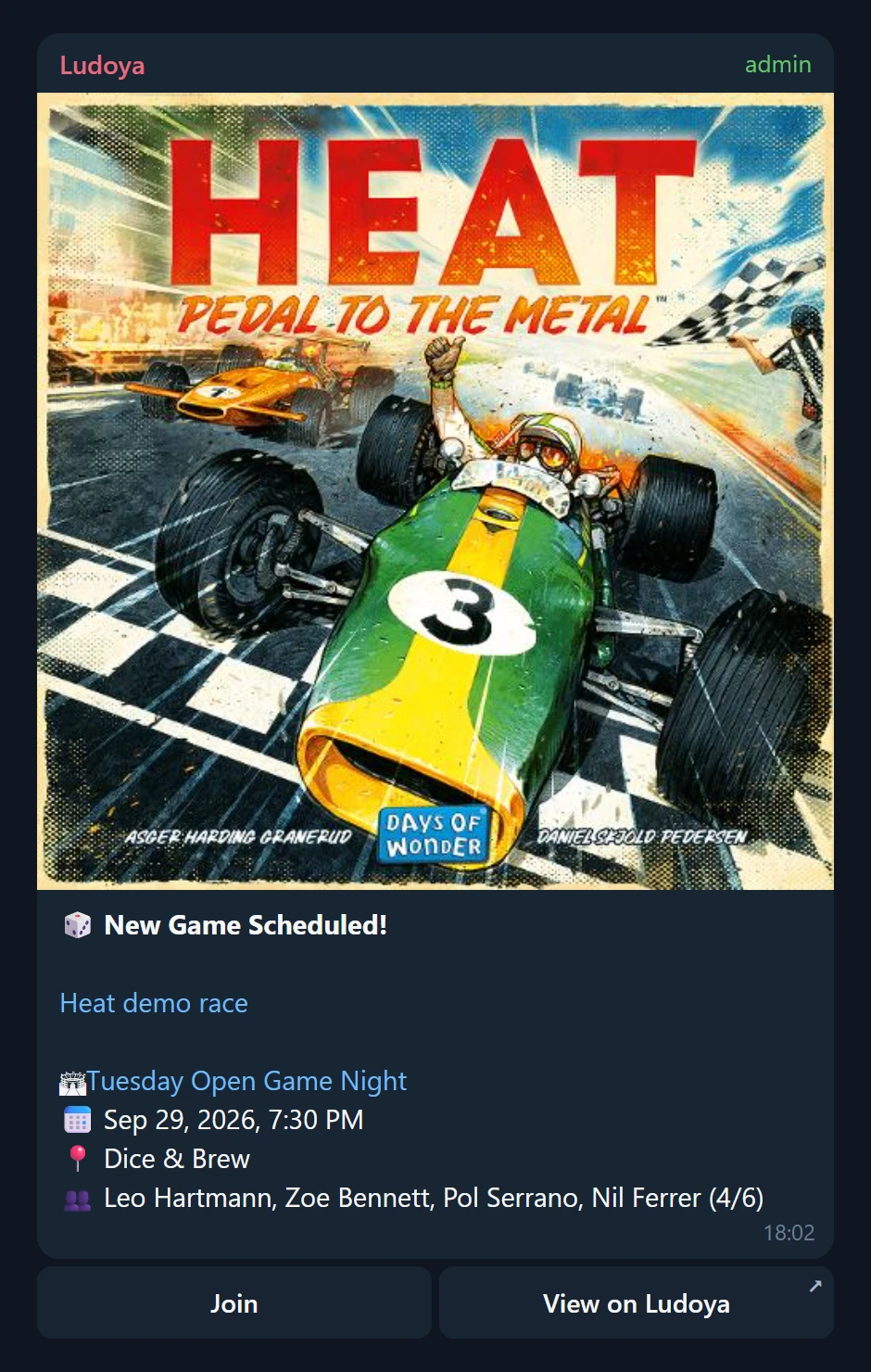
It posts to Telegram and Discord so you don’t have to
Your club has a channel and your members read it. Ludoya does not ask them to move — it publishes into the room they are already in.
- New events post themselves. With a join button, so people sign up without leaving the chat.
- The feed carries the rest. Plays, photos and announcements, translated automatically for a mixed-language club.
- Members can be messaged directly. For the conversation that should not be in the channel.
- It knows your shelf. Ask it for something light for six and it shortlists your own games, with players, length, age, complexity and where the copy sits.
Club plan
You find out before they stop coming
The club’s own sign-ups, read back as decisions. Built from what you already have — no forms, no surveys, nothing asked of your members.
Who has gone quiet
Regulars whose nights stopped, measured against their own rhythm — so a monthly club is never judged like a weekly one, and a quiet summer accuses nobody.
What fills the room
Which weekday, which hour and which games actually fill seats, so the next calendar is planned on evidence instead of habit.
Whether newcomers stay
New and returning faces month by month, and the people who came once and never came back — a welcome to write, not a mystery.
Who carries the club
The people at most of the nights, and whether the room is leaning on fewer of them than it used to.
And the rest of it
The things you only miss once you need them
Every one of these is shipped today. None of them is a roadmap promise.
A club account, not a personal one
Your club gets its own profile and a login the committee shares, so it outlives whoever set it up.
Tables for one specific game
“Looking for three for Gloomhaven on Saturday” — seats, a waitlist, and someone flagged to teach it.
Raffles
A prize draw at the end of the night, without a hat and a pile of torn paper.
Numbers on your own club
What gets played, who turns up, how attendance moves through the year — and a Replay to close the season with.
Co-hosted events
Run a night with another club and have it show up properly on both sides. Free.
Score sheets and setup steps
Community-built kits that total themselves, so nobody is doing arithmetic at 1am.
Group chats
For the Thursday regulars, and one that comes with every event, table and campaign, joined and left as people sign up and drop out.
A second-hand market
Members sell to members, or you run a Bring & Buy at your event with a till and a payout for every seller. The organizer-run market is on the Business plan.
Membership dues
Each tier with its price, collected in cash or by card, and a list of who owes. Club plan.
Getting started
Twenty minutes, most of it choosing a picture
Create the club account
Name, location, description, and the committee members who should be able to post as the club. No approval queue — you are live immediately.
Publish your next game night
Date, place, how many seats. Share the link anywhere: people can read it and sign up without an account, and members get it in the app automatically.
Let the club use it
Members log the plays, the collection fills up, the stats build themselves. You go back to organising games instead of chasing replies.
Honestly
Against how most clubs do it today
Nothing is wrong with a group chat. It just stops scaling somewhere around the fortieth member.
| Chat group + spreadsheet | Ludoya | |
|---|---|---|
| Seat limit respected | First to read | |
| Waitlist when someone drops | — | |
| Reminders before the night | If someone remembers | |
| Tournament pairings | By hand | Swiss, mixer, elimination |
| More than two per table | Manually | |
| Who has which game out | — | Club plan |
| New members find you | — | |
| Attendance history | If someone kept it | |
| Live standings on every phone | Paper on a pillar | |
| Who has paid their dues | A spreadsheet column | Club plan |
| Cost | Free | Free — Club plan for extras |
What it costs
The club account, your members, your events and your collection are free. No seat limits, no trial, no card. Most clubs never need anything else.
The Club plan adds what only matters once you are running the room rather than attending it: recurring nights that repeat themselves, tournaments in all four formats, raffles, sub-events inside a bigger event, stand hosts and join links for a festival team, club insights — who has gone quiet, which nights fill, what your members want to play next and when the room is fullest — a shared inbox your admins can answer as a team with the audit log beside it, four announcements a week instead of one, membership tiers and dues, cash or by card, and Telegram and Discord announcements.
If you also run a venue or a convention — selling tickets, verifying entry at the door, floor plans, every location you run shown on your profile, a lending desk and a second-hand market at your events, the event on a big screen — that is the Business plan, and the venues page is the better read.
Prices are on the pricing page, in public, monthly or yearly.
Your next game night could run itself
Create the club in a couple of minutes. Your members open a link in the browser — nothing to install, no account for many events.
Frequently Asked Questions
Can we collect membership fees through Ludoya?
Yes, on the Club plan. Give each membership tier its price and period, then either record the cash and transfers you take as you do today, or let members pay by card from the club’s page, straight to the club’s Stripe account. The members table shows who is up to date, who owes and who renews this month.
Is it really free for a club?
Yes. The club account, unlimited members, unlimited events, the shared collection, one announcement a week and the feed cost nothing. Co-organizing a night with another club is free too. The Club plan is for recurring nights, tournaments, raffles, sub-events, festival teams, a shared inbox with the audit log, and Telegram and Discord announcements.
Do my members need to install anything?
They can, and most do — Ludoya is on iOS and Android — but it also runs in any browser. Someone can open your event link, read it and sign up without installing anything, and without an account for many events.
What happens when the person who set it up leaves the committee?
Nothing. A club account is shared: you add and remove the people who can act as the club, and the club keeps its profile, history and events regardless of who holds the keys this year.
Can we run a tournament with more than two players per table?
Yes, and this is the part most tournament software gets wrong for board games. Swiss and mixer formats seat three, four or more per table. Elimination brackets are one against one, as they have to be.
What is a mixer tournament?
Swiss’s sociable cousin. Instead of sorting the field by skill, the whole schedule is built up front to maximise how many different people you play. It is usually the right format for a club night, where mixing the room matters more than crowning a champion.
Can we track games the club owns and lends out?
Yes. The collection is shared with members for free. Lending the games out comes with the Club plan: each loan records who has the game and since when, and the Loans tab puts every loan on one screen, the late ones first, with each borrower’s history and each copy’s. Printed QR labels let members borrow and return from a shelf nobody mans, and reserve a game that is out: the copy that comes back waits for them. On the Business plan, a lending desk at your events scans a code from the borrower’s phone with nothing on the boxes.
We already have a Telegram group. Does this replace it?
No, it feeds it. Connect the channel and new events post themselves there with a join button, so people sign up from the chat they already read. The conversation stays where your club likes it.
Will people outside the club find us?
That is much of the point. Public events and club profiles show up in search and on the map for players nearby, which is how most clubs on Ludoya pick up new members. You choose which events are public and which are members-only.