
For publishers and distributors
Your games, in the app people log them with
Every play of your game is a moment on Ludoya — logged, rated, photographed. Be present at that moment instead of advertising somewhere else entirely.
Where your games already live
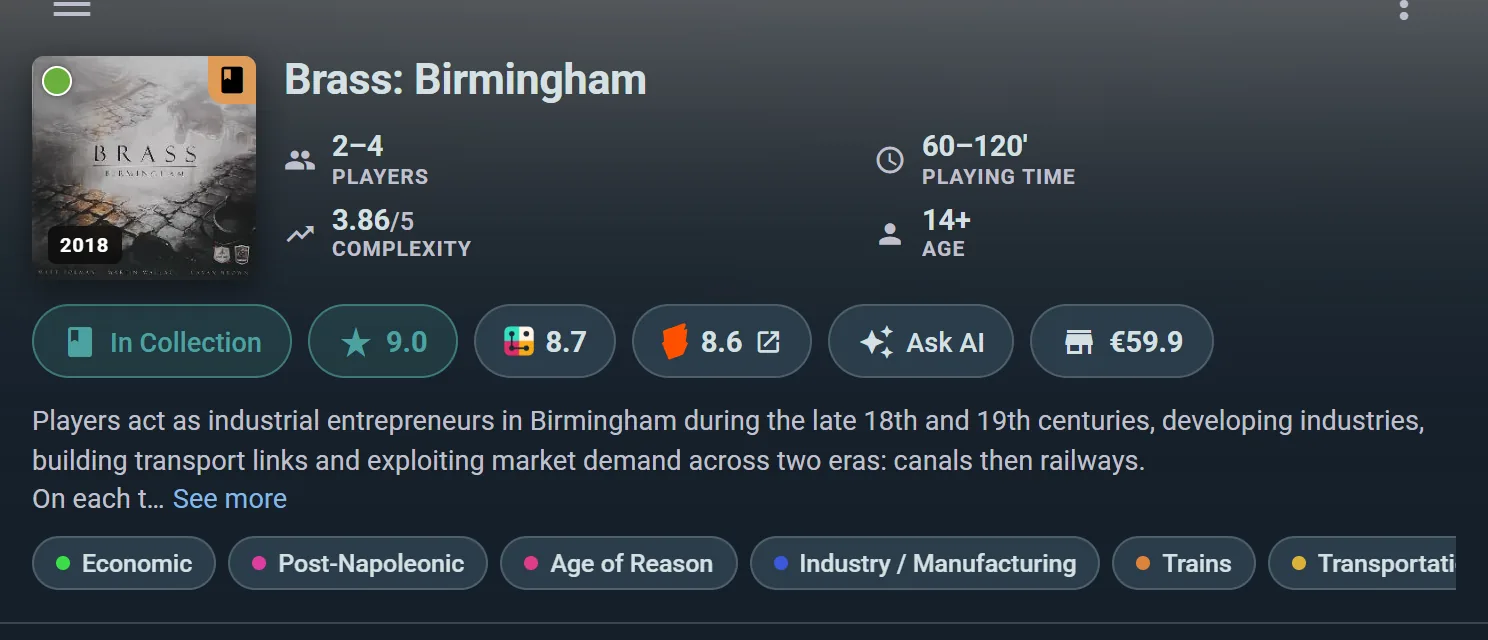
The game page
The page players check before they buy
Ratings from people who played, real play counts, session photos, shop prices and reviews — your game’s page is where the decision happens, synced from BGG and enriched by every play.
- Reviews backed by plays. Each review carries the reviewer’s logged plays and their best, good or skip call per player count — richer signal than one number.
- Live shop prices. Retailers carrying your game appear right on the page, with prices.
- Rulebooks attached. Host the PDF; the AI assistant answers rules questions from it, with page references.
Game kits
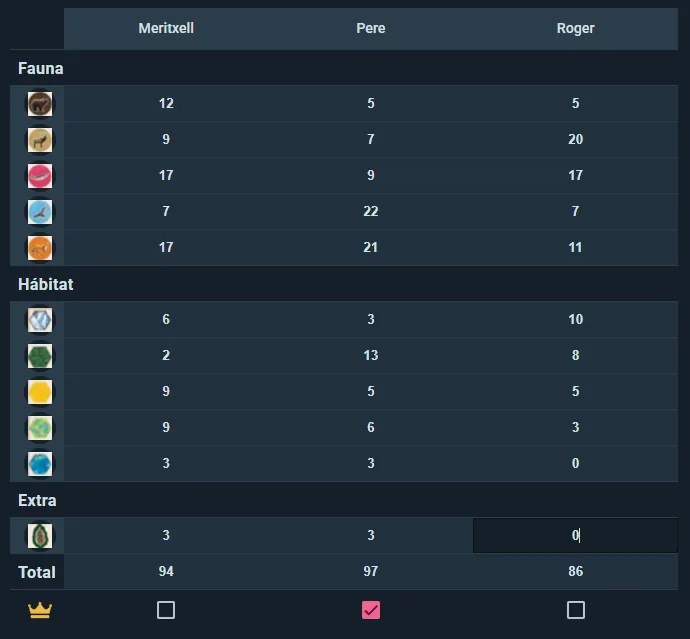
The official score sheet, in every player’s pocket
A kit for your game — score sheet that totals itself, setup checklist, round structure — makes every session smoother and carries your name on the table.
- Scoring maths done right. Your edge cases, encoded once, instead of argued at every table.
- Setup and teach flow. A checklist that gets new tables playing your game correctly, faster.
- Multi-language. One kit, playable in every language the app ships in.
The honest pitch
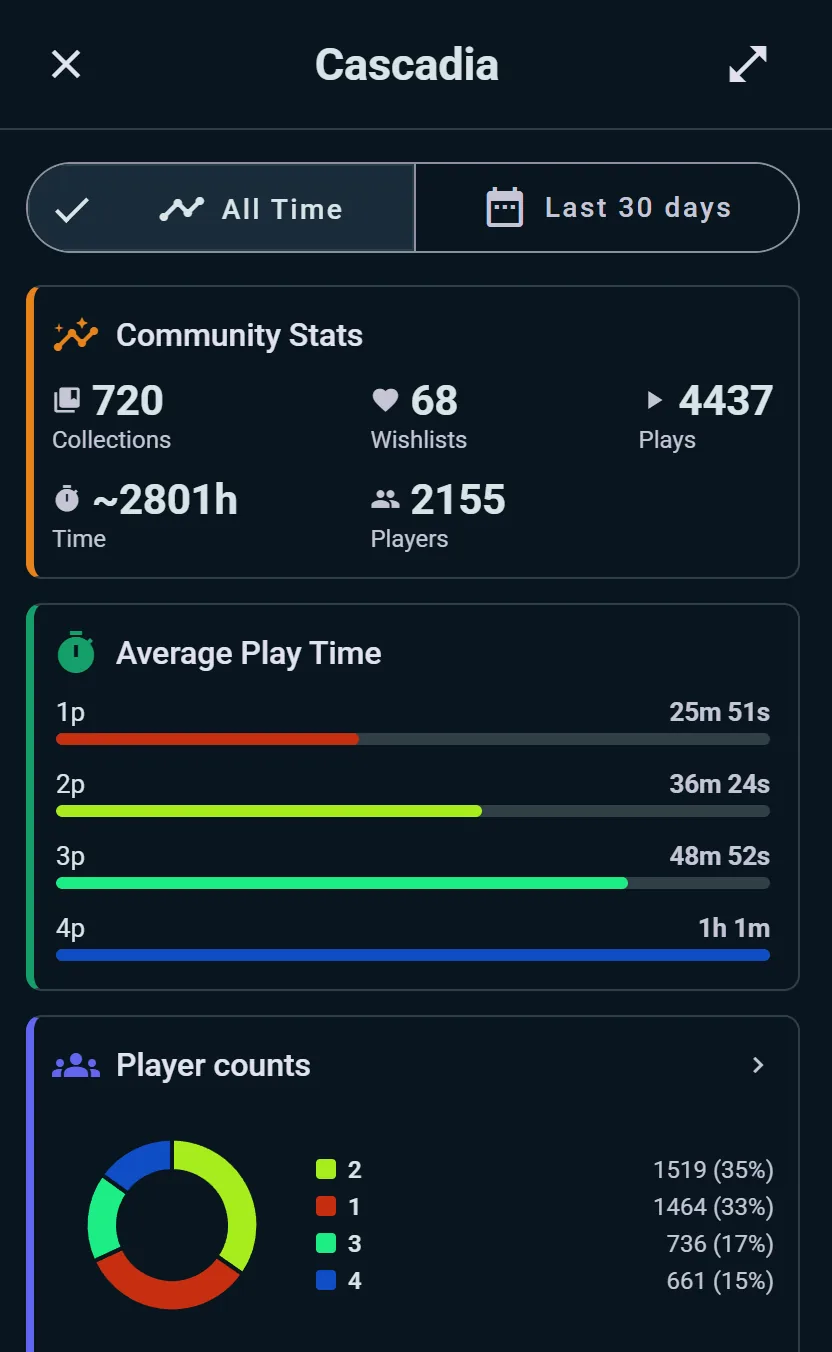
Players log 6,000 plays a month here. Some of them are yours.
The question is whether your games meet them with a rich page, a proper kit and a demo seat — or a stub.
Demos and launches
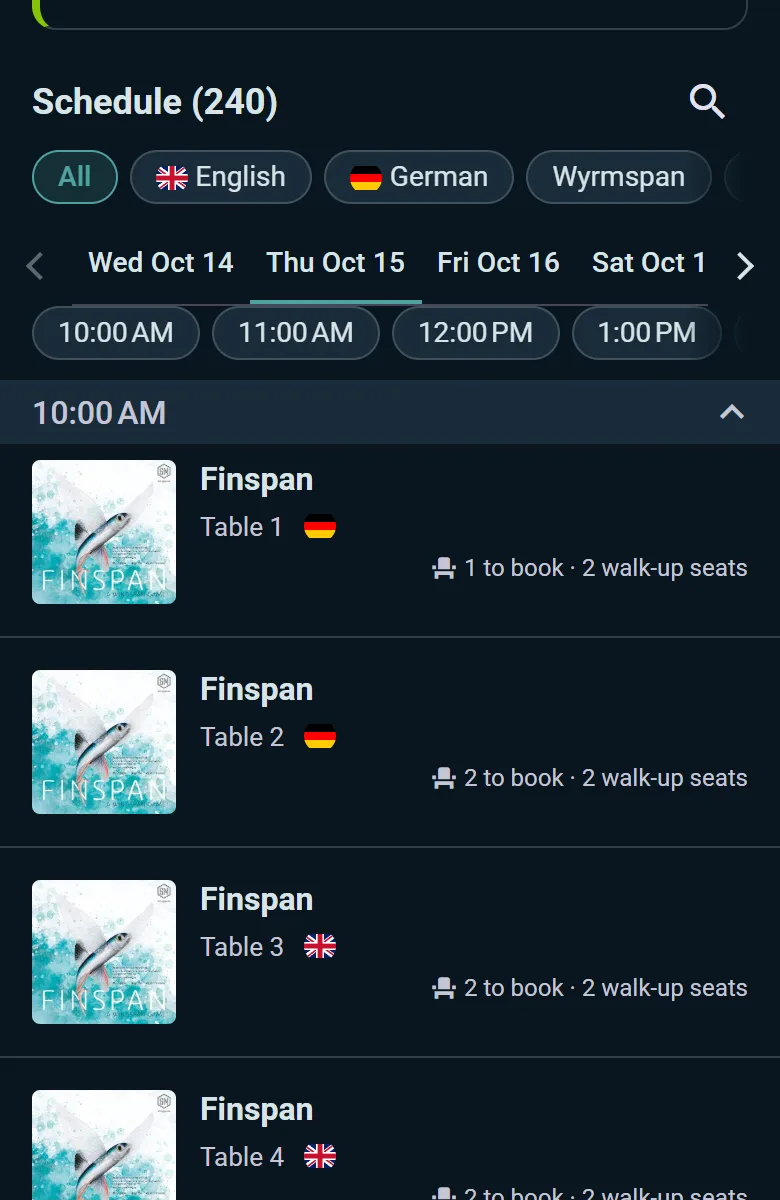
Demo tables players book like tickets
At a convention or in a store, your stand runs your games on a timetable visitors book — seats, walk-ups and the wait list handled, and every player a tap away from logging the demo as a play.
- Your team runs one desk. Who is booked, who checked in, who is waiting, table by table, now and next.
- Demos become data. Players log each session as a play in one tap, and answer your own questions after it.
- Runs under your name. Inside a convention’s programme, or standalone in a partner store.
- Your whole range. One game per table, each in its own language, built for the whole fair in one go.
Activation
Badges and challenges that get a game to the table
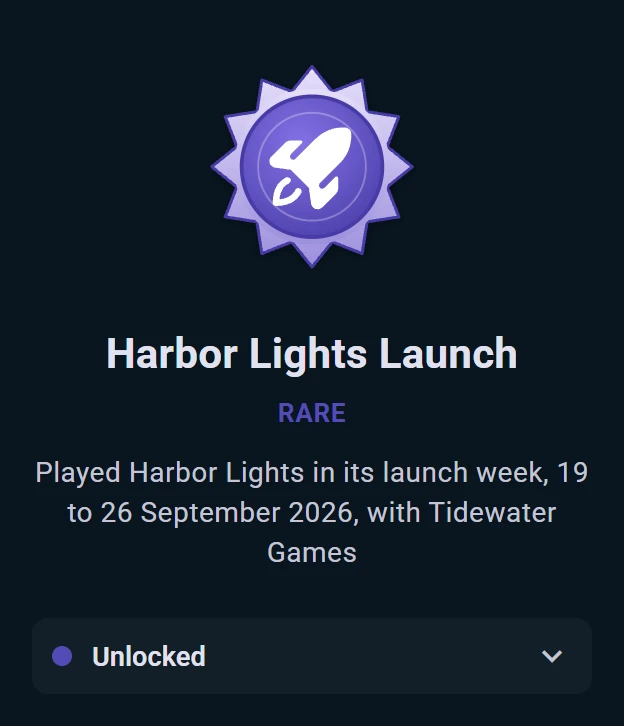
A time-limited badge for playing your new release, a raffle at the launch event, a challenge across partner venues — reasons to play that reward the players, not interrupt them.
- Badges players actually want. Earned by playing, shown on profiles, gone when the window closes.
- Raffles at your events. A prize draw among the people who came and played.
- Aggregate results, no personal data. You see plays, ratings and reach. Player identities stay theirs.
Also in the kit
The quieter advantages
Playtest your prototypes
Run a rotation night: every prototype gets played, tables stay balanced, and the feedback form lands on the testers right after the game.
Aggregate play data
How often your games hit the table, player counts, durations and rating trends — aggregated, never personal.
AI rules answers
Your rulebook, answering questions at the table with page references — fewer support emails.
Catalogue corrections
Fix your games’ data through a moderated edit flow instead of emailing a wiki.
Retail visibility
Shops that stock your game surface on its page — the path from interest to purchase stays short.
A publisher profile
Your releases, events and announcements, followed by the players who care.
Public API
Play counts and event data for your own dashboards.
Working with us
From catalogue to activation
Claim your presence
A publisher profile, your catalogue checked and corrected, rulebooks attached where you want the AI answering.
Equip the games
Kits for the titles that need scoring or teaching help — we will tell you which ones players struggle with.
Activate when it matters
A launch badge, a demo stand at the right convention, a challenge across partner stores. Sized to the release, priced per campaign.
What it costs
The profile and your game pages cost nothing — they are part of the catalogue being good, and that serves everyone.
Activations — badges, challenges, demo stands, launch campaigns — are priced per campaign, because a small-box launch and a national circuit are not the same job. Talk to us with the release and the dates, and you get a concrete number, not a rate card riddle.
One line on data, because it matters: campaign reporting is aggregate. Plays, ratings, participation, geography of activity — never player identities, never contact lists.
Put your next launch where the players are
Tell us the game and the date. We will come back with what an activation would actually look like.
Frequently Asked Questions
Is a publisher profile free?
Yes. The profile, your game pages, rulebook hosting and catalogue corrections cost nothing. Paid work starts at activations — badges, challenges, demo stands — priced per campaign.
What data do we actually get?
Aggregates: plays over time, table sizes, durations, where and when it is played, editions and expansions, replays, and wins by role and seat. Never individual identities or contact details.
Our games are already on BGG. Why does this matter?
BGG is the encyclopedia; Ludoya is where the playing happens — logging, events, demos. The catalogue syncs from BGG, so you are not maintaining two databases; you are showing up where sessions get recorded.
Can we run a demo stand at a convention we do not organise?
Yes — your stand sits inside the organiser’s programme, run by your team under your name, with its own timetable and the sessions logged against your game.
Who builds the game kit — you or us?
Either. The kit editor is open, many kits are community-built, and for a launch we can build the official one with you so the scoring is right on day one.
What does the AI assistant do with our rulebook?
Answers players’ rules questions from it, citing pages. It reduces the “how does scoring work” traffic that otherwise lands in your inbox or in a bad review.
Can we sponsor an existing community event instead of running one?
Yes — prize support plus a raffle, or a badge tied to plays at the event, are the two lightest-weight ways in, and organisers generally welcome both.