
Finding your people
The players were nearby all along
Nearby gamers sorted by distance, clubs with open doors, and tables that need exactly one more — the hard part of this hobby, solved with a map.
The neighbourhood
People
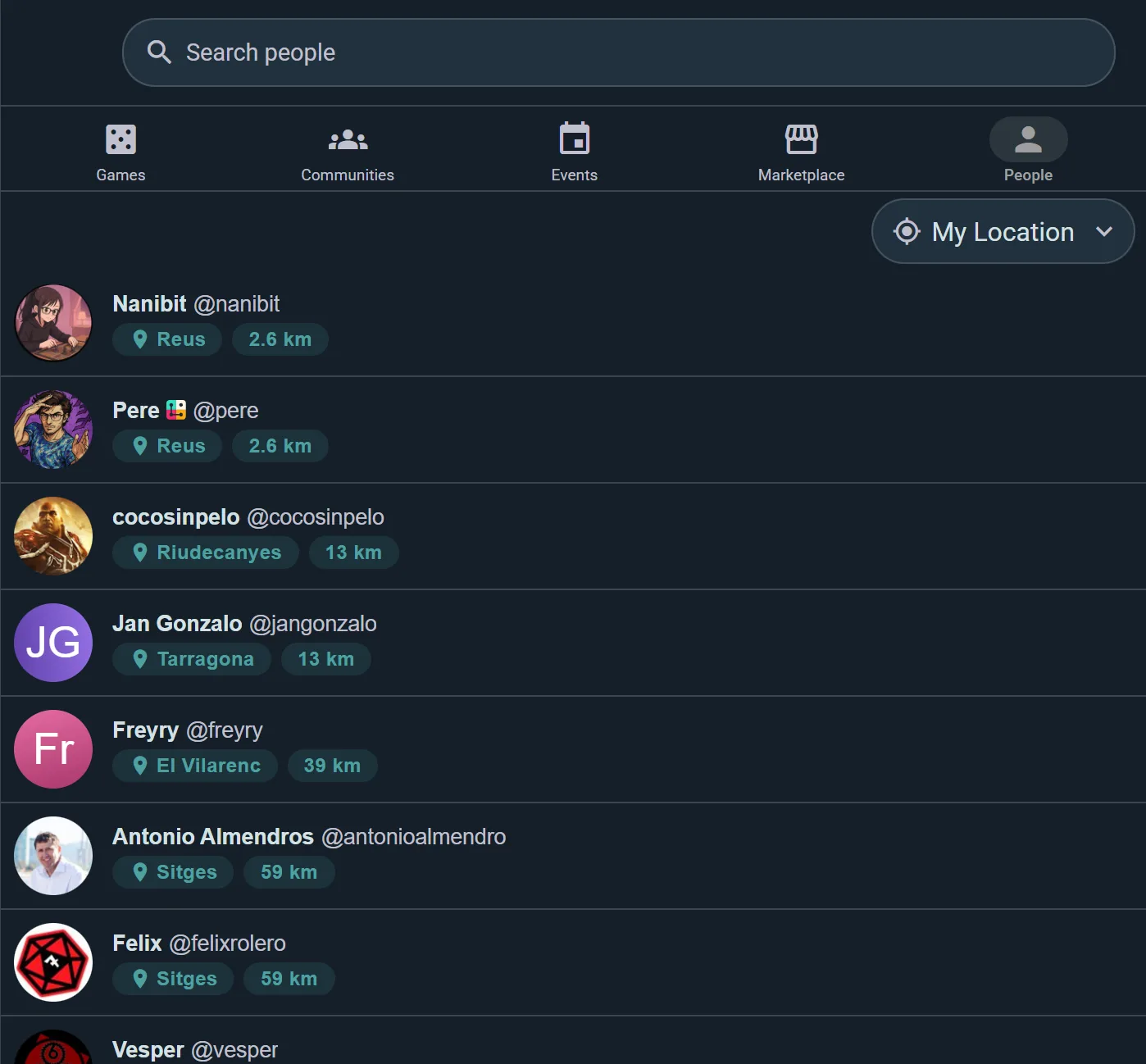
Gamers, sorted by distance
The People tab is exactly what it sounds like: players near you, with their town and how far away they are. 2.6 kilometres is a ten-minute walk to a new gaming group.
- Distance, not algorithms. Sorted by kilometres from you — the person 2.6 km away outranks the influencer.
- Profiles that say something. Their plays, their shelf, their groups — you know if you match before you say hi.
- Message them. A direct conversation is a tap away, inside the app.
Communities
The clubs already have chairs
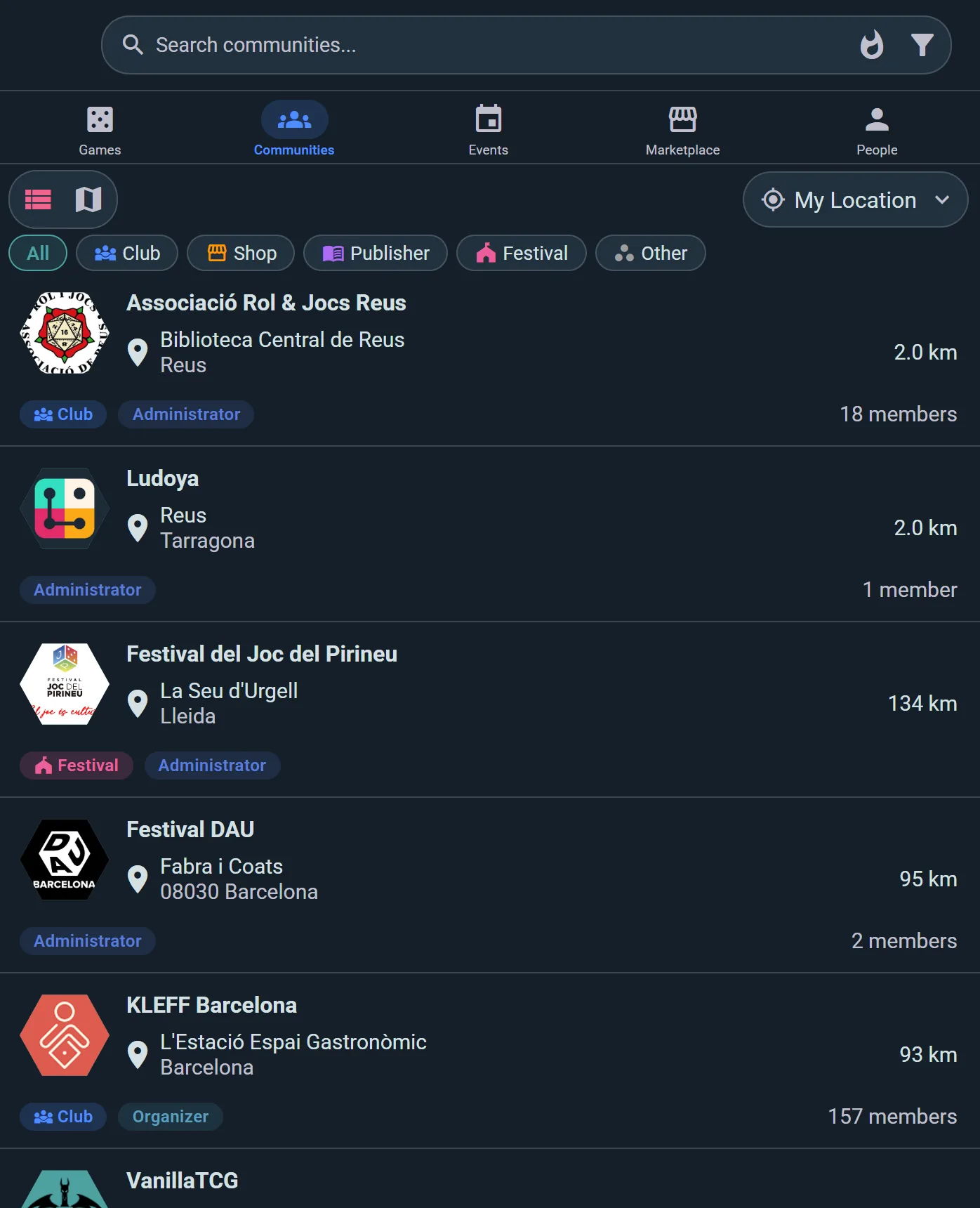
Clubs, shops, festivals and communities near you, with member counts and distance — filterable by what they are. Most run public nights; joining one is how this hobby actually grows.
- Real places. A club at the local library, a games café, a festival — with the address on the card.
- Filter by type. Club, shop, publisher, festival — pick your poison.
- On the map too. Flip to map view and see your city’s scene at a glance.
Open tables
“We need one more” — be the one more
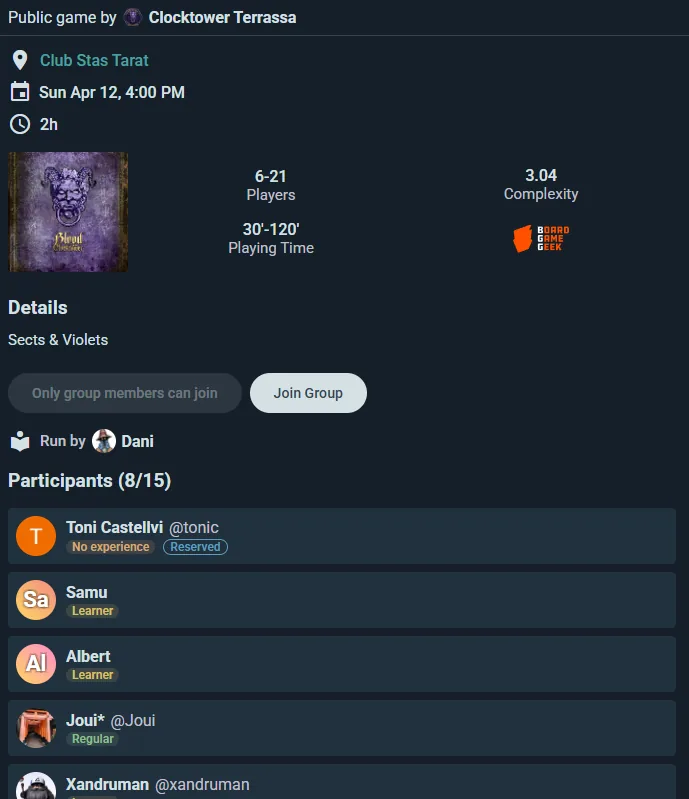
Scheduled games are tables for one specific game with open seats — who runs it, how long it takes, and how experienced the table is, stated up front.
- Someone’s teaching. “Run by Dani” means the rules are Dani’s problem, not yours.
- Experience tags. Learner, regular, no experience — every player at the table shows where they stand, so nobody walks in blind.
- Seats and waitlists. 8 of 15 means there is room. Full means the waitlist works for you.
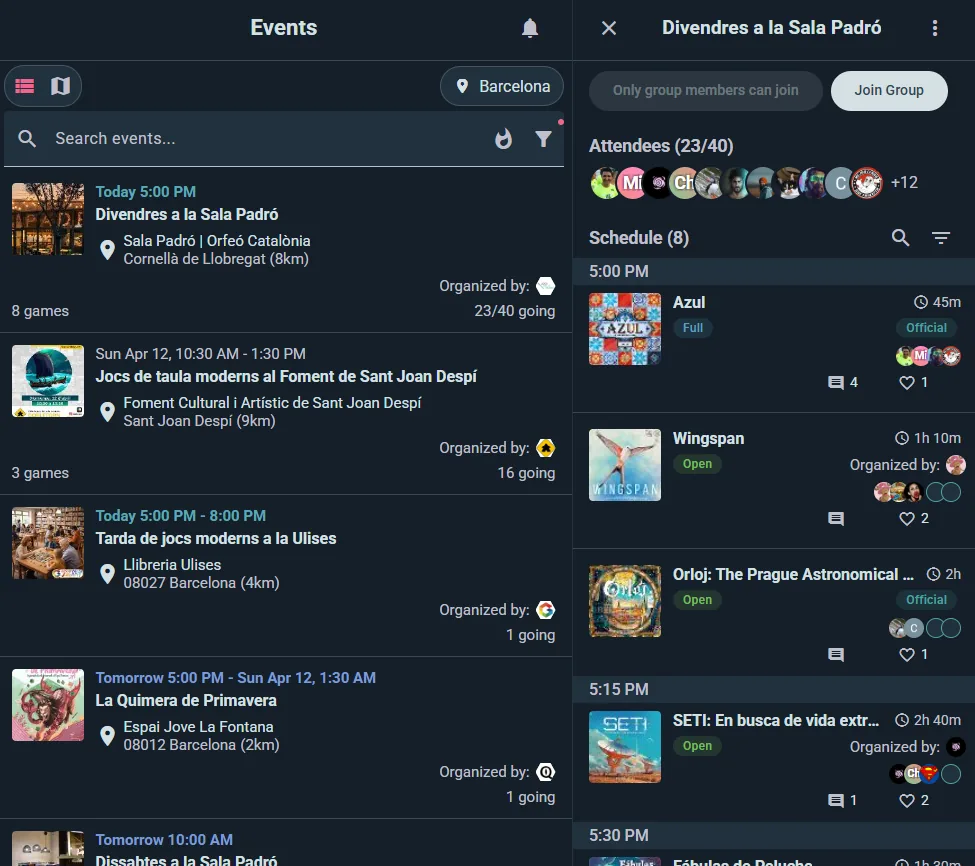
Events
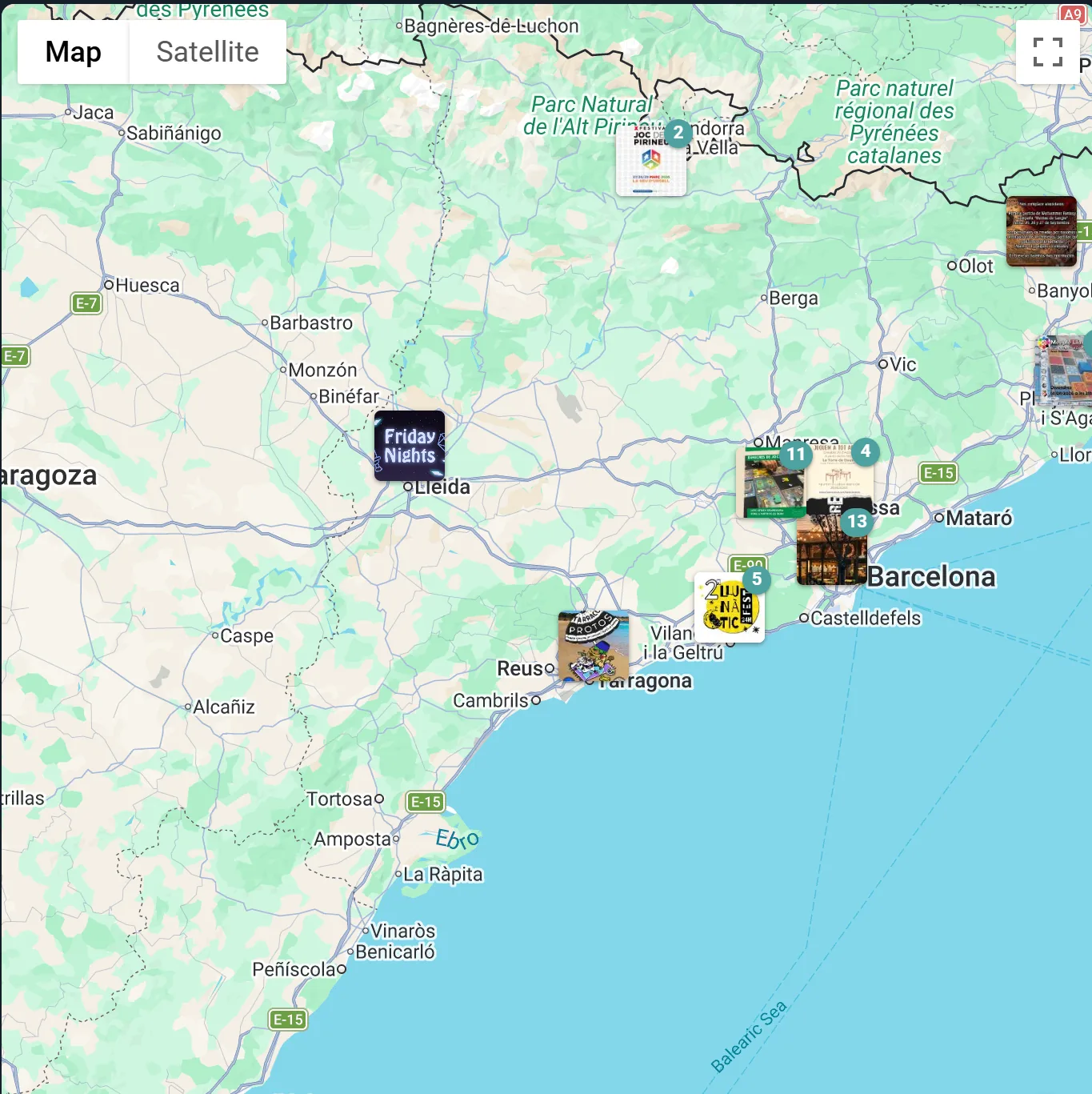
Game nights, pinned to the map
Public events across your region — club nights, festivals, tournaments — each pin a poster, each poster a place you could be on Friday.
- RSVP in a tap. Seats and reminders are the organiser’s problem — you just show up.
- See the schedule first. What is being played, at what time, with seats per table.
- No account needed to look. Event links open in any browser; many accept sign-ups without an account.
Getting started
From zero group to game night
Set your location
Your town is enough — distances and the map work from there, and your exact address is never required.
Look around
People, communities and events near you, sorted by distance. Follow a club, wave at a profile.
Take a seat
Join a public night or an open table. The second time you go, you are a regular.
Honestly
Against asking the internet at large
Forums and generic social apps can find you players. Eventually. Somewhere.
| Forums / generic social | Ludoya | |
|---|---|---|
| Sorted by distance to you | — | |
| What they actually play | Ask | Their log and shelf |
| Clubs with addresses | A stale wiki | |
| Tables that need players | Group chats | Open seats |
| Joining an event | DM and wait | One tap |
| Your privacy | Public posts | Town-level, your rules |
What it costs
Nothing. Finding people, joining groups and attending events are the free core of Ludoya — the whole point of the platform is that the room fills up.
If you end up being the one hosting the room, the clubs page shows what the organiser side looks like.
Your next gaming group is a few kilometres away
Set your town, open Explore, and see who has been there all along.
Frequently Asked Questions
Do I have to share my exact location?
No — your town is enough. Distances are computed from there, your address is never shown, and your profile’s visibility (plays, shelf, everything) follows your own privacy settings.
How do I know if someone plays what I play?
Profiles carry their play log, shelf and groups — you can see that someone is a heavy-euro person or a party-game person before ever writing to them.
What is an open table exactly?
A scheduled game: one specific title, a date, seats, a waitlist and someone flagged to run or teach it. Each player shows their experience with the game, and a named teacher means “never played” is welcome.
I am shy. What is the lowest-effort way in?
A public club night with open seats. You RSVP, you show up, the schedule tells you which table to sit at, and someone there teaches the game. Nobody has to be approached cold.
Can I look without an account?
Event links open in any browser and many events accept sign-ups without an account. The map and people discovery live in the app, which is free.
What if there is genuinely nothing near me?
Then be the pin: create a group, publish one public night, and you become what the next person searching finds. Several of today’s clubs on Ludoya started exactly like that.
Is this a dating-style matching thing?
No. There is no swiping and no matching score — just real distances, real profiles and real tables with empty chairs.