
The whole hobby, one app
Everything board games, minus the six apps
A tracker, a shelf, a calendar, a community and a marketplace usually means five tabs and a spreadsheet. Here it is one home screen.
One account, the whole hobby
Home
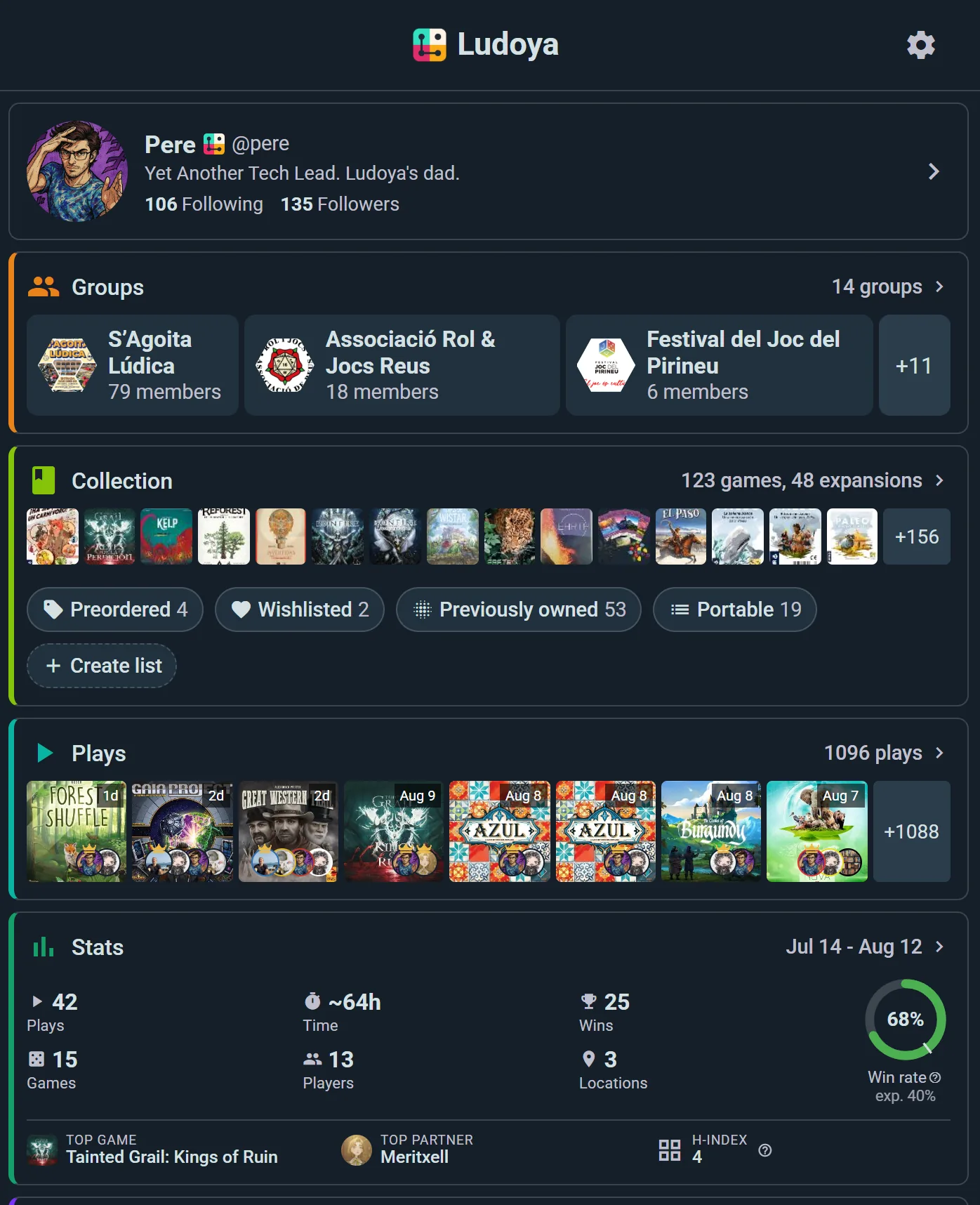
One screen that knows your gaming life
Your groups, your shelf, your last plays and this month’s stats — the dashboard is the hobby at a glance, and every card opens into the full machinery.
- Everything is connected. A play links its players, its game, its location and its event — nothing lives in isolation.
- Lists that mean something. Preordered, wishlisted, previously owned, portable — chips, not spreadsheets.
- Stats without asking. A 42-play month computes its own win rate; you just play.
At the table
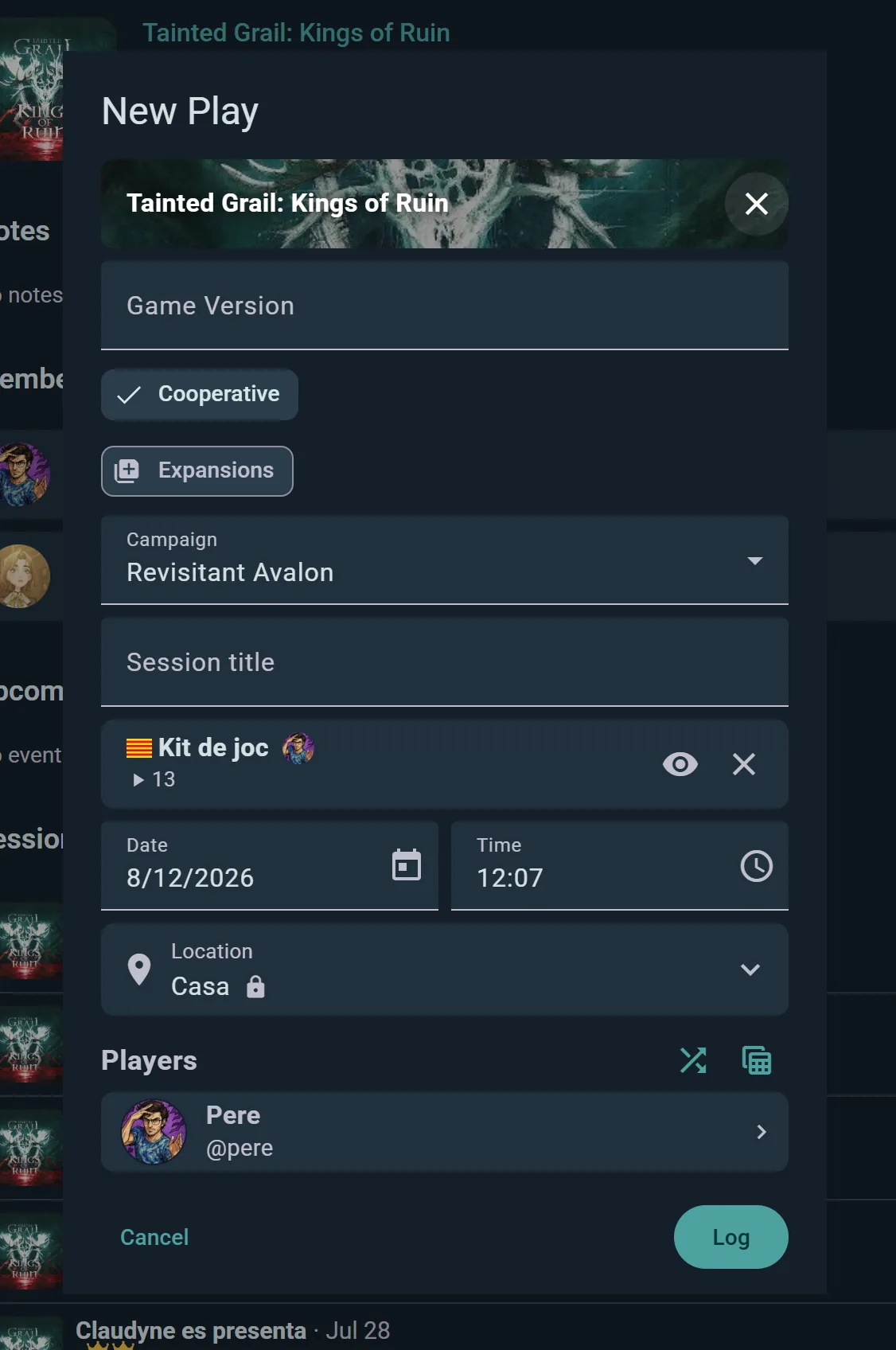
Log it in twenty seconds, argue rules with the AI
The play takes seconds to record; score sheets from game kits total themselves; and mid-game rules fights end with a photo of the board and an answer with page references.
- Plays are shared. Log once — it lands in every player’s history and stats.
- Kits carry the game. Setup checklists and self-totalling score sheets, built by the community.
- The rules referee. The AI assistant answers from the actual rulebook, pages cited.
Beyond your table
The community is built in, not bolted on
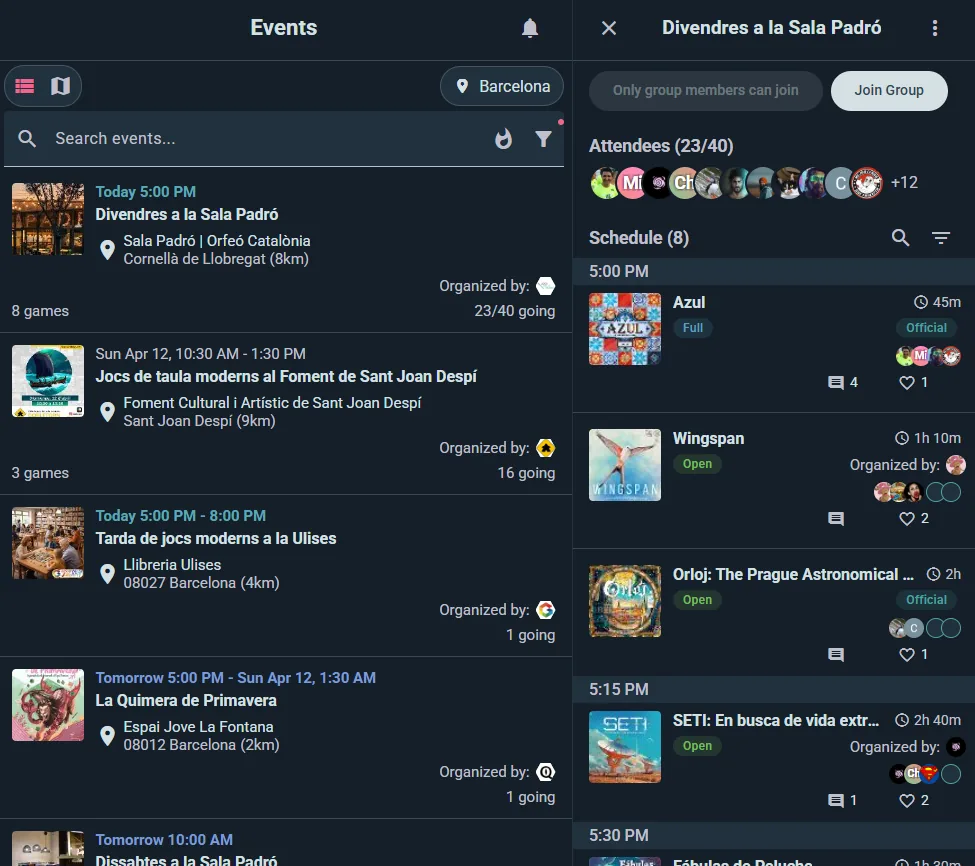
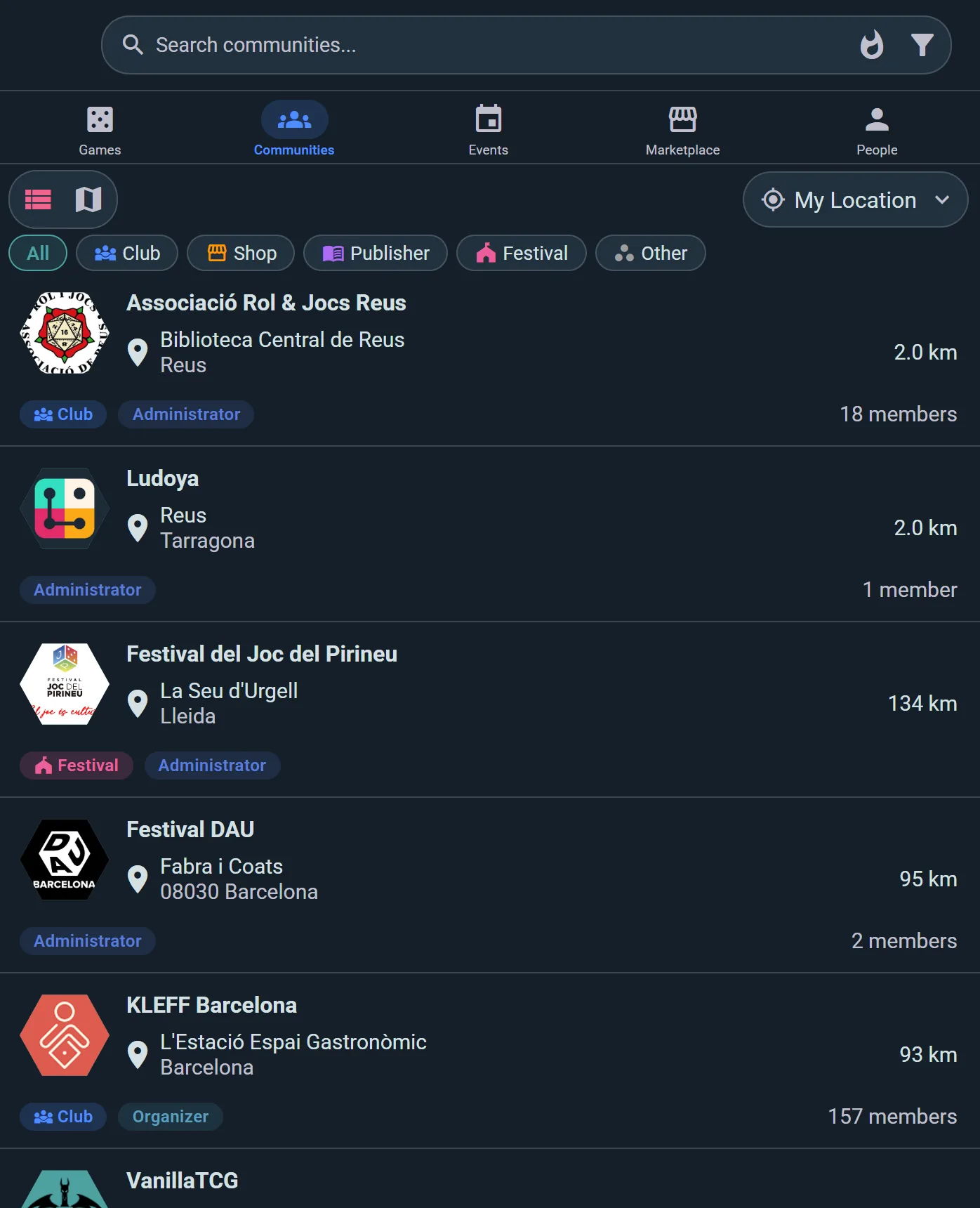
Players by distance, clubs with open nights, events on a map, groups with shared shelves — the social half is the same app, not a separate network.
- Find your people. Sorted by kilometres, not by algorithm.
- Join real events. RSVP to club nights; browse festivals; take an open seat at a taught table.
- Feeds that translate. Posts auto-translate, so the local scene and the global one read as one.
The shelf economy
Buy it well, sell it honestly, watch the price
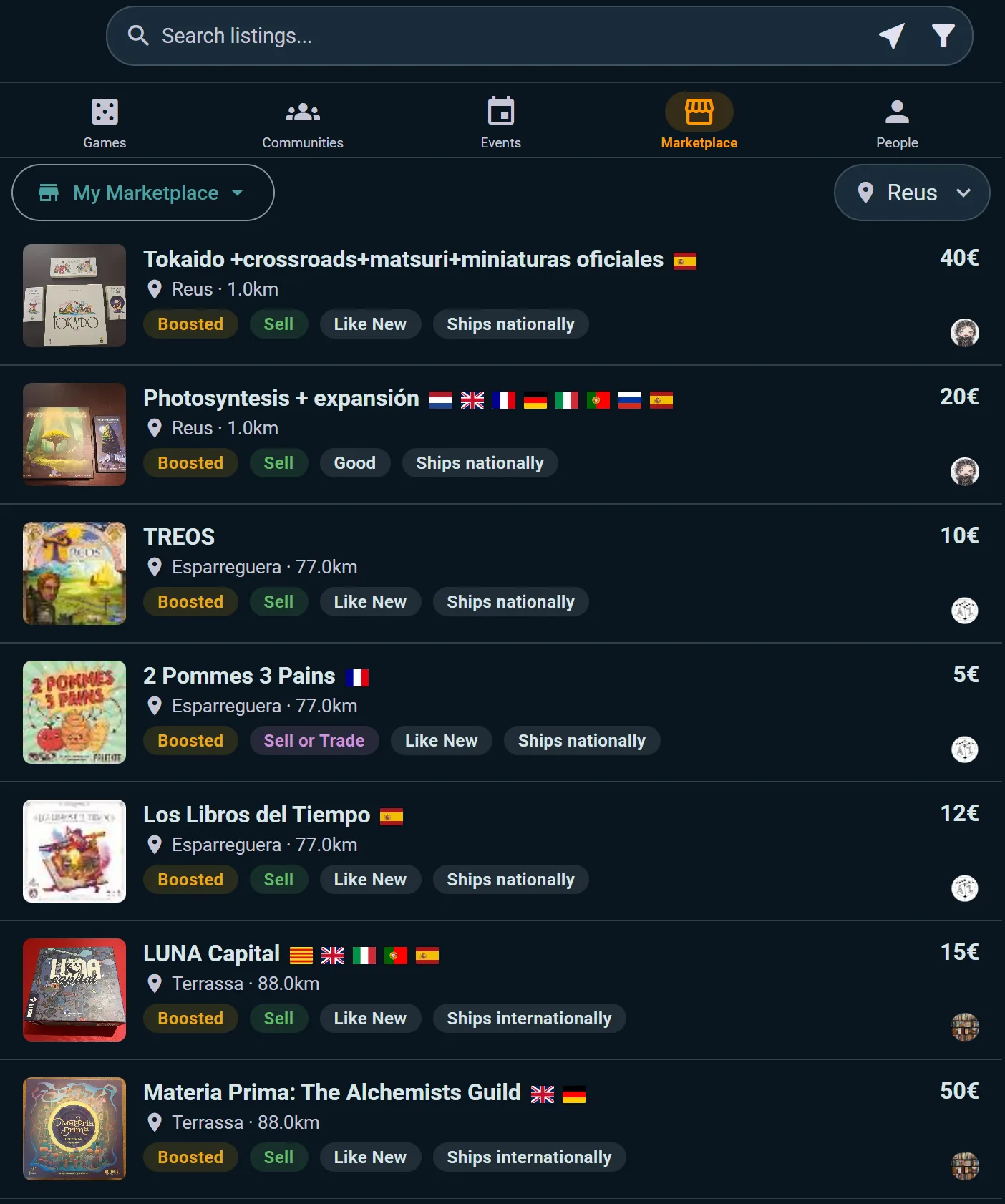
Shop prices compared on every game page, a second-hand marketplace with nearby players, and your own sell pile two taps from the collection.
- Price watch. Alerts when the game you want drops at a shop.
- Local marketplace. Buy, sell and trade with people close enough to hand the box over.
- Reputation included. Traders build a track record; chats carry the listing along.
And it keeps going
The rest of the toolbox
Every tile is a shipped feature with its own guide — no roadmap promises.
Statistics
Win rates, head-to-head rivalries, calendars and deep cuts.
Collection
Two-way BGG sync, filters, loans and lists.
Replay & badges
Monthly and yearly animated recaps, milestones as you hit them.
Campaigns
Gloomhaven to D&D: sessions, characters and world state.
Tournaments
Swiss, mixer and elimination with live standings.
Ticketing
Paid events with Stripe payouts and QR doors.
Integrations
BGG, Board Game Arena, Telegram, Discord, calendars.
Privacy controls
Per-play and per-surface visibility: anyone, friends, groups, nobody.
Offline sync
Everything important works without signal and syncs later.
Getting started
Three steps, and it is yours
Create an account
Email or Google — on iOS, Android or the web, same account everywhere.
Bring your history
Connect BGG or BGA and your collection and plays import in one sync. Starting fresh works too.
Play something
Log tonight’s game, RSVP to a night nearby, or just catalogue the shelf. Every path leads into the rest.
Honestly
Against the six-app stack
A tracker here, a collection there, a group chat, a forum, a ticket site and a spreadsheet. It works — the way juggling works.
| Six apps + spreadsheet | Ludoya | |
|---|---|---|
| Log a play | Separate app | |
| It updates your friends’ stats | — | |
| Collection with BGG sync | One-way | Two-way |
| Find players and clubs nearby | Forums | By distance |
| Game nights with RSVPs | Group chat | |
| Tournaments and paid events | Two more apps | |
| Works offline at the table | Spreadsheet only | |
| Accounts to maintain | Six | One |
What it costs
The app is free — plays, collection, stats, groups, events, discovery and the marketplace, without limits.
Paid plans exist where someone is running a business on top: the Player plan for power-user extras, Club for organisers, Business for venues and conventions. All prices are public on the pricing page.
One app. The whole hobby.
iOS, Android and web, one free account, online or off.
Frequently Asked Questions
Is it really one app for all of that?
Yes — plays, collection, stats, events, groups, discovery, marketplace, tournaments and ticketing share one account and one data model, which is why a play can link its game, players, location and event.
iOS, Android or web?
All three, same account. The apps are at home at the table; the web version does everything for the sofa and the desk.
I already live on BGG. Why switch?
You do not have to switch — the two-way sync keeps BGG current while you use Ludoya day to day. BGG stays the encyclopedia; this is where the playing happens.
What happens with no signal at the venue?
Logging and collection edits work offline and sync when you are back. The cellar full of games is a supported environment.
How private is my data?
Visibility is per surface and per play: profile, collection, stats and each individual play can be open to anyone, friends, group-mates or nobody. Your data is not sold.
What does the free plan actually include?
Everything above: logging, collection with BGG sync, stats, events, groups, discovery and the marketplace, without limits. Paid plans add power-user and organiser tooling.
Where do I start if I am overwhelmed?
Log one play — the one you finished most recently. The stats, the shelf and the rest of the app grow naturally from there. The First Steps guide walks the whole path.