
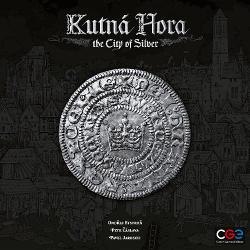
2023 · Medieval
Kutná Hora: The City of Silver
Players act as rival guild leaders developing a 14th-century mining city around a newly discovered silver deposit. Each round they play double-sided action cards to mine ore, smelt silver, buy land, obtain permits, construct buildings for their guilds, and advance shared projects such as a cathedral. The game's economy is dynamic: supply and demand shift with each action, so production, prices, and available resources change in response to players' choices. Asymmetrical guild abilities alter available strategies and create interaction as players expand mines, build infrastructure on a shared board, and balance personal goals with the city's overall prosperity.
- Players
- 2–4 best 4
- Playing time
- 60–120 min
- Age
- 13+
- Complexity
- 3.3 / 5
About the game
- Publisher





Expansions
See them in Ludoya
Photos from Ludoya tables
All photos in Ludoya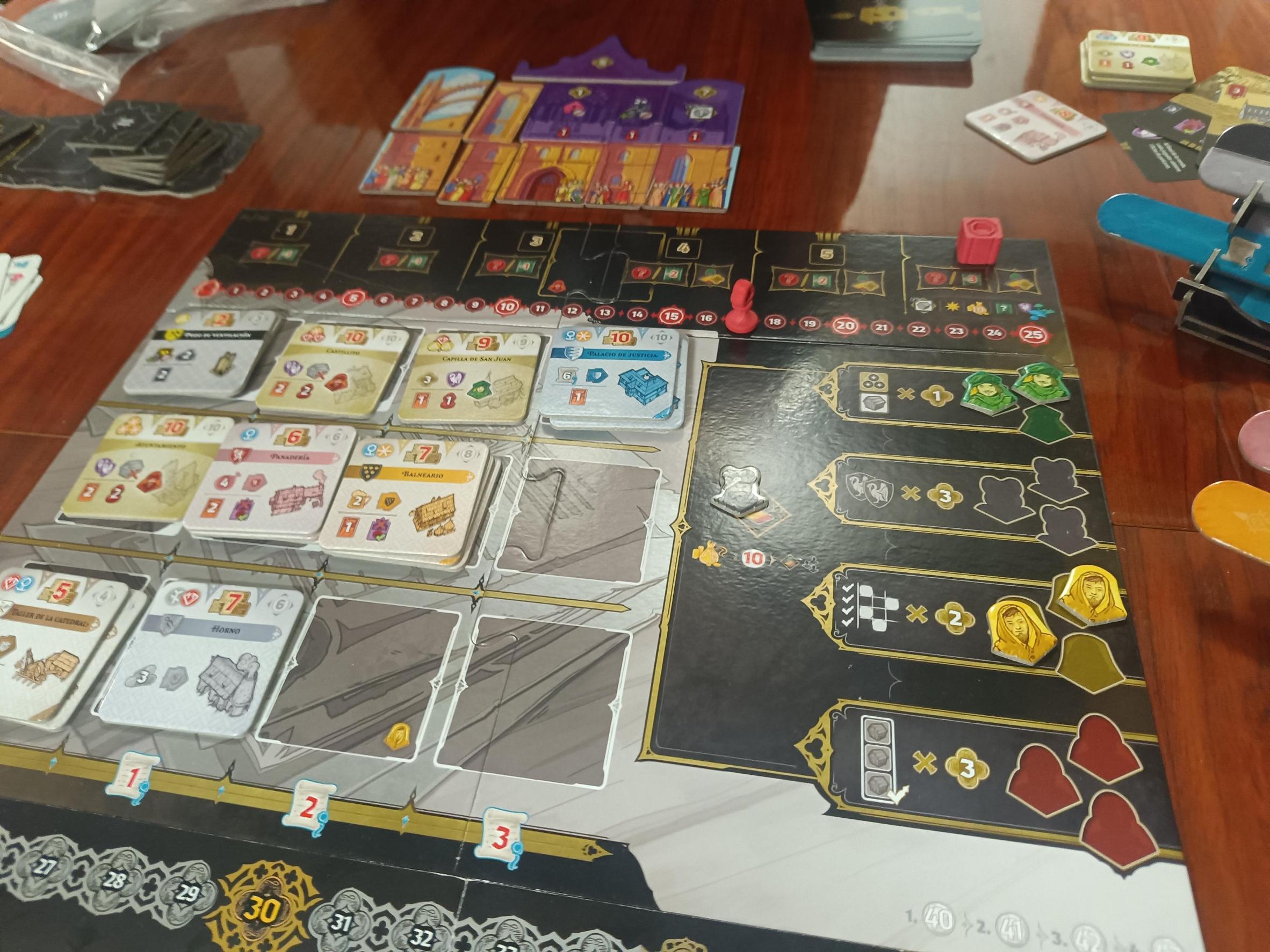
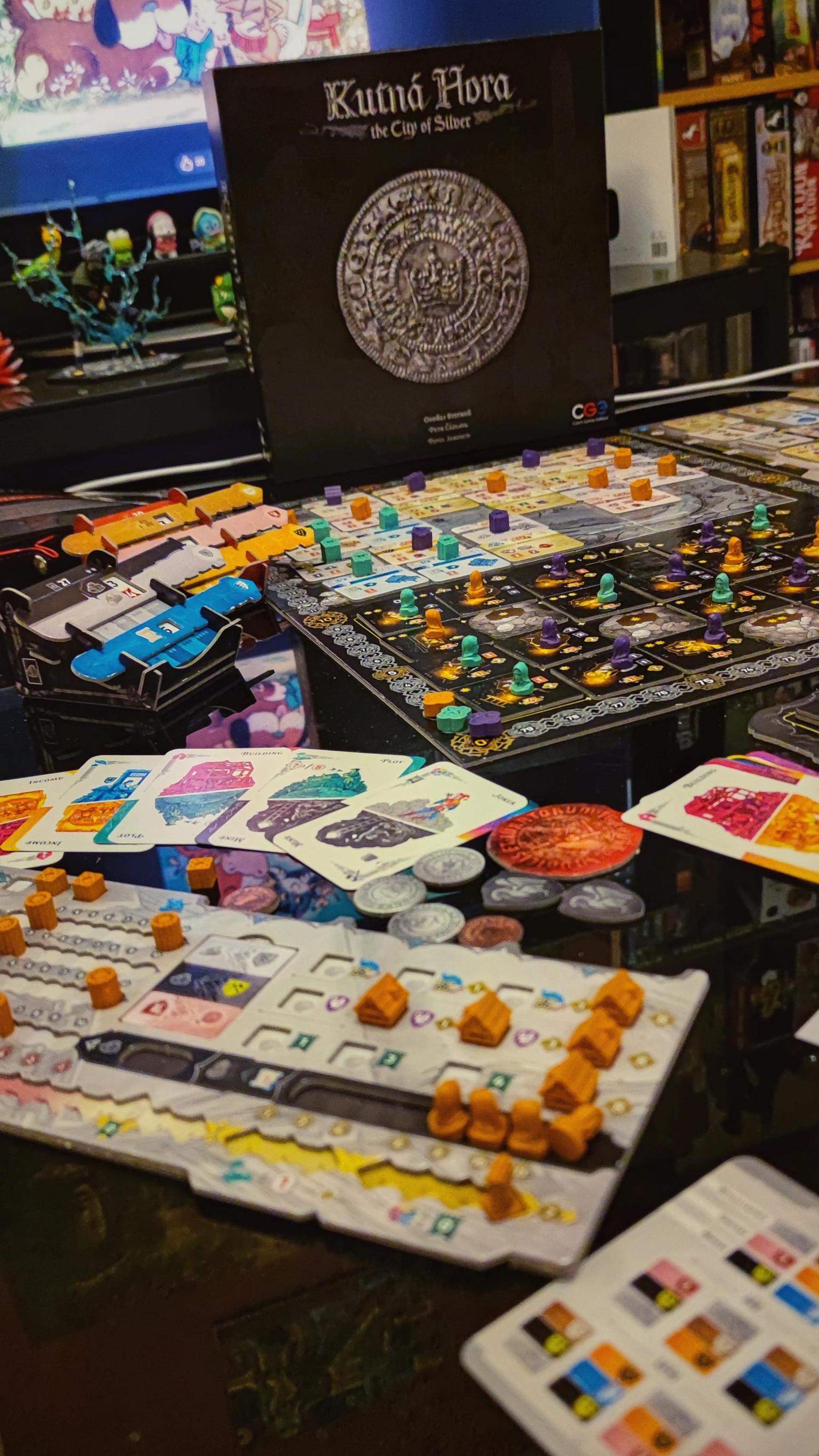
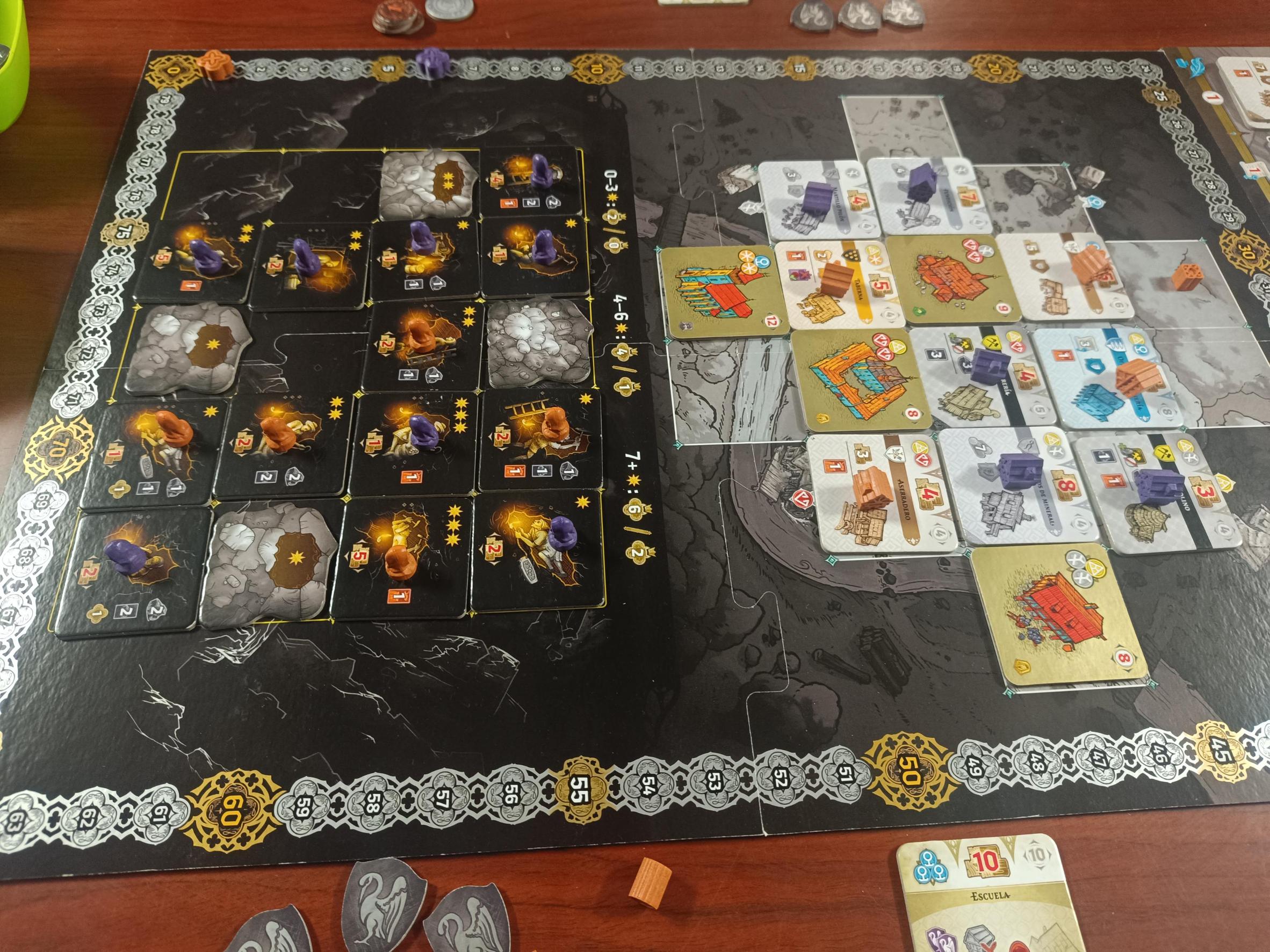
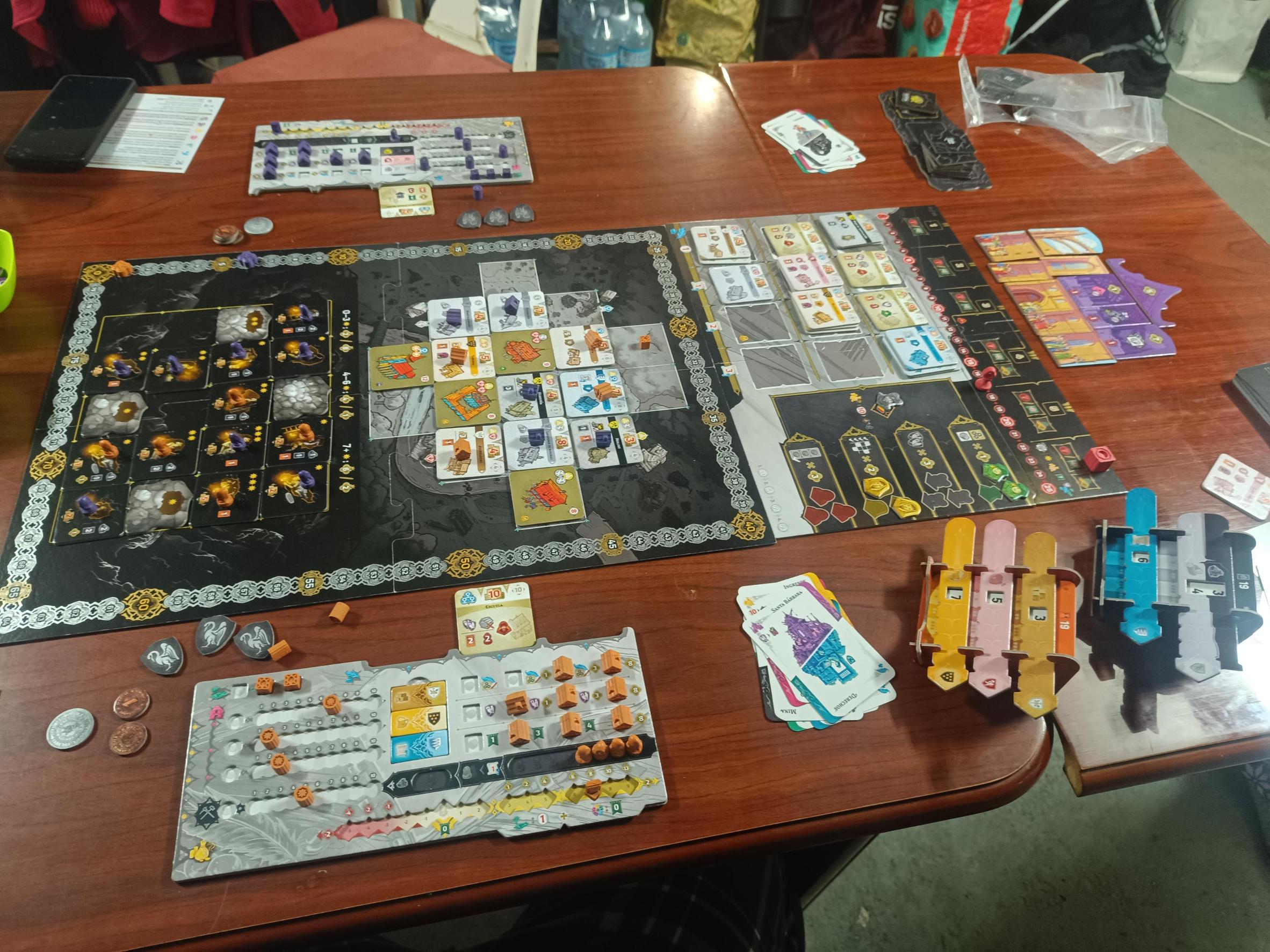
Where to buy it
Shop prices and second-hand copies, checked every day.
On Ludoya's tables
Full stats in Ludoya- 114
- Plays logged
- 178
- Players
- 2h 2m
- Average play
- 69
- In collections
- 20
- On wishlists
- 2
- Pre-ordered
7.8/10
from 26 Ludoya reviews
Vardak6.9 Materials and edition are lovely. Market and price movements are key in the game and makes everything tricky. Money becomes crucial, even more important than the rest of the mechanisms.

Rules questions
Answered from the rulebook by Ludoya's rules assistant.
How many action cards do I play each turn — and can I use both sides of a card in the same round?
On your turn you choose one action card and take one of its two printed actions; once played the card cannot be used again that round. You play 2 cards on your first two turns (so 2 actions each) and only 1 card on your final turn. (page 9)
How does the Joker card work — does it cost anything to use?
The Joker lets you take any one other action, but using it costs you 1 reputation (the penalty is waived if your reputation is 6 or higher). (page 14)
When I take the Mine action where am I allowed to place a mine tile and how do I pay the cost?
You must place on a mine entrance, beside an existing mine, or below an existing mine (never on rock or an existing mine); entrance builds cost 2 wood and other squares use the cost printed on the adjacent/above mine, and if multiple costs apply you pay the highest. (page 10)
Do I have to get Rights before I can build a building in town?
Yes — you must take a building tile via the Rights action (only top tiles of stacks; guild tiles only if you have that guild) and pay the permit/groschen cost, then store the tile in one of your three slots on your board before you can build it. If your slots are full you cannot take a Rights action. (page 11)
When I perform the Building action how do I pay and do guild house effects trigger?
Choose a claimed plot, return the plot marker, place the tile and pay wood cost as (tile wood × current wood price in groschen), then resolve the tile's effects and flip it face-down; if it’s a guild building place a house and remove the leftmost house from that guild row to trigger its house effect, while public buildings give no house effect. (page 12)
What happens at the end of the round about taxes — do my claimed plots change how much I pay?
At round end each player must either pay the tax shown for that round or take the reputation loss instead; having more than one plot in Kutná Hora increases your tax by +3 groschen for two plots or +8 groschen for three (you don't pay the plot surcharge if you choose the reputation loss). (page 16)











Free, on web, Android and iOS
Play Kutná Hora: The City of Silver with Ludoya
- Keep it in your collectionTrack your copy and its expansions, lend it to friends, or put it on your wishlist and get told when the price drops.Add it to your collection
- Log every playScores, winners, timers and photos, then your stats: win rate, favourite player count, best score.Log a play
- Settle rules questionsAsk anything about the rules and get an answer from the rulebook, with the page to check it on.Ask the rules assistant
- Find people to play it withClubs, game nights and events near you that bring this game to the table.See events
Game facts (players, playing time, age, credits) from BoardGameGeek.