

2025 · Industry / Manufacturing
Luthier
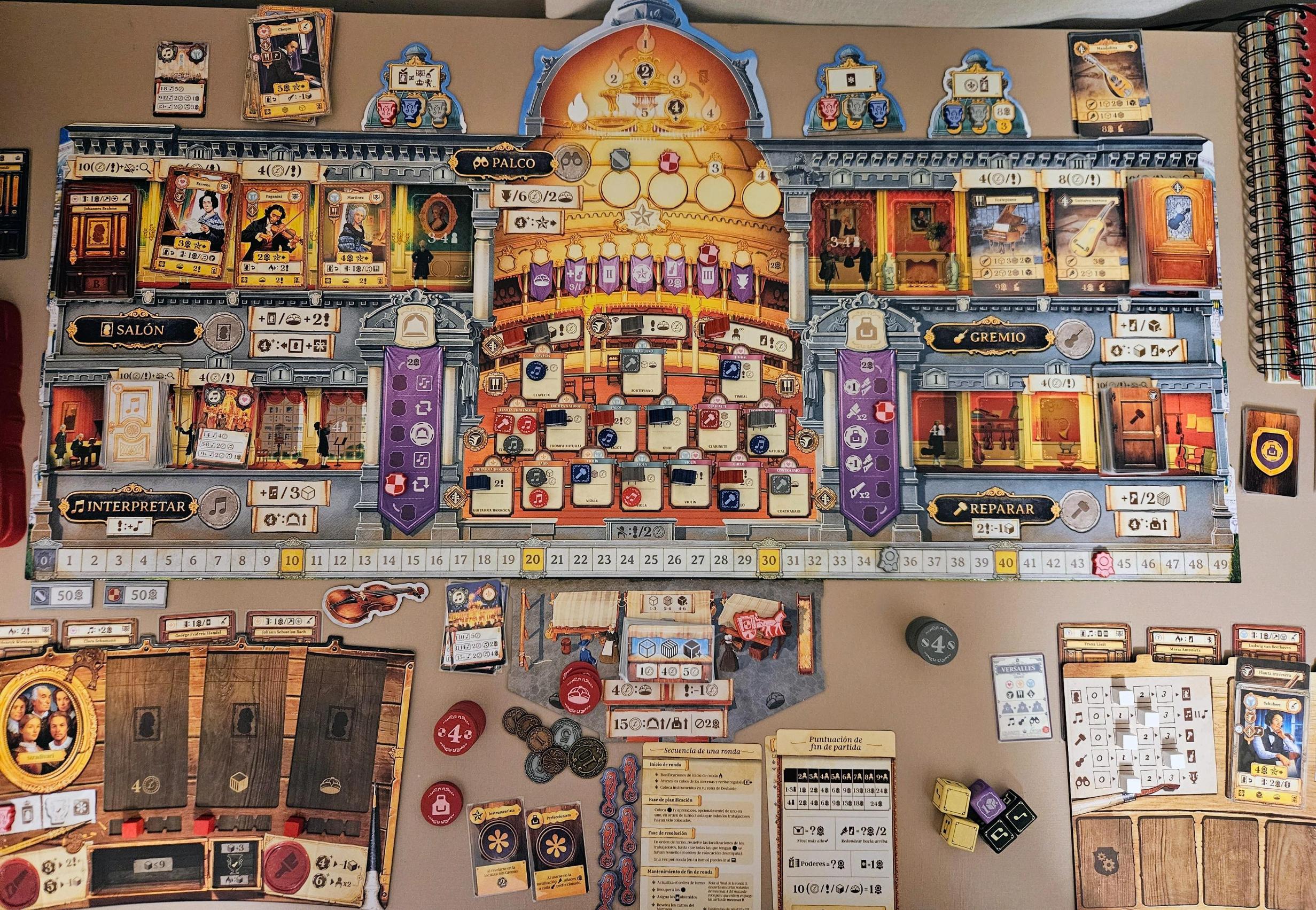
Players run a workshop crafting and repairing classical musical instruments for historical patrons during the height of Western classical music. Gameplay combines hidden bidding with worker placement as players collect resources, assign workers, and bid secretly to secure actions and commissions. Players develop skills across multiple tracks, unlock specialized worker abilities, expand the workshop, train apprentices, and pursue performances or reputation to score points. Multiple strategic paths—instrument building and repair, patron relations, apprentice development, and workshop upgrades—shape each player’s approach and final scoring.
- Players
- 1–4 best 3
- Playing time
- 90–150 min
- Age
- 14+
- Complexity
- 3.8 / 5
About the game
- Design
- Publisher




Expansions
See them in Ludoya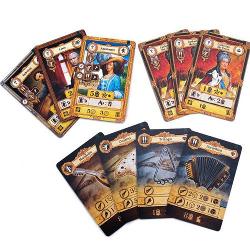
Photos from Ludoya tables
All photos in Ludoya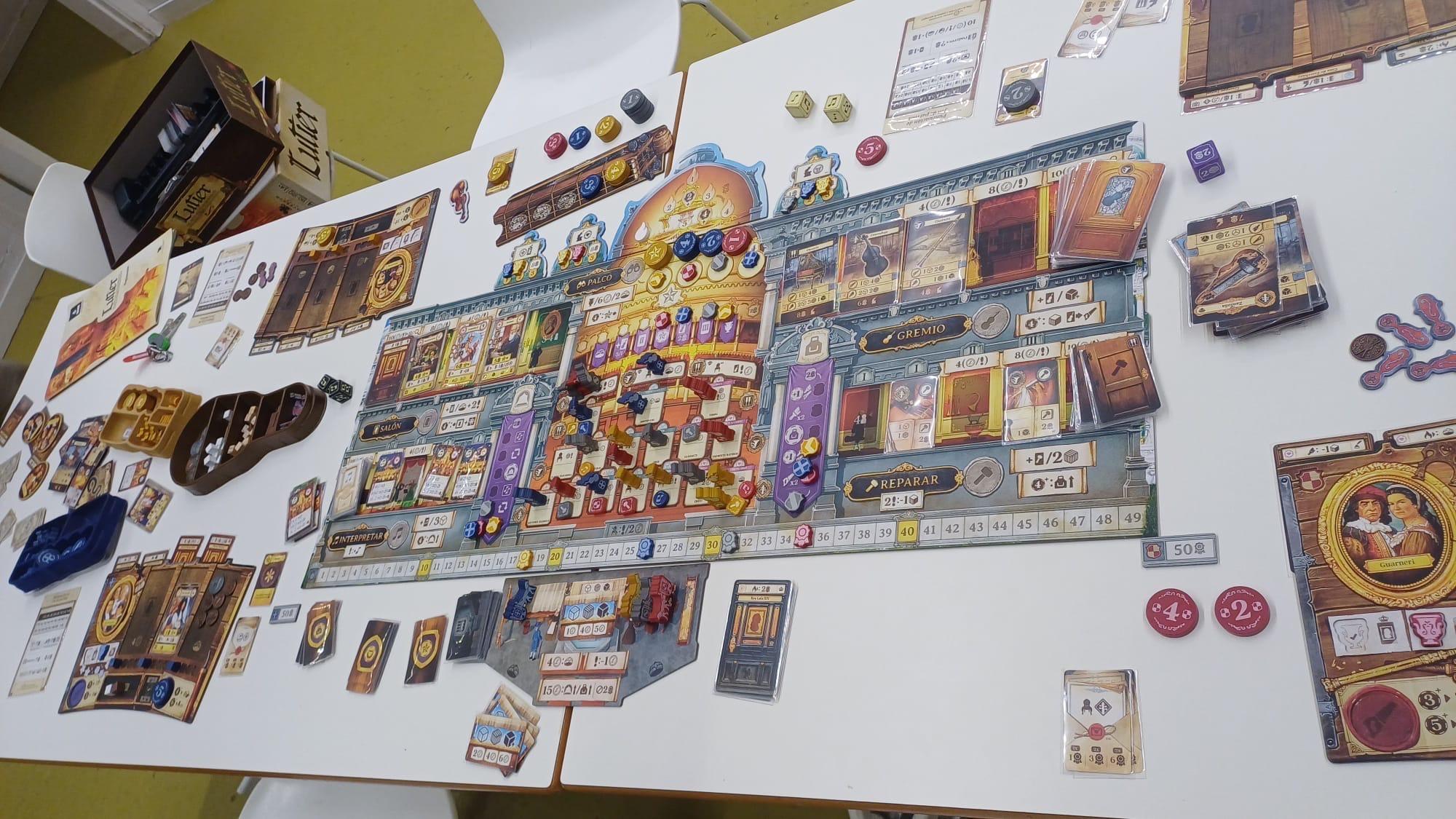
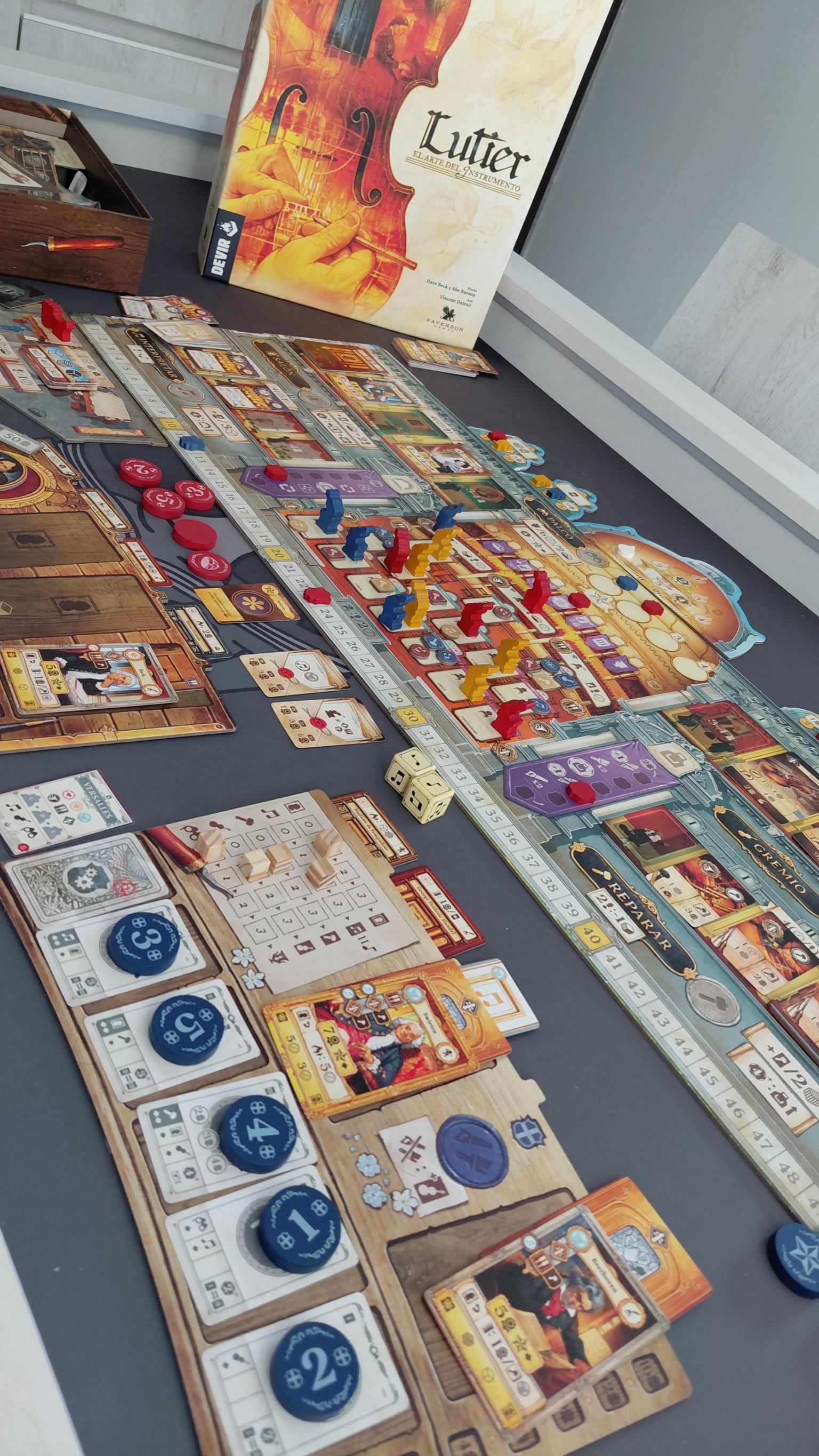
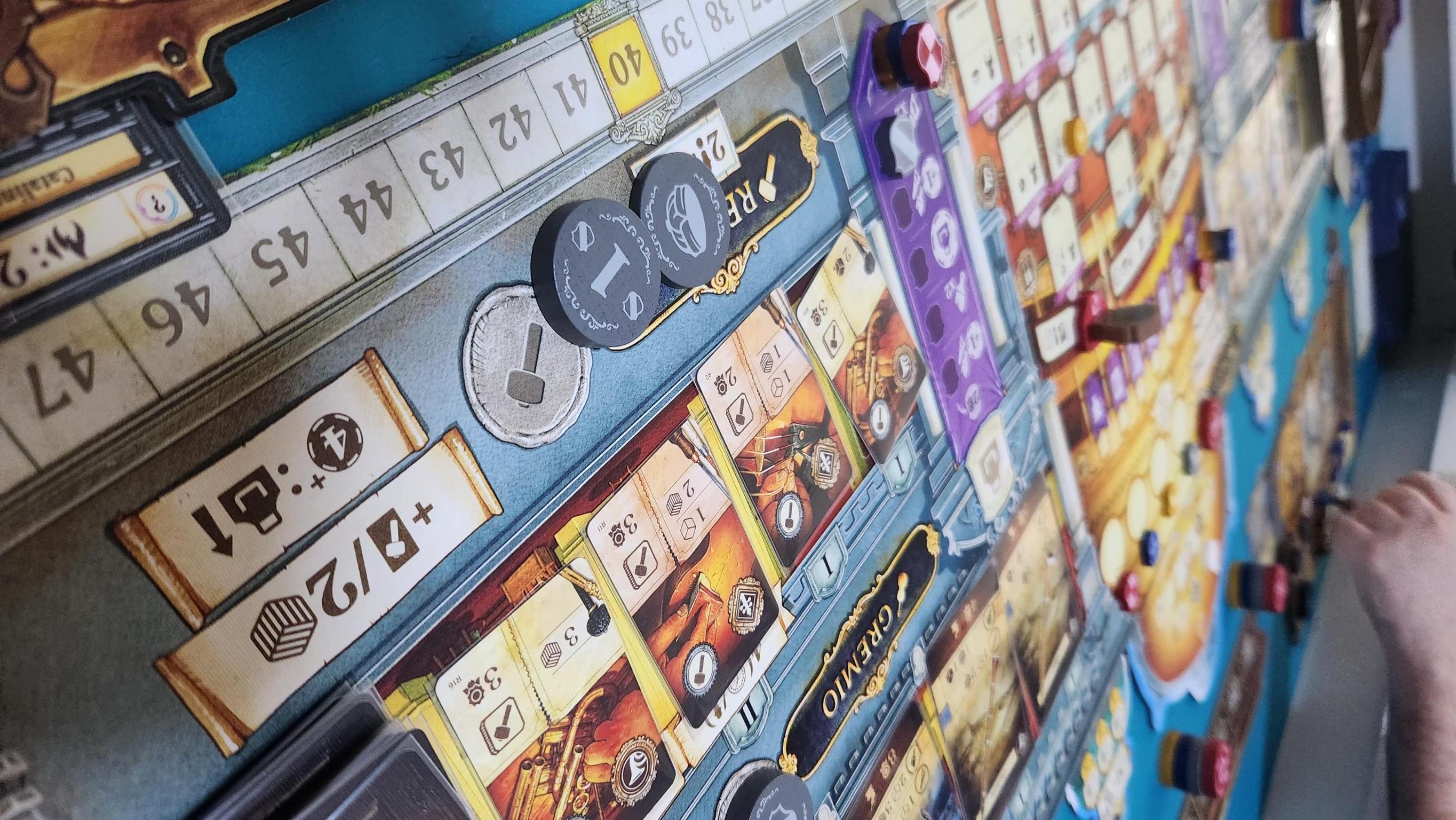
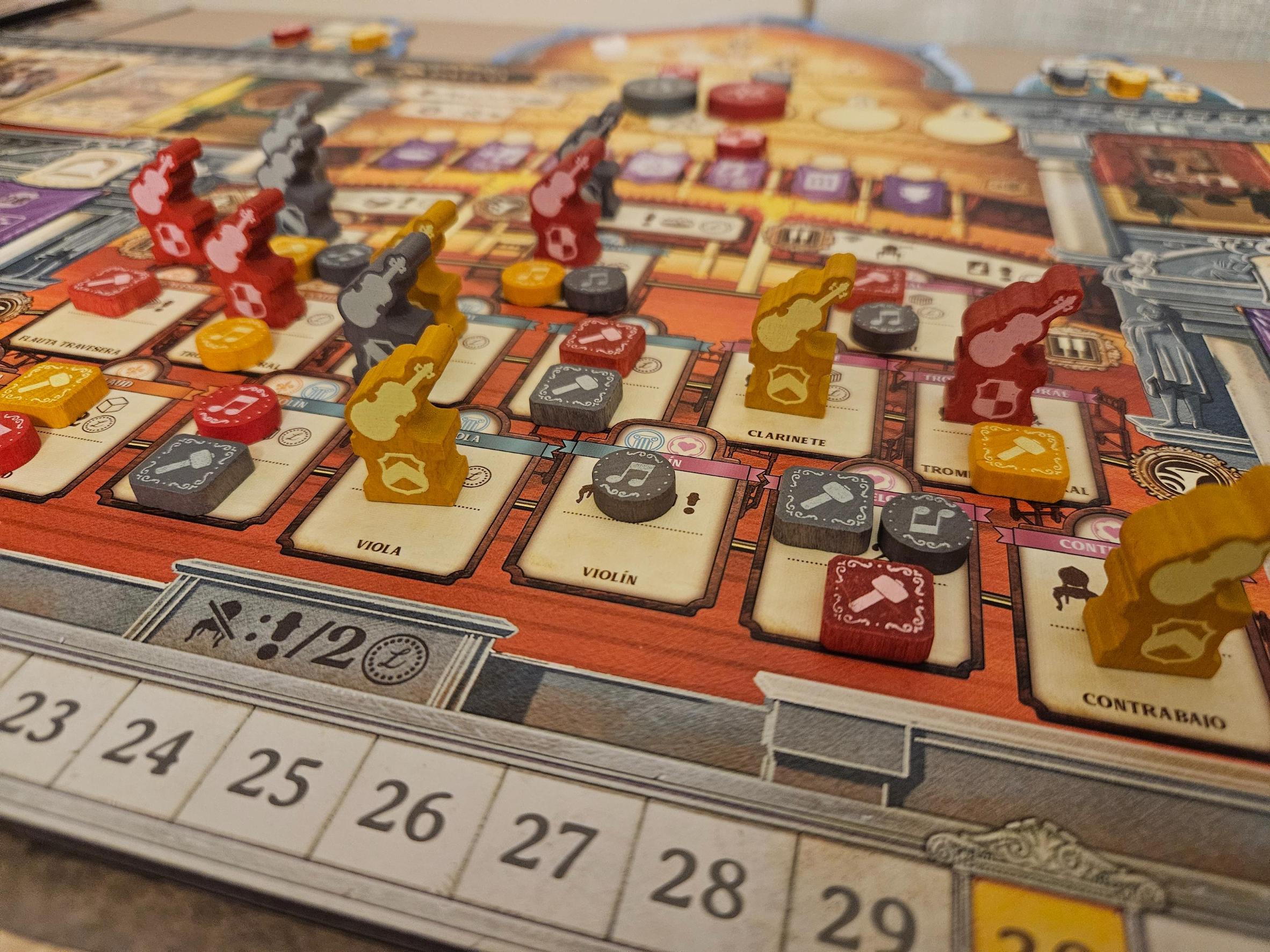
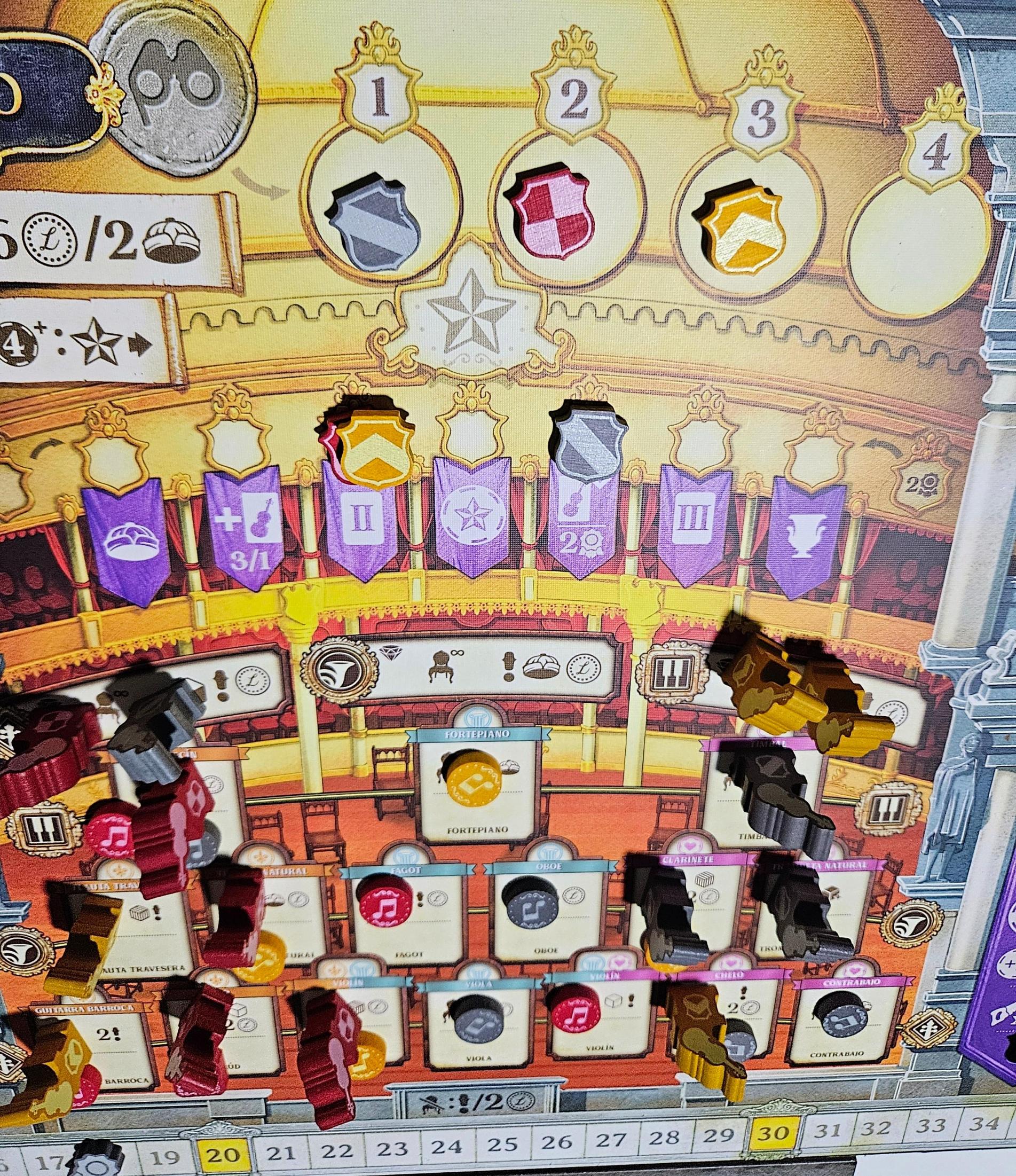
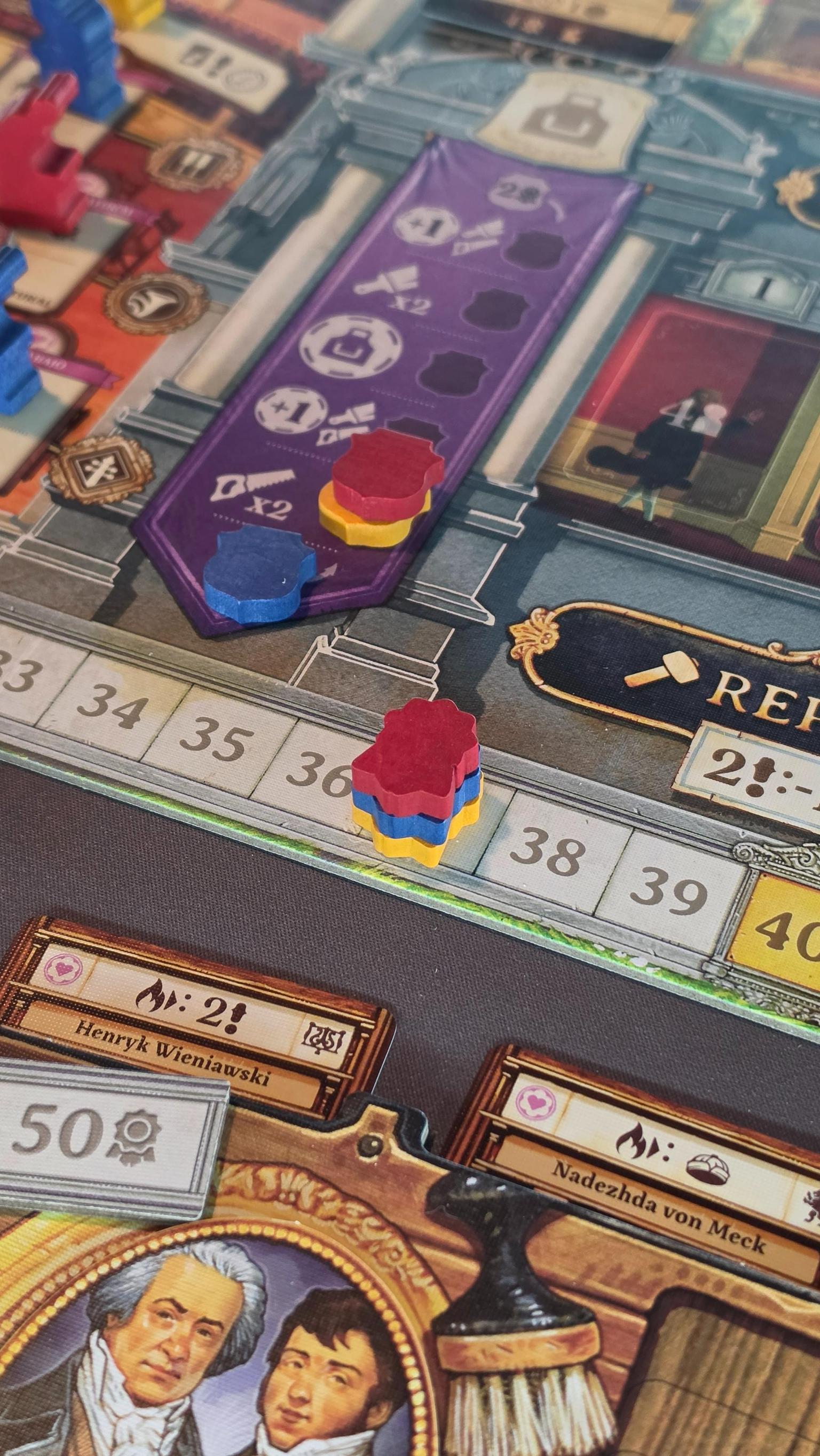
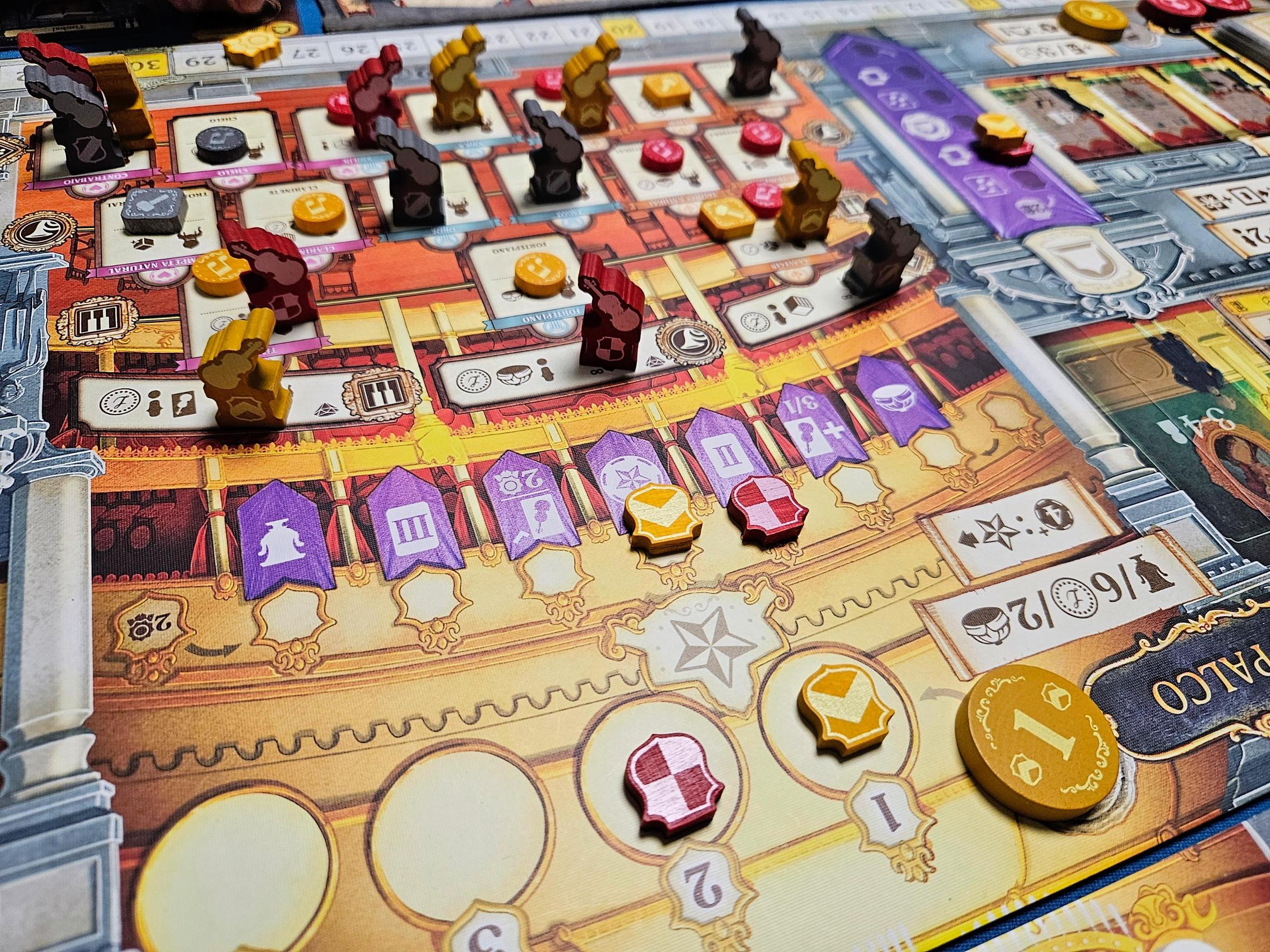
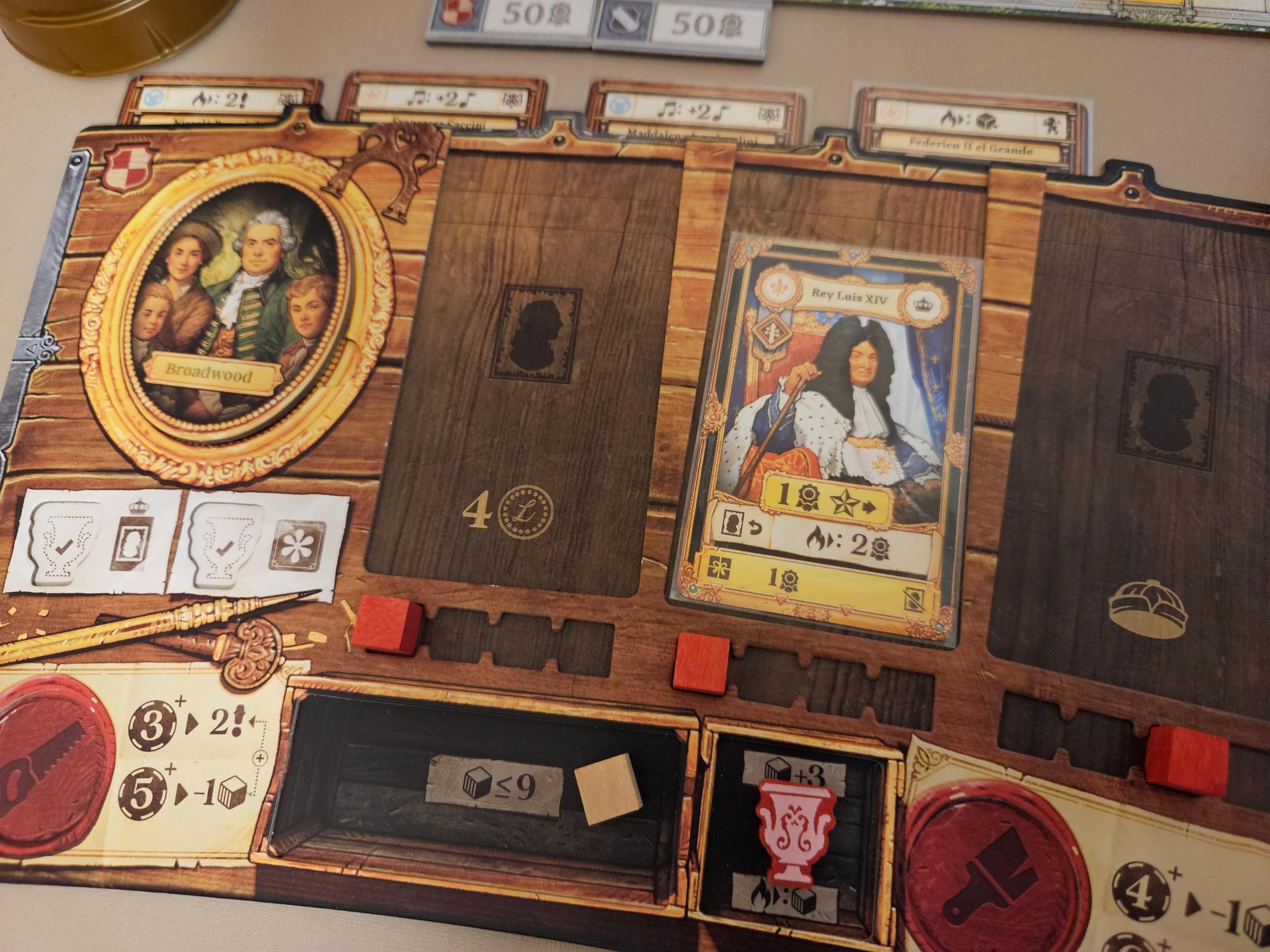
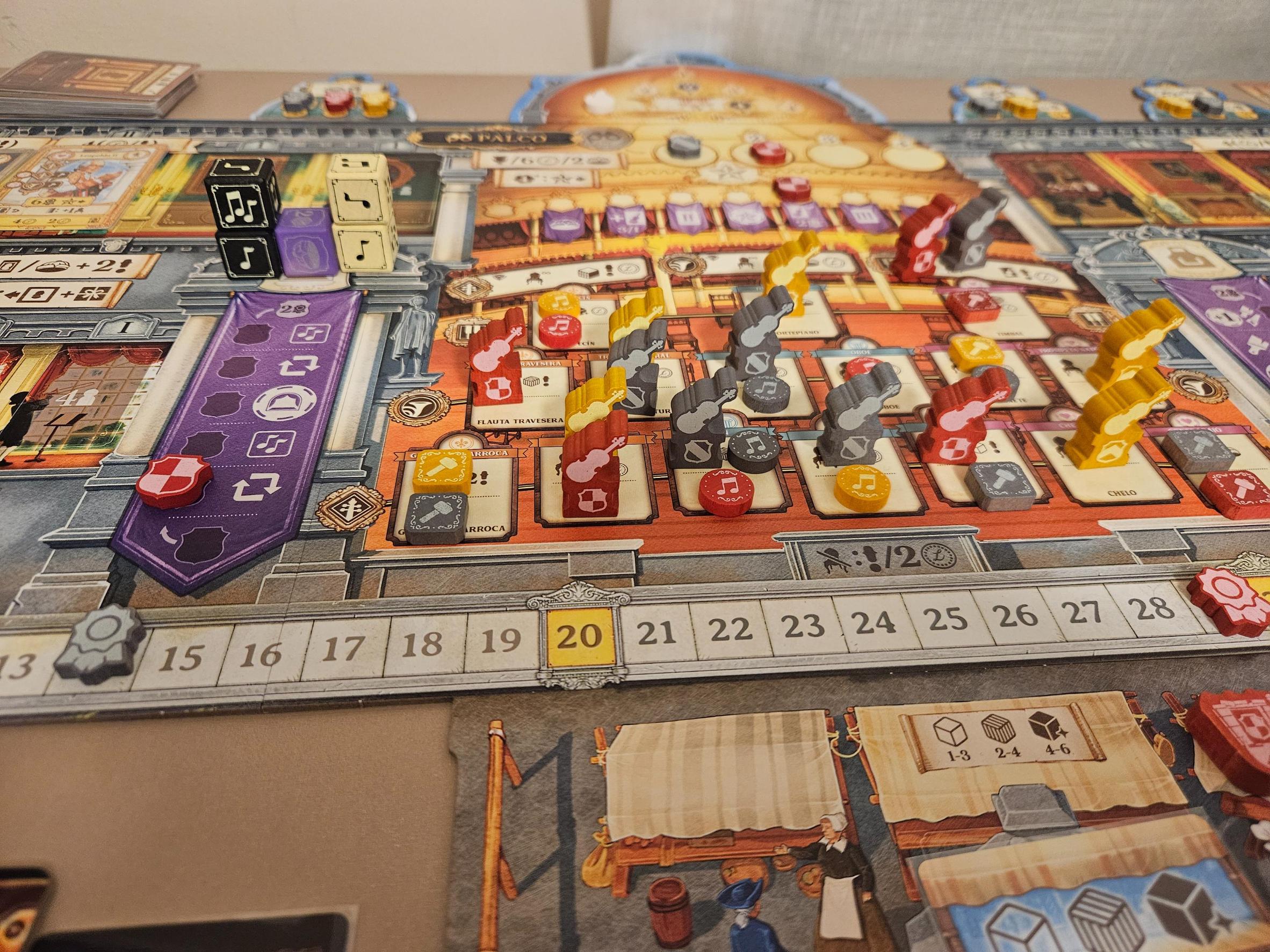
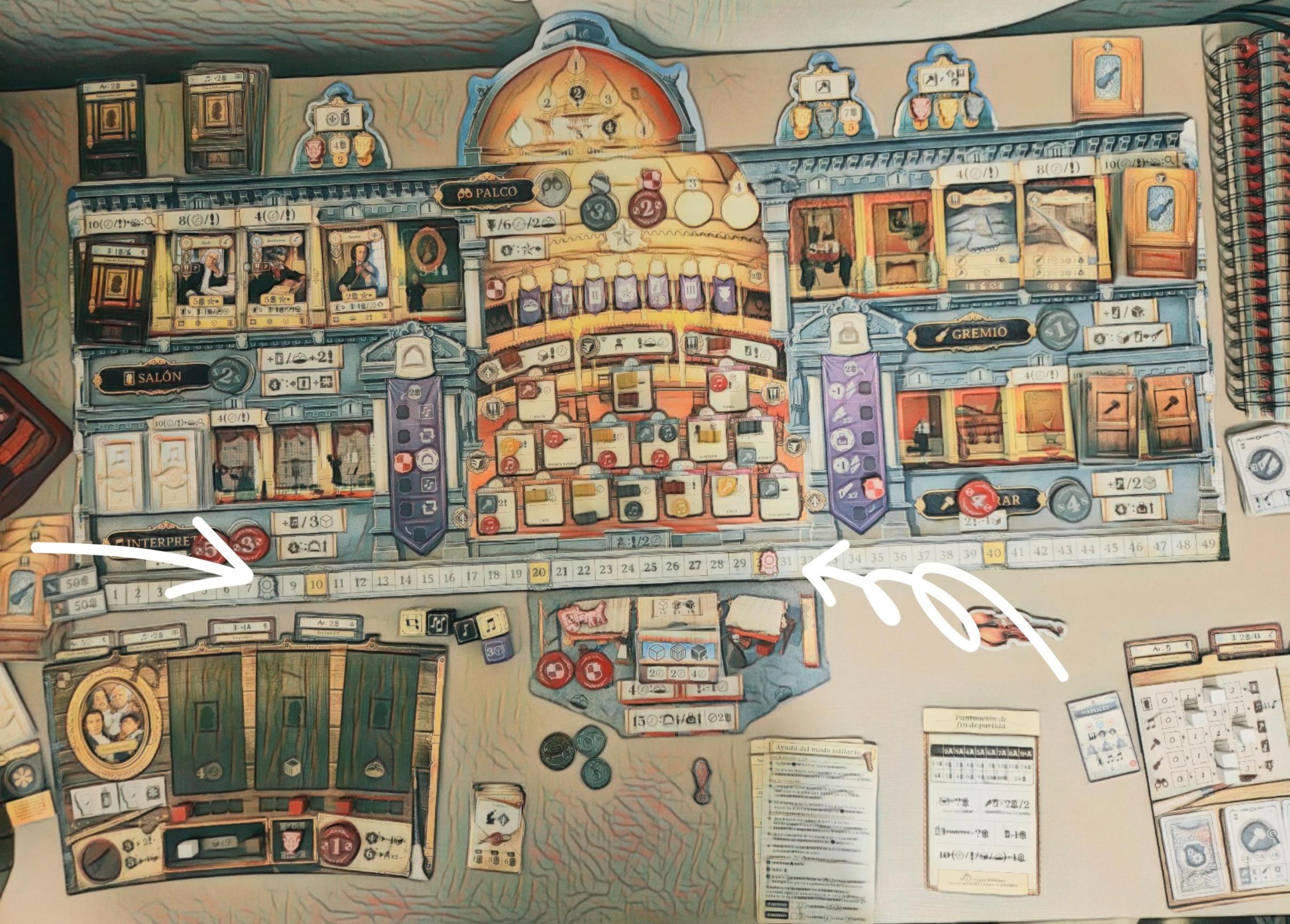
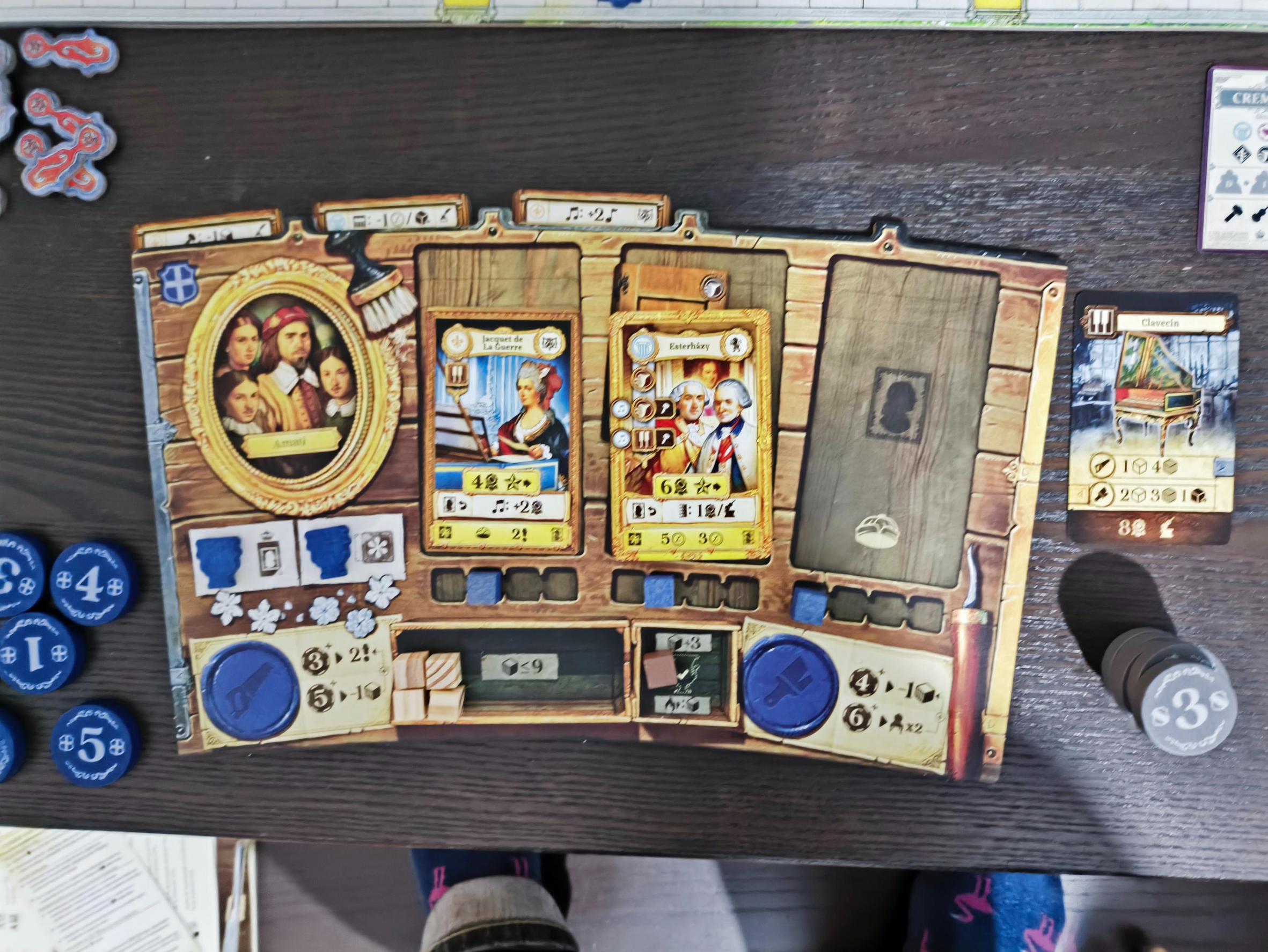
Where to buy it
Shop prices and second-hand copies, checked every day.
On Ludoya's tables
Full stats in Ludoya- 158
- Plays logged
- 229
- Players
- 2h 46m
- Average play
- 69
- In collections
- 22
- On wishlists
- 3
- Pre-ordered
8.3/10
from 24 Ludoya reviews
israel diaz8.3 La programación de acciones junto a la colocación de trabajadores le sienta genial al juego. El tema está un poco pegadillo, pero lo salvan unas ilustraciones geniales y un tablero colorido pero que resulta agradable. La iconografía tras un par de turnos la pillas al vuelo.

Rules questions
Answered from the rulebook by Ludoya's rules assistant.
Can I place more than one worker on the same location and do they all get to take the action?
Yes — you may stack multiple worker chips on a location and each worker acts independently in the Resolution Phase, so you can perform the location’s action as many times as you have workers there (resolved in priority order). (pp. 12–13)
How is priority decided when several workers are at the same location?
Priority is determined by each worker’s skill at that location (including apprentices); the highest-skill worker goes first, and ties are broken by the order the workers were placed. Multiple workers you own are treated individually under these rules. (p. 13)
If I take a patron, do I get its placement bonus right away, and how does patience/gifts work?
Taking a patron immediately grants the placement bonus shown on your workbench, and at the Start of Round you advance each patron’s patience cube and claim the gift above its new position; if the patron’s patience reaches its end you discard the patron and lose 3 prestige per unsatisfied requirement. (pp. 8, 11, 16)
When I Perform, can I spend Inspiration to improve my result and when can I reroll?
You may spend any number of Inspiration tokens to increase your performance result by +1 per token after rolling (you decide after rolling/rerolling), and additional rerolls or die upgrades are provided by steps on the Performance Skill Track. (pp. 18–19)
If I finish an instrument can I give it to a patron to satisfy their requirement, and what happens to the card?
Yes — you may give a finished instrument to an active patron to satisfy a matching requirement, tuck the instrument card under the patron (which resets their patience), and otherwise finished instruments are discarded if not given to a patron; finishing also places your instrument token in the Orchestra and grants prestige. (pp. 23–24)
If someone activates a bench, do other players’ bench workers activate too?
No — when a roughing or finishing bench location is activated, only the active player resolves that bench; other players’ bench workers are not activated by that action. (p. 12)











People who own it also own








Free, on web, Android and iOS
Play Luthier with Ludoya
- Keep it in your collectionTrack your copy and its expansions, lend it to friends, or put it on your wishlist and get told when the price drops.Add it to your collection
- Log every playScores, winners, timers and photos, then your stats: win rate, favourite player count, best score.Log a play
- Settle rules questionsAsk anything about the rules and get an answer from the rulebook, with the page to check it on.Ask the rules assistant
- Find people to play it withClubs, game nights and events near you that bring this game to the table.See events
Game facts (players, playing time, age, credits) from BoardGameGeek.