
2020 · Industry / Manufacturing
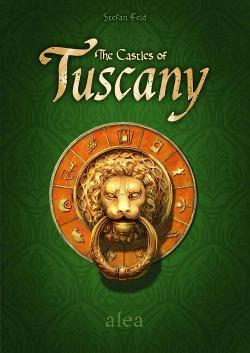
The Castles of Tuscany
Players take the role of regional lords in 15th-century Tuscany, developing a map of towns, villages, monasteries and resources across three rounds. Each round, cards determine which tiles can be placed; players use those cards to expand their region, build infrastructure, extract marble, and deliver goods to score points. Strategic placement and timing of tile plays create combos and new opportunities as the game progresses. Play ends after three rounds and the player with the most victory points wins. Note that the English rules have some translation and design quirks; consulting the community FAQ is recommended for first-time players.
- Players
- 2–4 best 2
- Playing time
- 45–60 min
- Age
- 10+
- Complexity
- 2.2 / 5
About the game
- Design


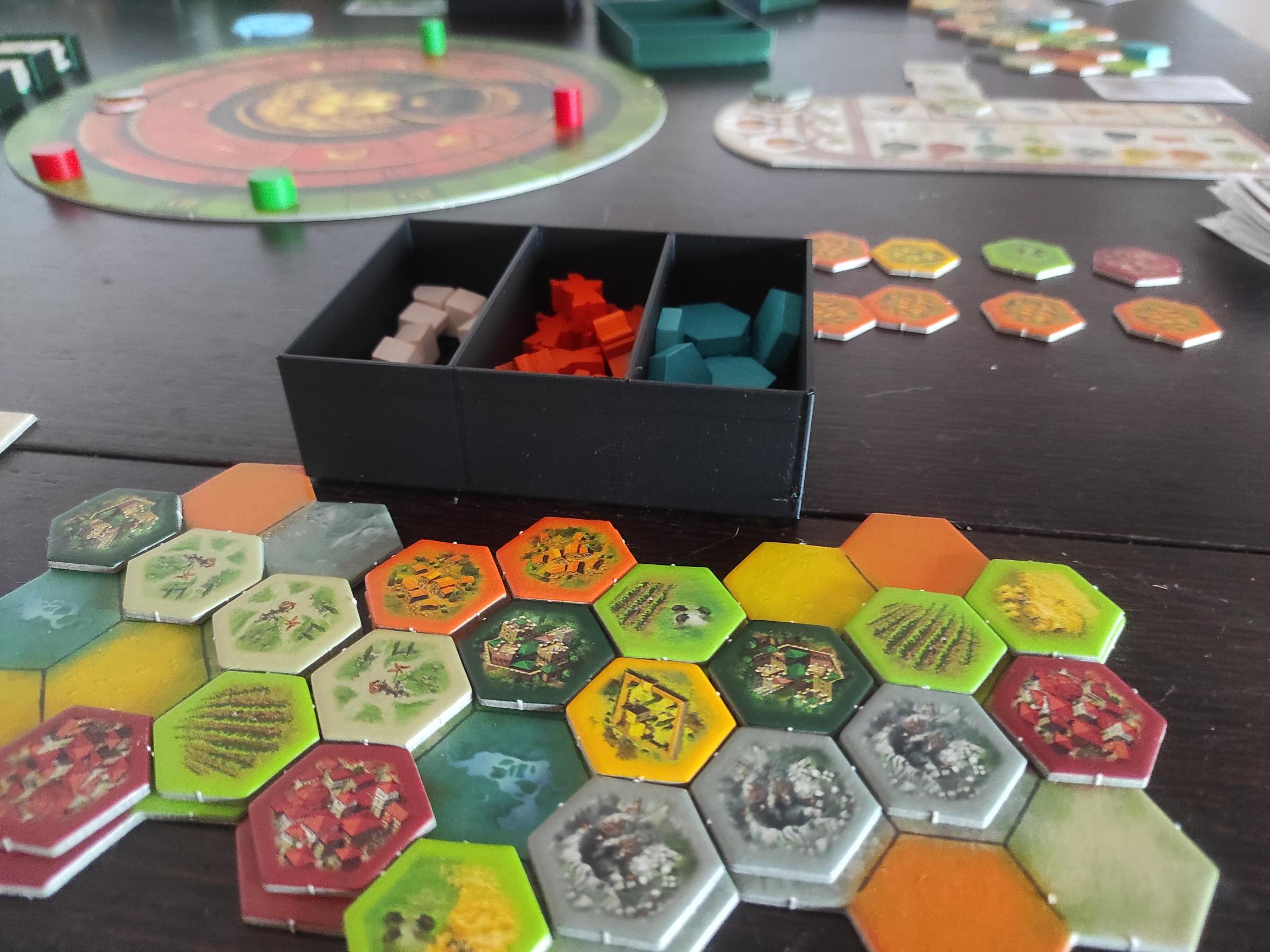
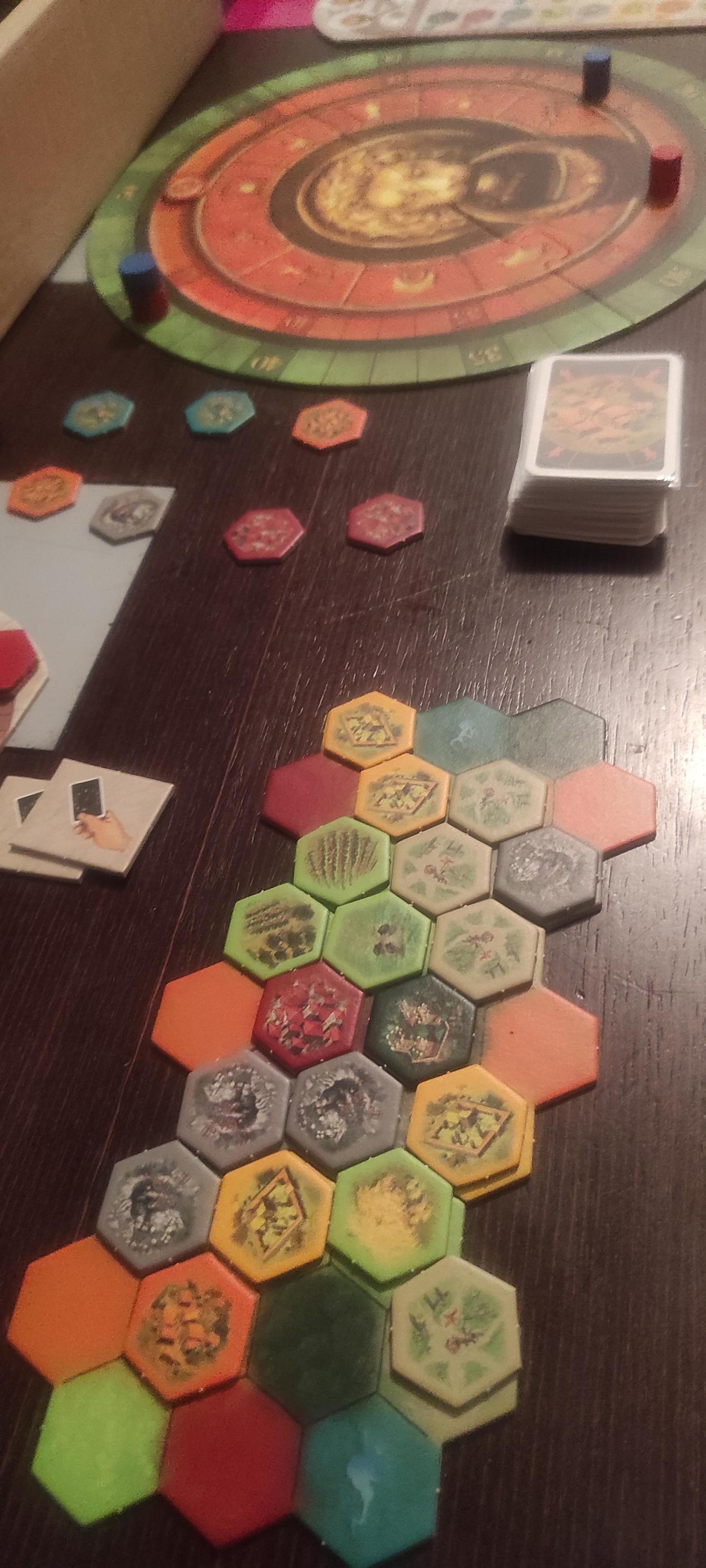
Photos from Ludoya tables
All photos in Ludoya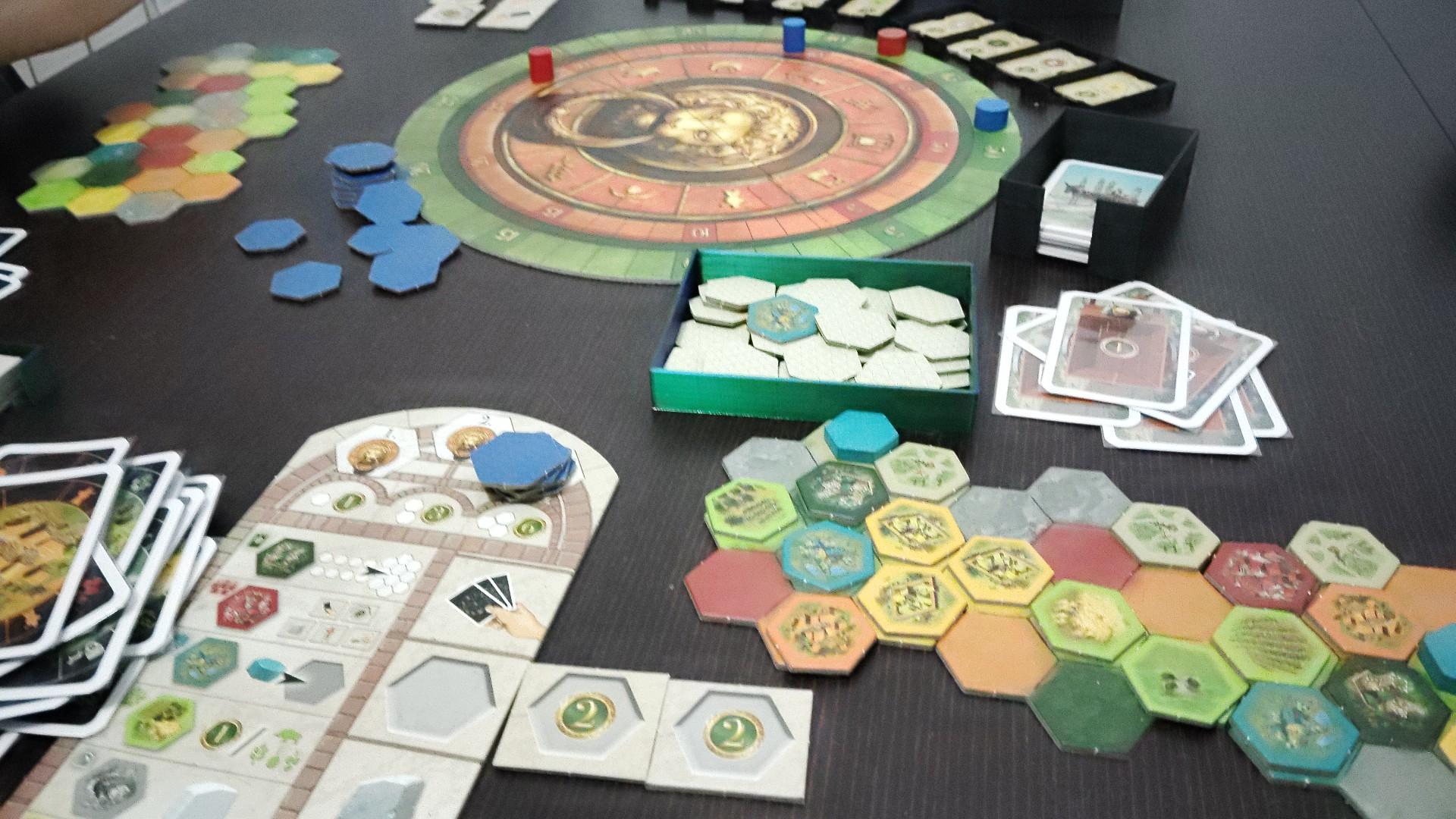
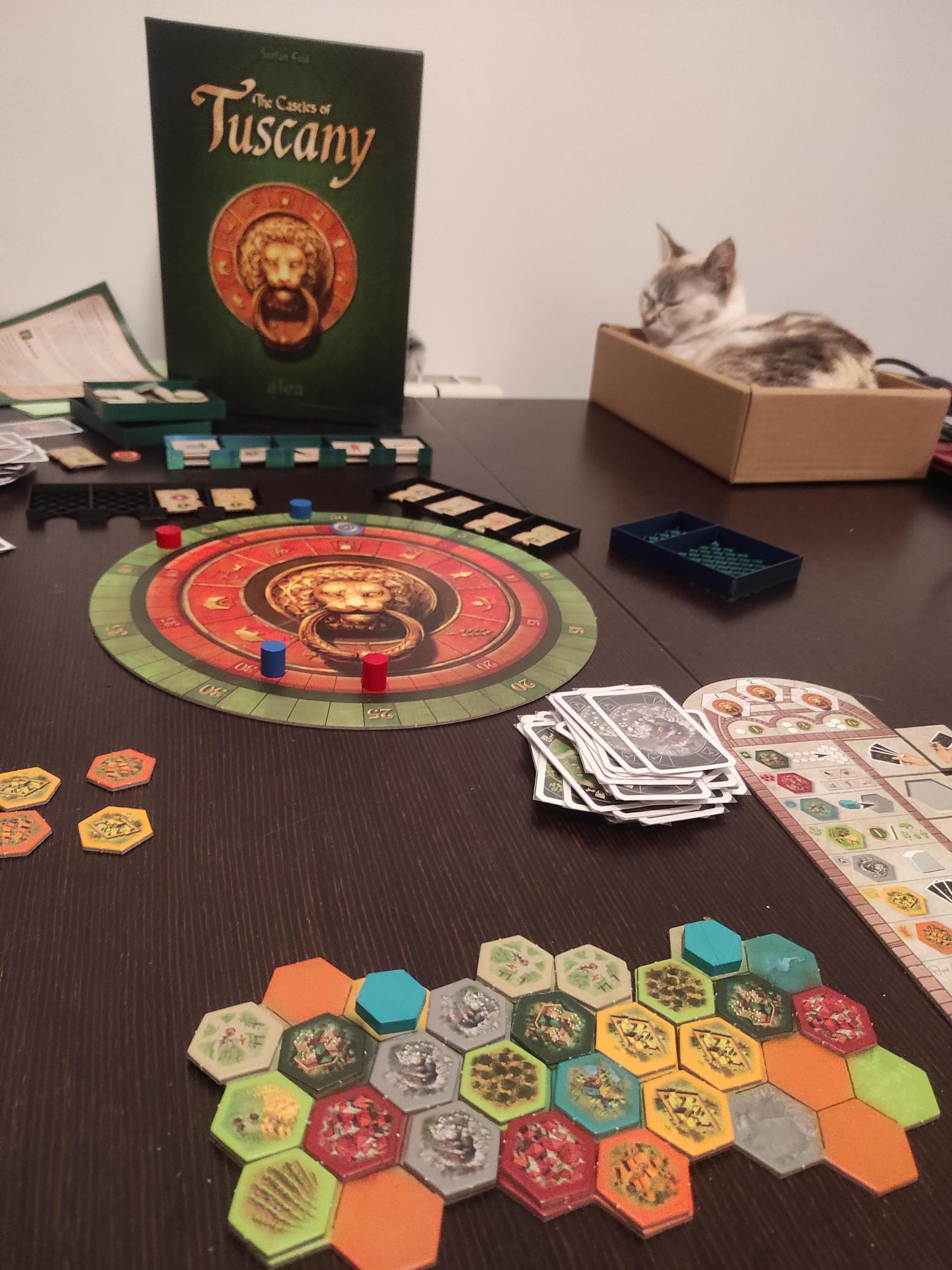
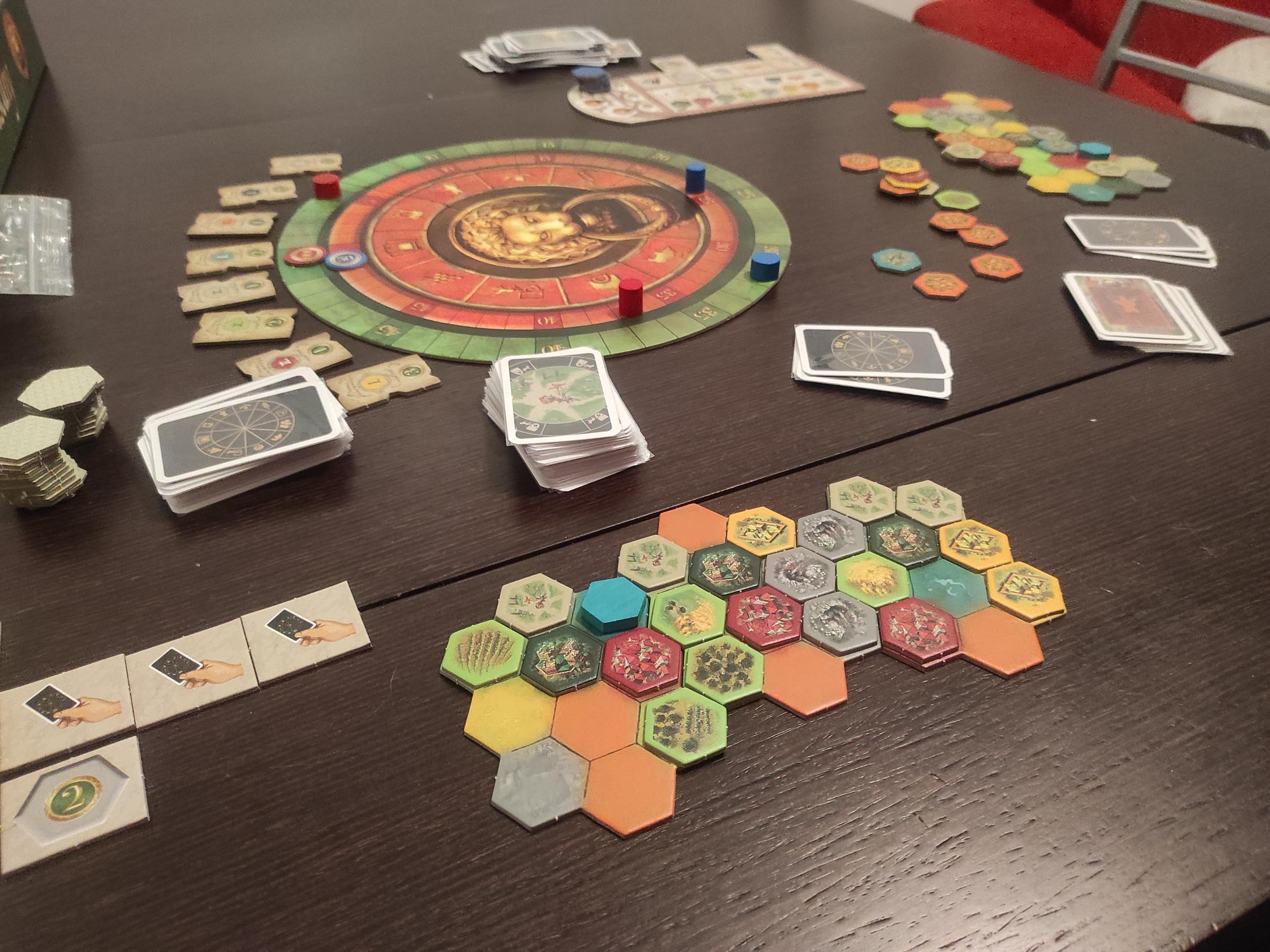
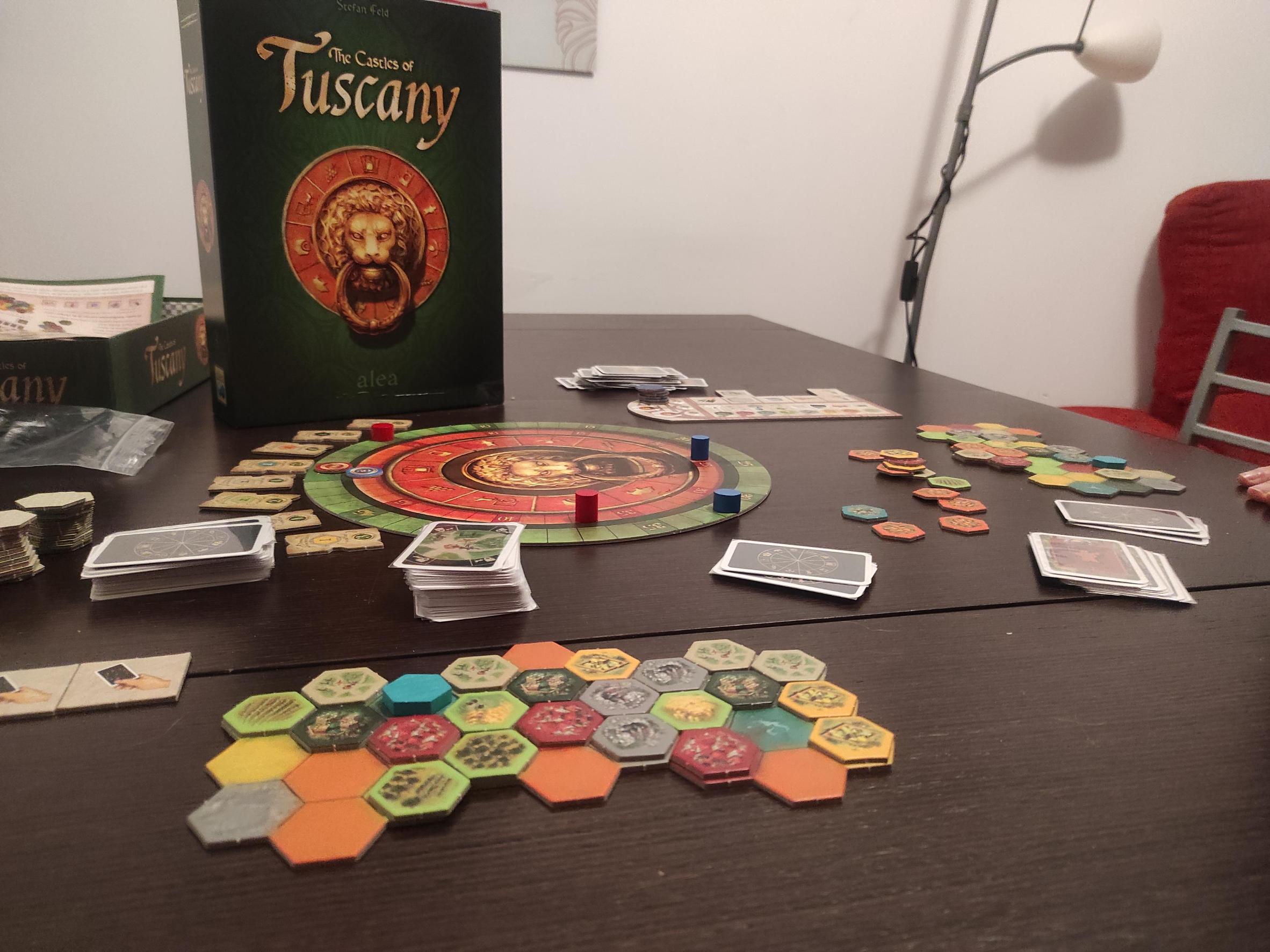
Where to buy it
Shop prices and second-hand copies, checked every day.
On Ludoya's tables
Full stats in Ludoya- 85
- Plays logged
- 100
- Players
- 1h 9m
- Average play
- 53
- In collections
- 2
- On wishlists
3.3/10
from 15 Ludoya reviews
Evan0.9 On your turn you either draw cards, take a tile from the display and add it to your storage, or play 2 cards matching the color of a tile in your storage to place it onto your board in a matching space, connected to tiles previously placed. Each color tile comes with a small reward that can be augmented by tech tiles granted for playing red tiles. The tile rewards come in the flavors of drawing extra cards with the draw action, getting a few extra points if tile illustrations line up, getting rock tokens that give you extra actions when spent, orange workers who are spent as wild cards for tile placements, drawing three cards or getting extra random effects when you flip cards from the random effects deck. The primary focus of the game is trying to complete regions as quickly as possible. There are two types of points, green and red. Green represent points income that you bank into red points each of the three scoring phases. Completing a region on your board is the primary way to get green points, with more points depending on how large the region is. Even more green points go to the player who completes all hexes of a specific tile color. All this is well and good except the process of play is nothing but frustration. There are too many different types of cards to reliably have a set of 2 when you need it, even if you push into drawing more cards as a strategy. You can spend a pair as if it were wild, but this is like losing an entire action in a game where you are racing for firsties bonuses. Even having the cards you need doesn't mean the tiles of the color you want are available. Even having the tile become available for you doesn't mean you have room to store it. Even having room to store the tile doesn't mean you have a legal placement for it based on your previous tile placements. Additional frustration because before the game starts you build your board to create up to 2 sets of 3-hex regions, essentially establishing your primary scoring criteria which the flow of all these things then denies you. If a player gets more tiles out faster, they control when the scoring phase triggers, which creates a major rich get richer situation, as you cans stand to not benefit from 1 or 2 thirds the points you had lined yourself up for, simply from the randomness of the game punishing you harder. ☆ Art, Iconography and components functional ☆ Clever or interesting mechanisms ★ Reasonably low downtime between turns with mildly AP players ☆ Multiple plays stay interesting ☆ Low or mitigatable luck elements ★☆☆☆☆ Raw enjoyment
De lo más mediocre que he jugado de Feld, me apena porque le tenia muchas ganas y es un gran diseñador de juegos. Este lo ha querido hacer tan light y no le llega a la suela de las botas a su afamado Castillos de Borgoña. Feld... puedes hacerlo mucho mejor y despide a tu equipo de asesores.

Rules questions
Answered from the rulebook by Ludoya's rules assistant.
Do hex tiles have to match the color of the space and be adjacent to other tiles?
Yes — a tile may only be placed in a zone matching its color and it must be connected to a previously played hex (the first tile must be placed next to your starting castle). (p. 6)
What cards or workers do I need to place a tile? Can I mix colors to pay the cost?
Placing a tile normally requires discarding two Region cards of the tile’s color; three cards of the same color can replace one required card (and two pairs of colors can replace both required cards). A worker counts as one of the two required cards and two workers let you play a tile without using cards. (pp. 6, 4)
If my storage space is already occupied when I take a tile, what happens to the tile that’s already stored?
If your storage space is not free, you must first remove the tile there from the game (put it back into the box) and then place the newly chosen tile on your player board. (p. 5)
Does placing a castle let me put a tile on my board without discarding cards?
Yes — placing a non-starting castle lets you take any of the eight center tiles and put it directly onto your Region board without playing cards, but you still must follow the placement rules (adjacency and matching color); the placed tile’s effect also triggers. (p. 6)
What if I earn a wooden hexagon (from an Inn) but have no storage space for it?
If you would receive a wooden hexagon and have no storage space, you do not take the wooden hexagon and instead immediately gain two victory points on the red scoring track. (p. 7)
How are green-track points handled each round and what counts at game end?
At the end of each round you transfer your green-track points to the red scoring track (do not reset the green track). After the third round, each unplaced hex tile, wooden hexagon, marble, and worker is worth 1 VP on the red track, and you gain 1 VP for every 3 cards in hand. (p. 8)
Similar games
 The Castles of Burgundy2019
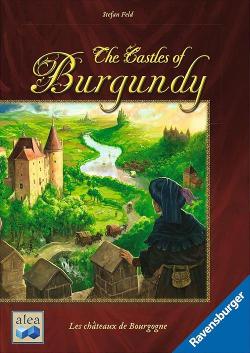 The Castles of Burgundy2011
 Botanicus2024
 The Castles of Burgundy: Special Edition2023
 Kingdom Builder: Big Box (Second Edition)2017
 The Palaces of Carrara (Second Edition)2022
 The Princes of Florence2000
 The Palaces of Carrara2012
 Azul2017
 Calimala2017
 Middle Ages2024
 Winter Kingdom2020


Free, on web, Android and iOS
Play The Castles of Tuscany with Ludoya
- Keep it in your collectionTrack your copy and its expansions, lend it to friends, or put it on your wishlist and get told when the price drops.Add it to your collection
- Log every playScores, winners, timers and photos, then your stats: win rate, favourite player count, best score.Log a play
- Settle rules questionsAsk anything about the rules and get an answer from the rulebook, with the page to check it on.Ask the rules assistant
- Find people to play it withClubs, game nights and events near you that bring this game to the table.See events
Game facts (players, playing time, age, credits) from BoardGameGeek.