
2022 · Fantasy
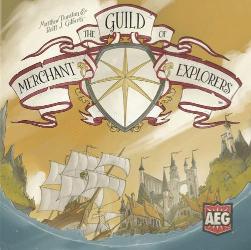
The Guild of Merchant Explorers
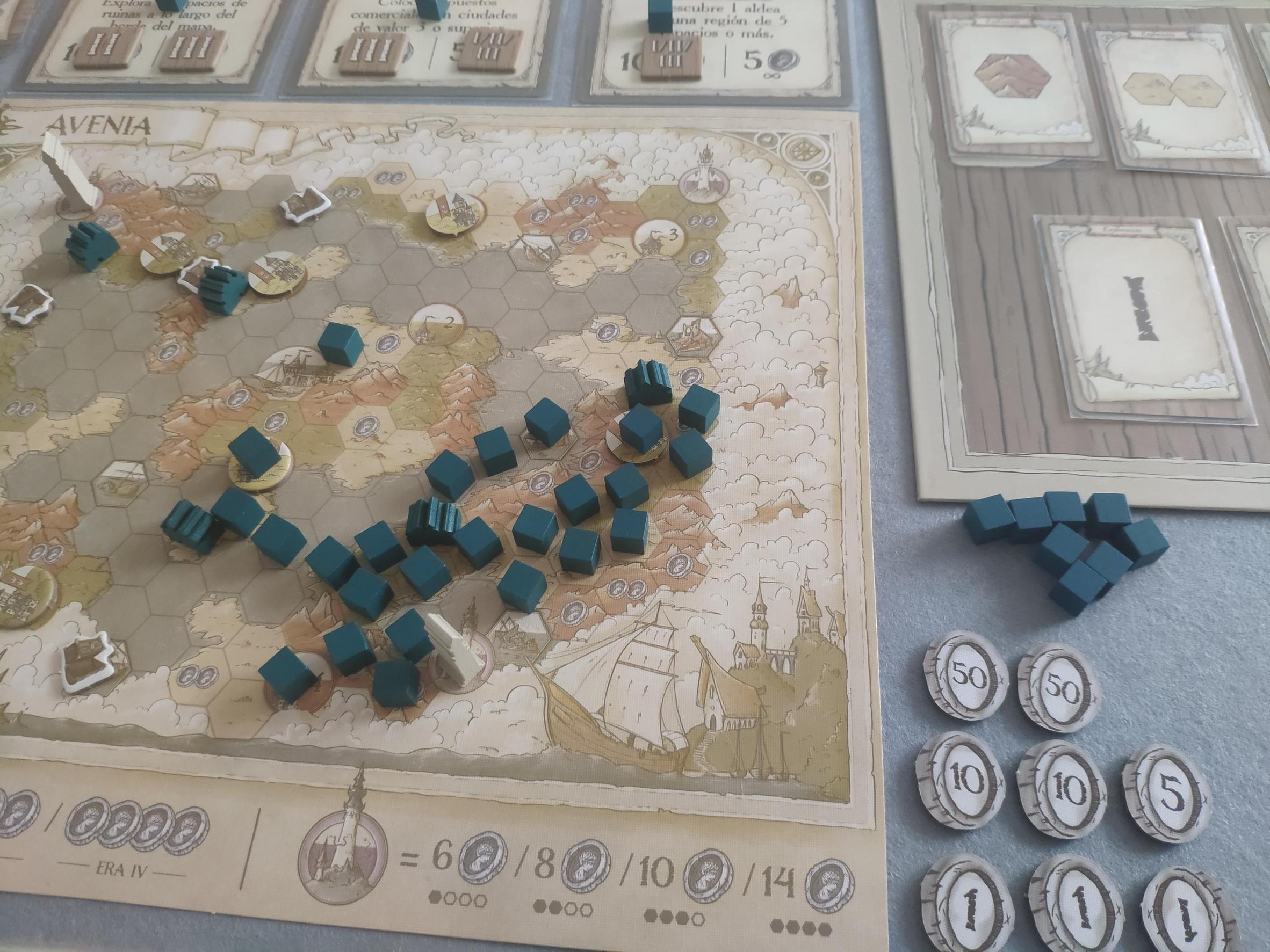
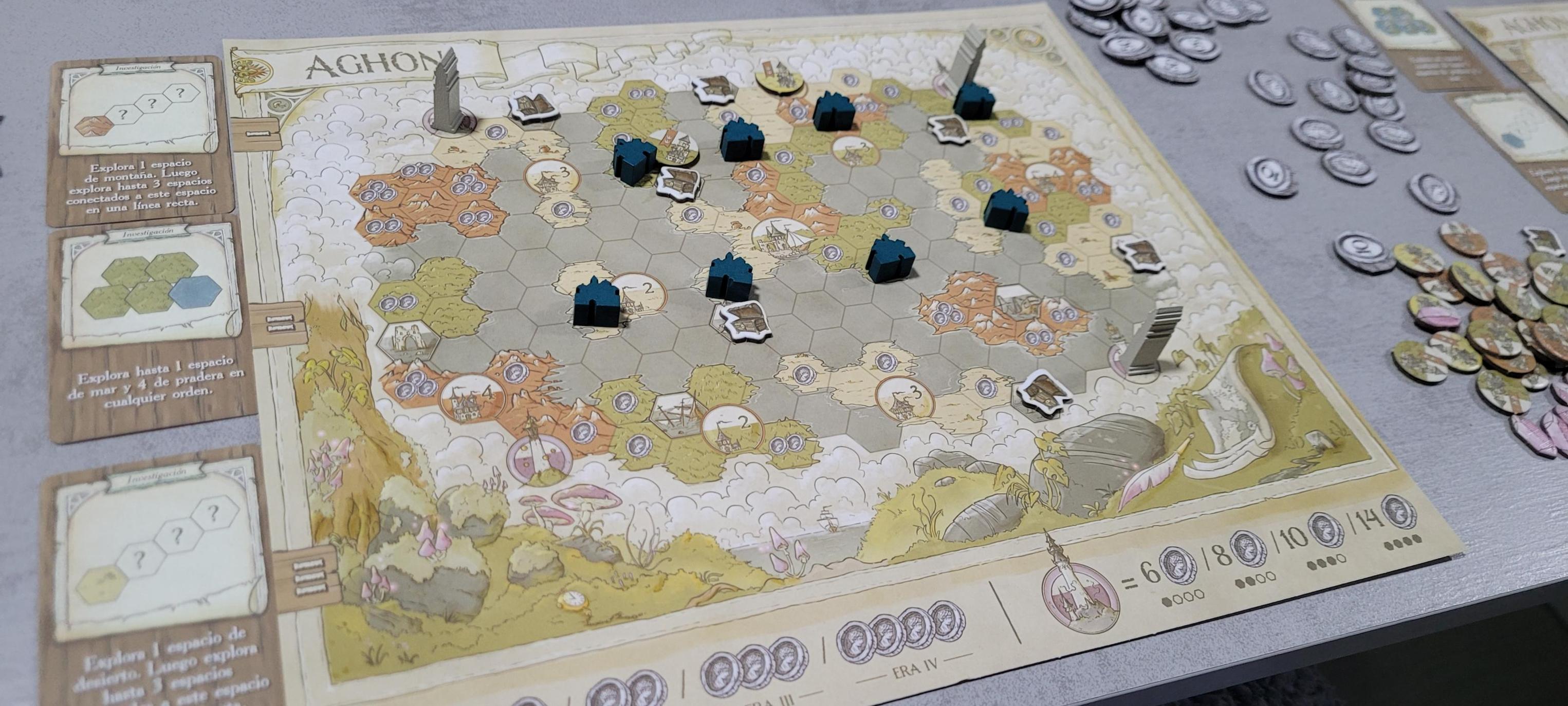
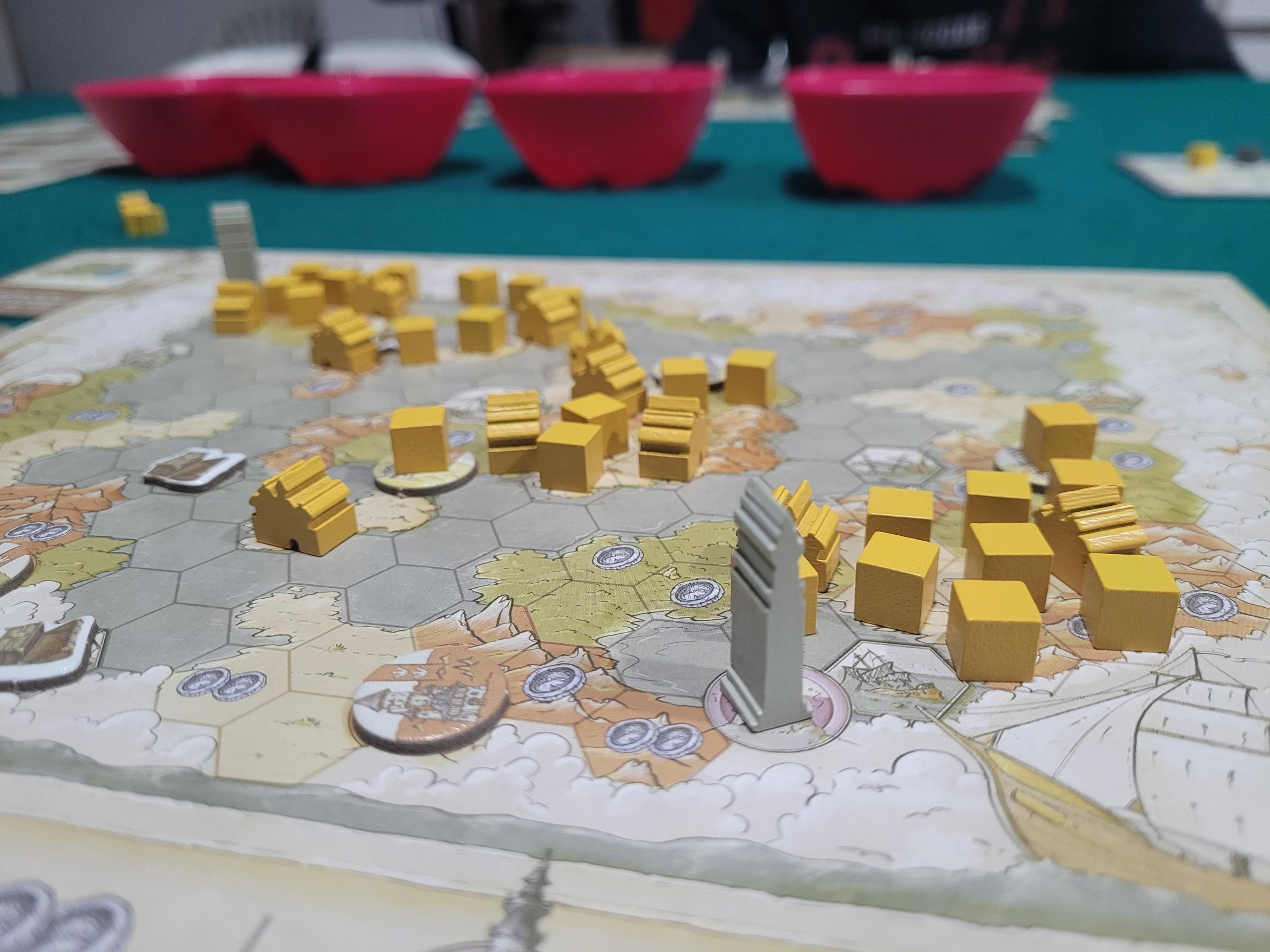
Players begin with a single city on a personal map and reveal a shared deck of terrain cards to drive play. Based on the revealed terrain, players place cubes that must connect to their existing network, aiming to complete areas, cross seas, and found new cities before cubes are cleared at the end of the round. Players can explore capsized ships for treasure tokens that grant special placement abilities and build linked connections between locations to score bonuses. Shared objectives offer additional scoring, with higher rewards for the first player to achieve them. The components include multiple maps and support play with separate copies for remote or simultaneous games.
- Players
- 1–4 best 2
- Playing time
- 45 min
- Age
- 14+
- Complexity
- 2.1 / 5
About the game


Expansions
See them in Ludoya
Photos from Ludoya tables
All photos in Ludoya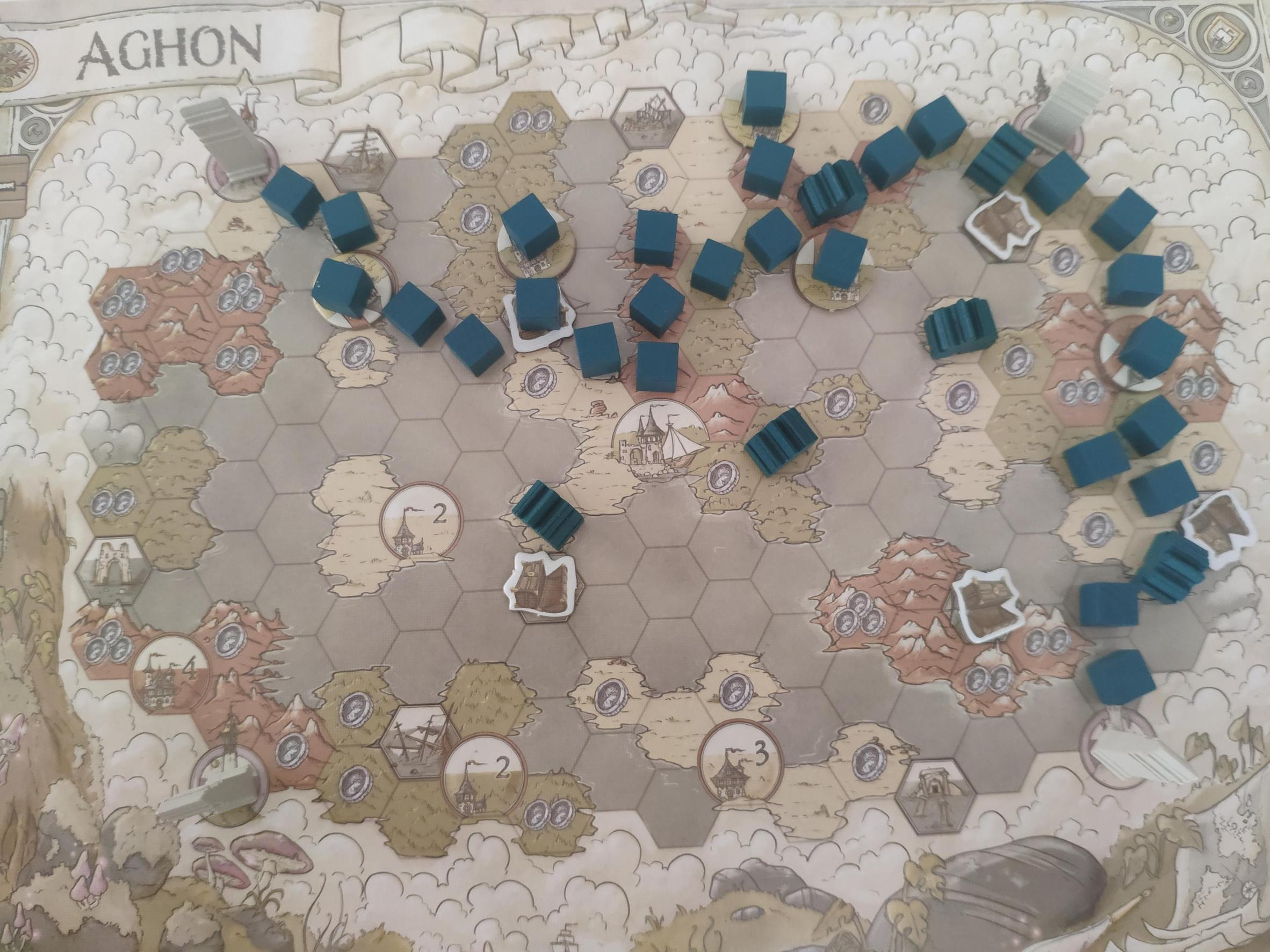
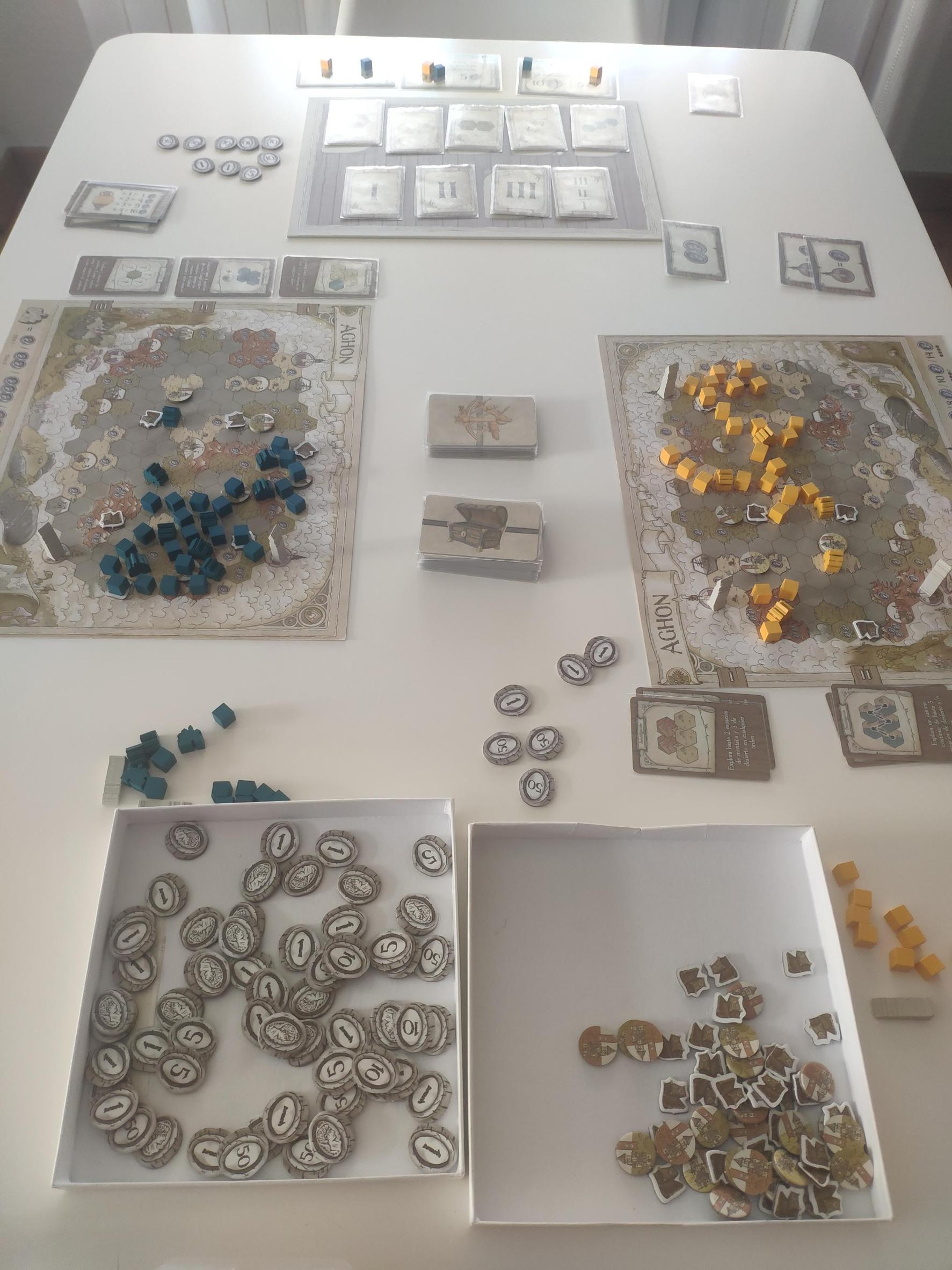
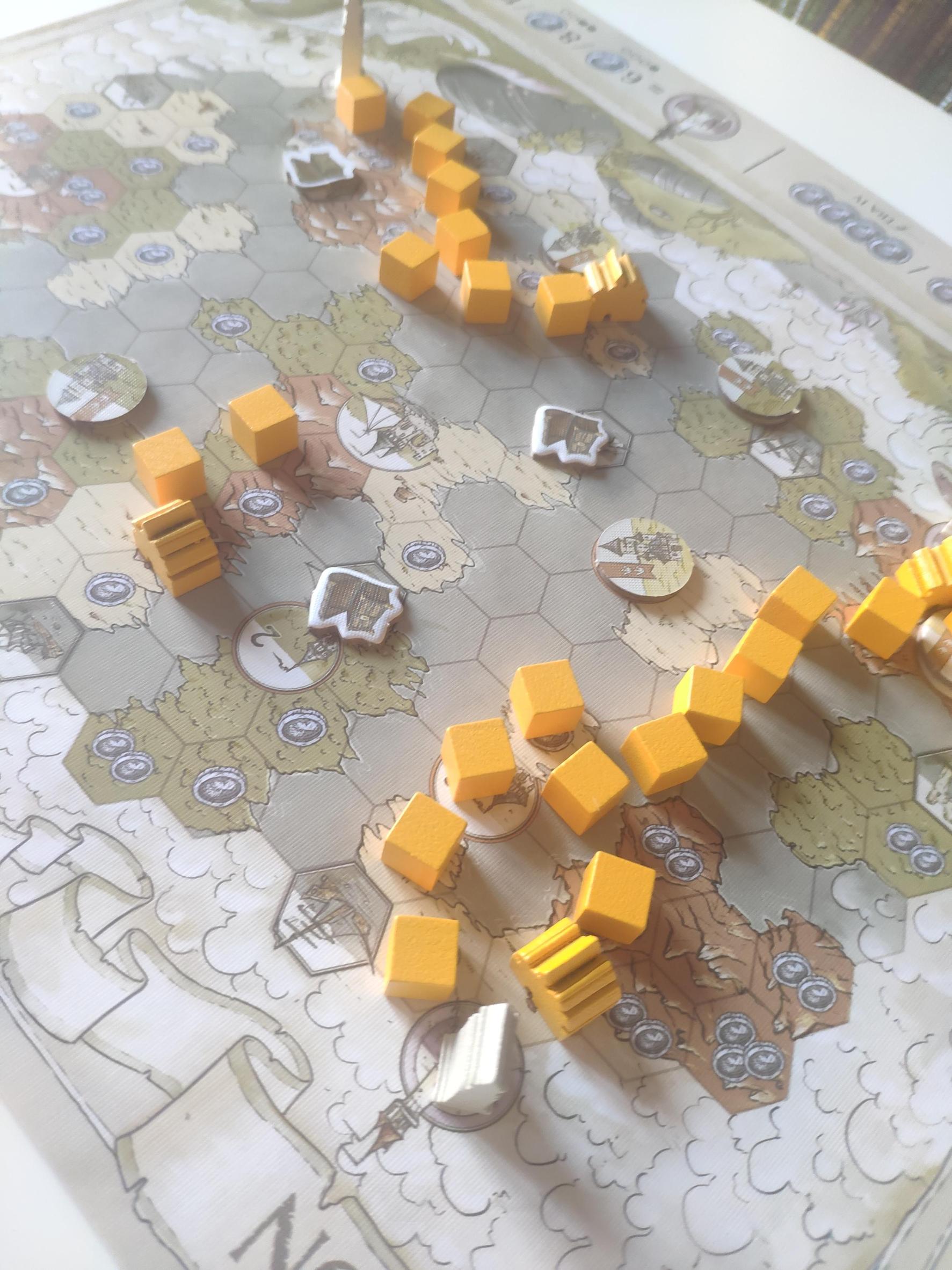
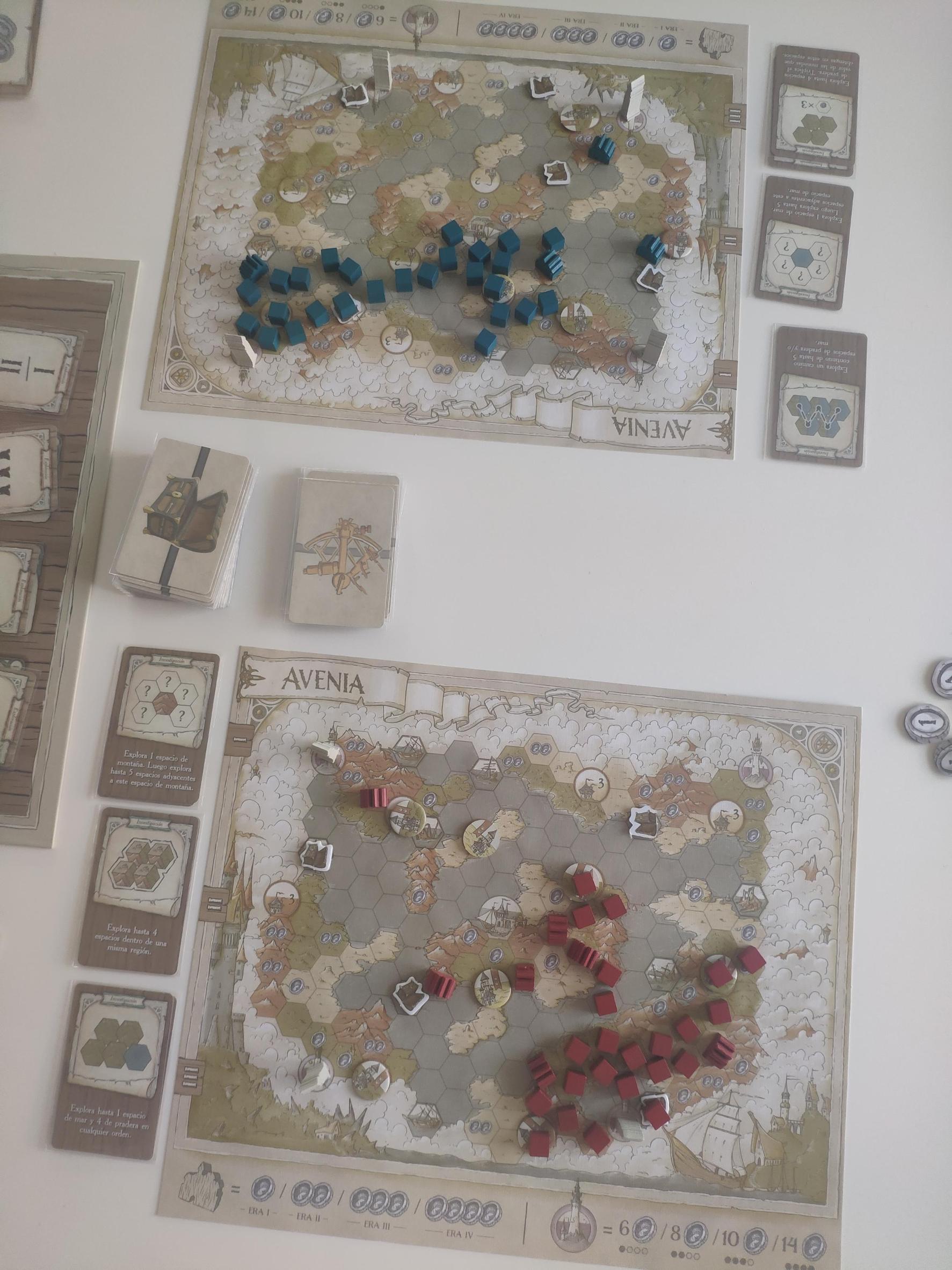
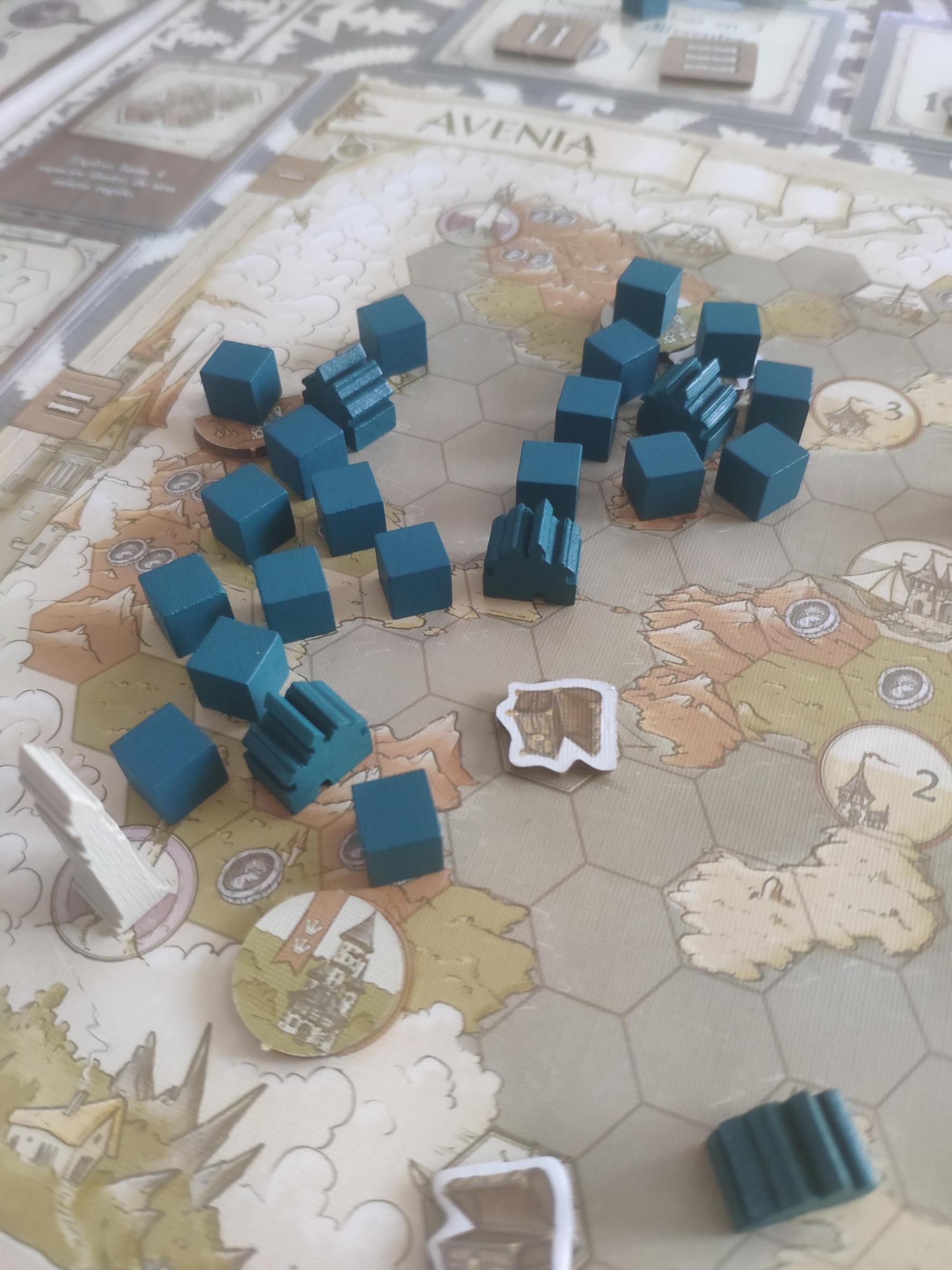
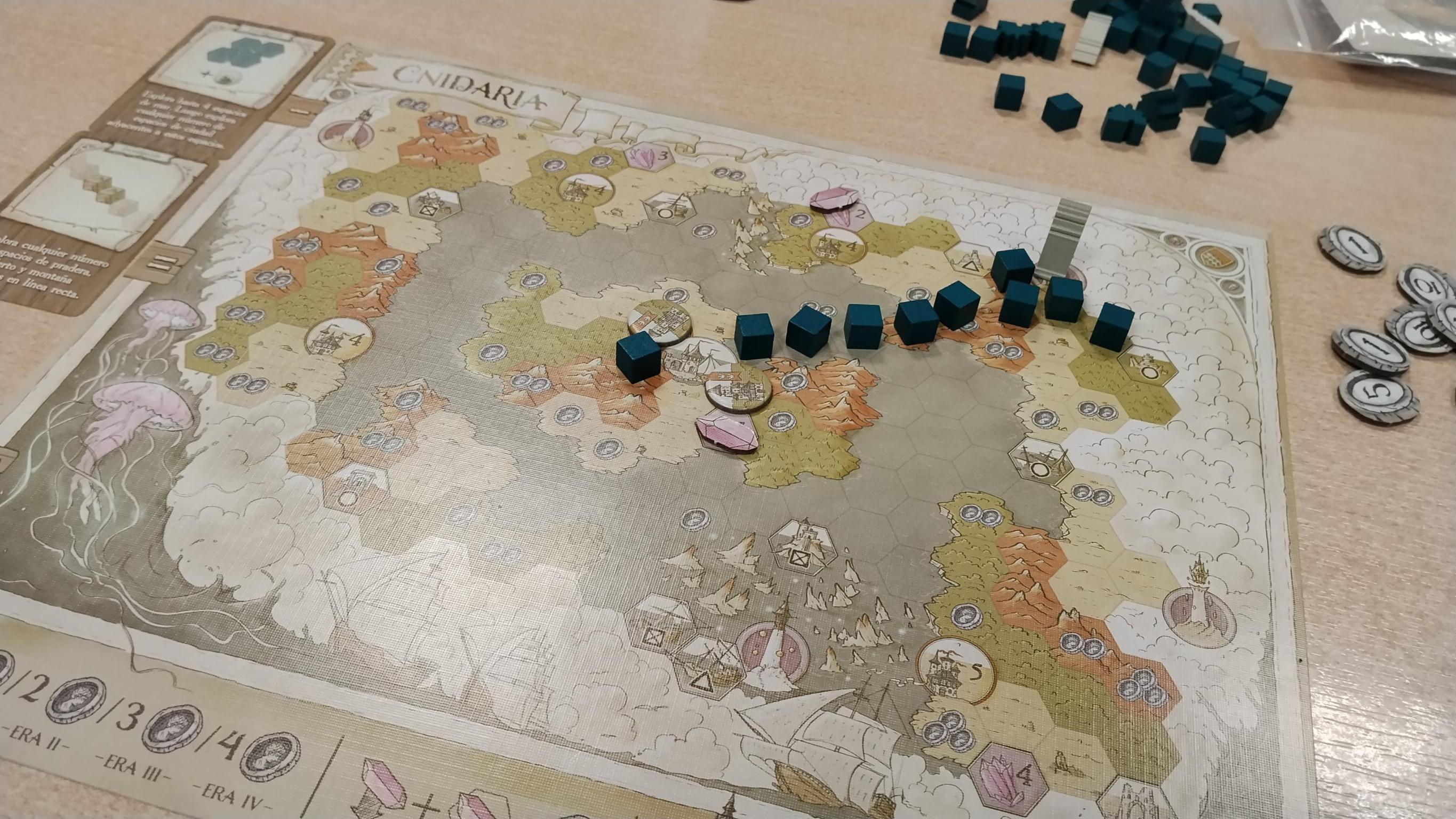
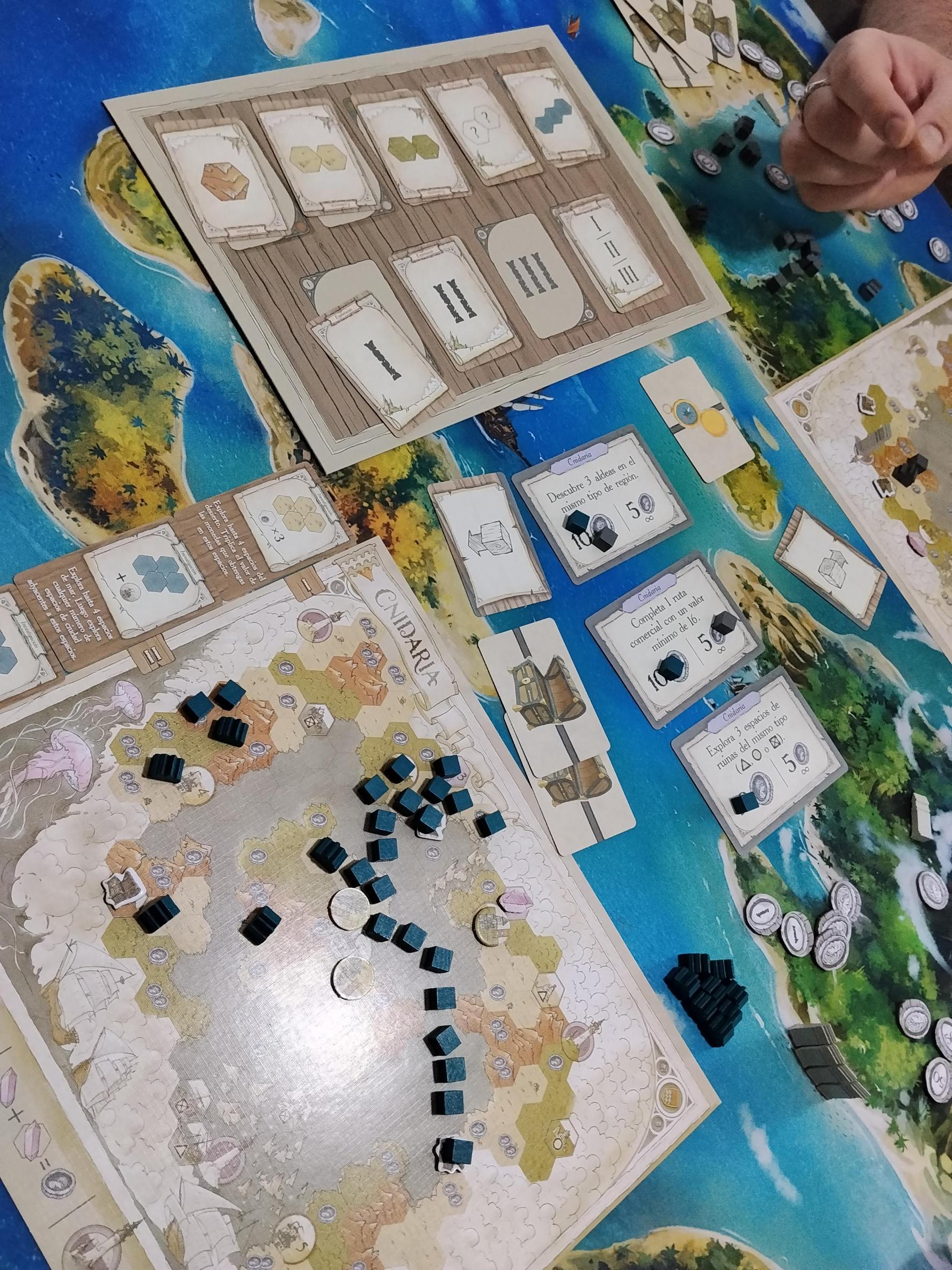
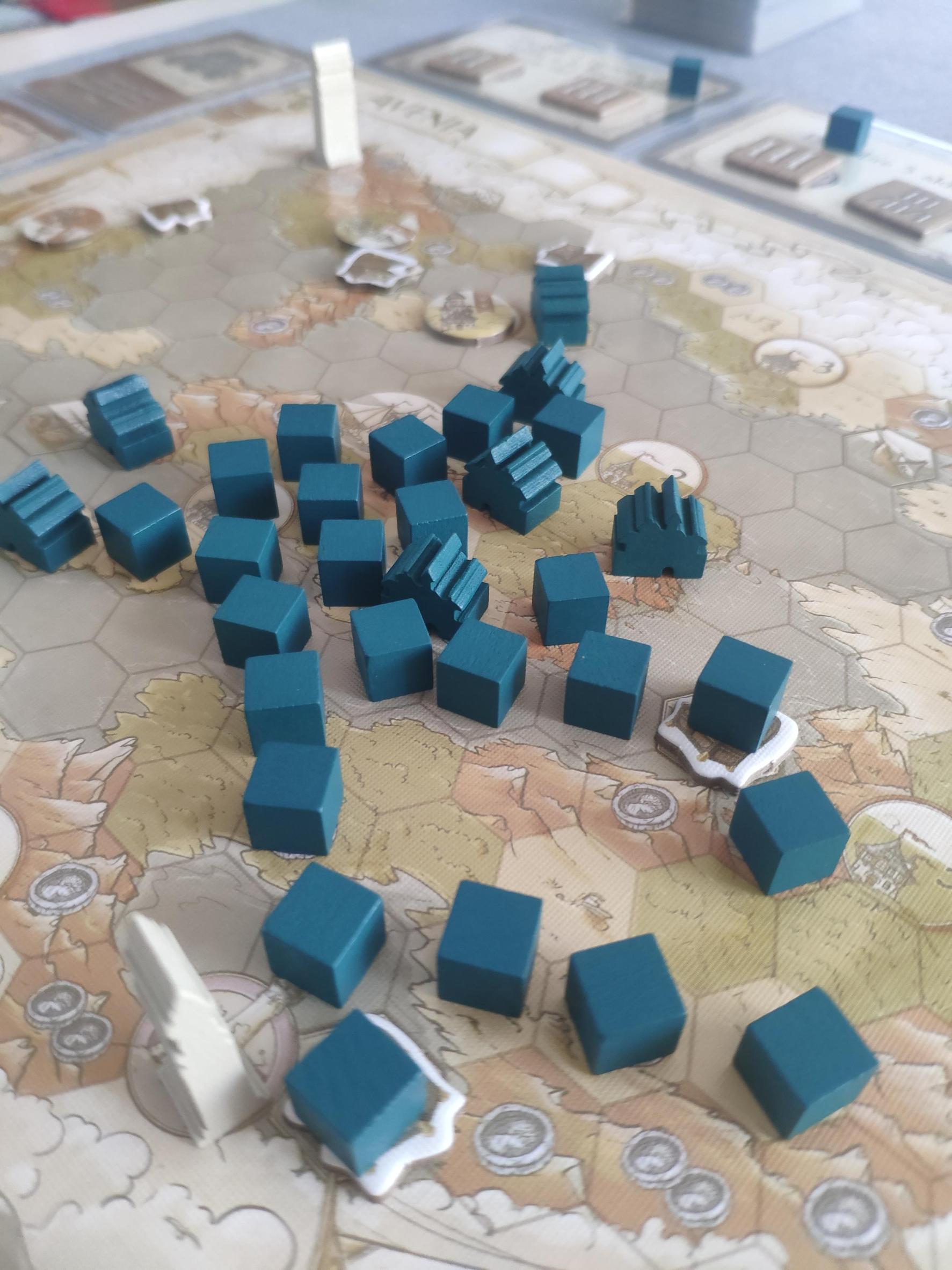
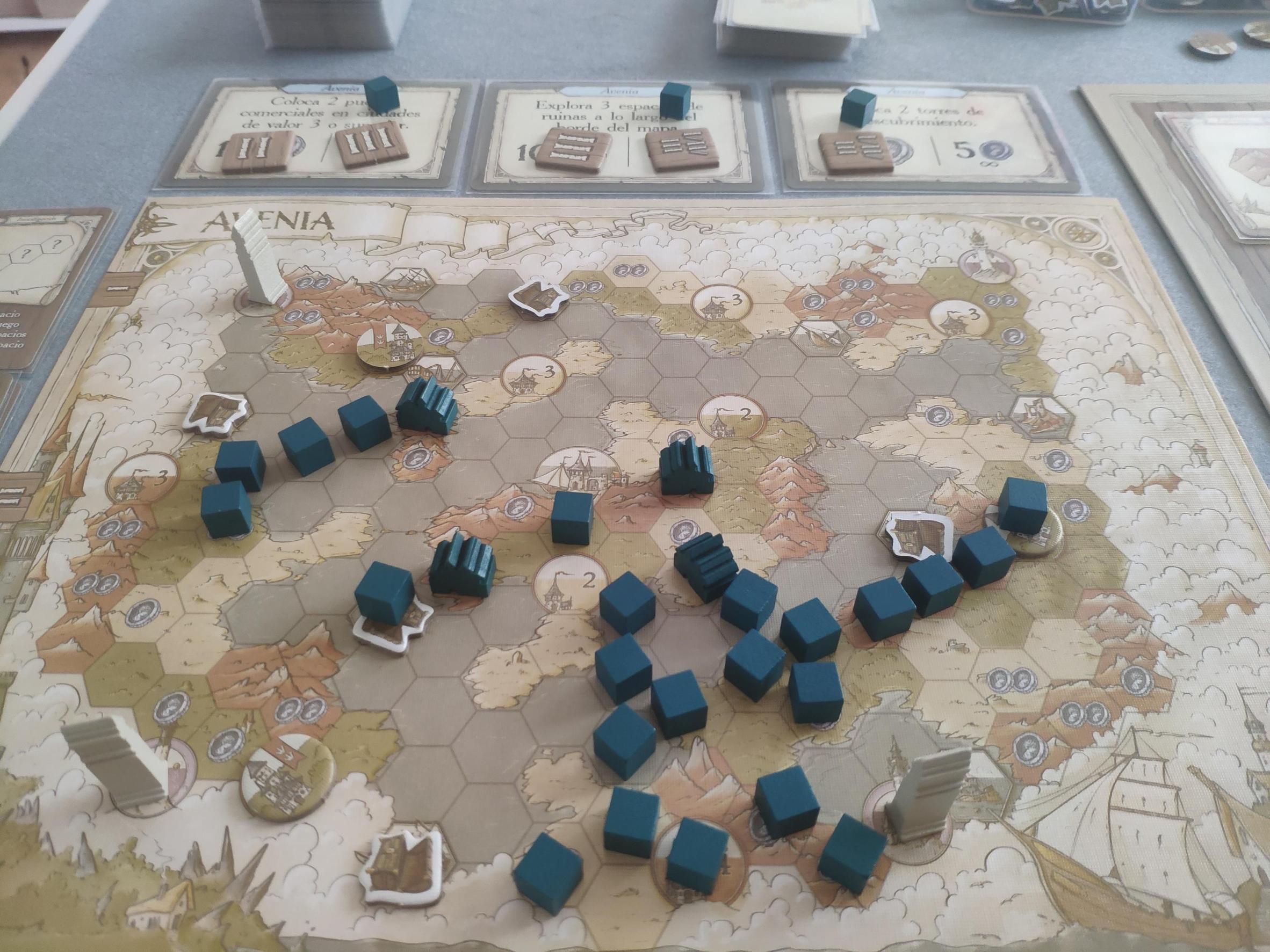
Where to buy it
Shop prices and second-hand copies, checked every day.
On Ludoya's tables
Full stats in Ludoya- 516
- Plays logged
- 390
- Players
- 45m 27s
- Average play
- 104
- In collections
- 32
- On wishlists
7.5/10
from 48 Ludoya reviews
- Base -

Rules questions
Answered from the rulebook by Ludoya's rules assistant.
If I discover a village during an explore action, can I immediately explore from that new village (even during the same action)?
Yes — discovered villages immediately act as starting spaces and you may explore from a village you discovered as part of the same explore action (see pages 5–7, and the investigate example on page 6).
Do my explorers stay on the map between eras, or do I remove them?
Remove all of your explorers at the end of each era and return them to your supply; villages, trading posts, treasure tokens, and discovery towers remain where they are (page 5).
Can I place explorers on the capital space, and does the capital count as a village for goals?
You cannot place explorers onto the capital space, but the capital always functions as a starting point like a village for explore actions and it does not count as a village for goals (pages 4–5).
When I connect two cities do I score immediately, and can the same city score more than once?
You immediately complete and score a trade route when you connect two cities with an unbroken chain (multiply the city values and take the coins), then place a trading post on one city; a city with a trading post can never be used to score another trade route, and if one placement connects three cities resolve the trade routes one at a time (page 7).
How do investigate cards work when an era card is revealed — do I draw and keep them, and when can I use them?
The first time an era card is revealed each player draws 2 investigate cards, chooses 1 to place in that era's slot and takes its action (discard the other); in later reveals you use the investigate card you placed for that era, and in Era IV you may use any of your investigate cards (page 6).
When I explore a ruin and draw a treasure card, do I resolve it now or at the end of the game?
When you first explore a ruin place a treasure token and draw a treasure card: resolve any immediate effects right away; treasure cards without immediate effects are kept face-down and scored at game end, and revisiting a ruin with a token does not draw another card (pages 7 and 10).
Similar games
 Cartographers Heroes: Collector's Edition2021
 Pilgrims: Curious Adventures2025
 Railroad Ink Challenge: Lush Green Edition2021
 A Wayfarer's Tale: The Journey Begins2025
 DungeonQuest: Revised Edition2014
 Railroad Ink Challenge: Shining Yellow Edition2021
 Kingdom Builder: Big Box (Second Edition)2017
 En Route2025
 Cartographers Heroes2021
 Let's Make a Bus Route2018
 Through the Desert1998
 Next Station: London2022



Free, on web, Android and iOS
Play The Guild of Merchant Explorers with Ludoya
- Keep it in your collectionTrack your copy and its expansions, lend it to friends, or put it on your wishlist and get told when the price drops.Add it to your collection
- Log every playScores, winners, timers and photos, then your stats: win rate, favourite player count, best score.Log a play
- Settle rules questionsAsk anything about the rules and get an answer from the rulebook, with the page to check it on.Ask the rules assistant
- Find people to play it withClubs, game nights and events near you that bring this game to the table.See events
Game facts (players, playing time, age, credits) from BoardGameGeek.