
2024 · Fantasy
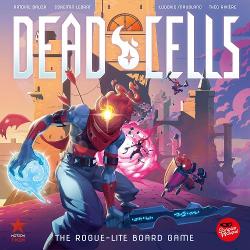
Dead Cells: The Rogue-Lite Board Game
Players take on one of four beheaded adventurers and explore a shifting, multi-biome island in a cooperative rogue-lite dungeon crawl for 1–4 players. Gameplay uses character-specific action decks to resolve encounters: players choose a single action card per enemy to handle attack, defense, and movement, then loot equipment, gold, scrolls, and resource Cells from defeated foes. When characters fall they lose most progress but keep Cells, which are spent at a persistent hub to buy permanent mutations and upgrades across three archetypes (Brutality, Survival, Tactics), expand decks, increase health, and unlock item slots. Runs loop repeatedly as biomes and monster spawns evolve, encouraging gradual progression through permanent upgrades and deeper exploration.
- Players
- 1–4 best 3
- Playing time
- 45 min
- Age
- 14+
- Complexity
- 2.3 / 5
About the game
- Publisher








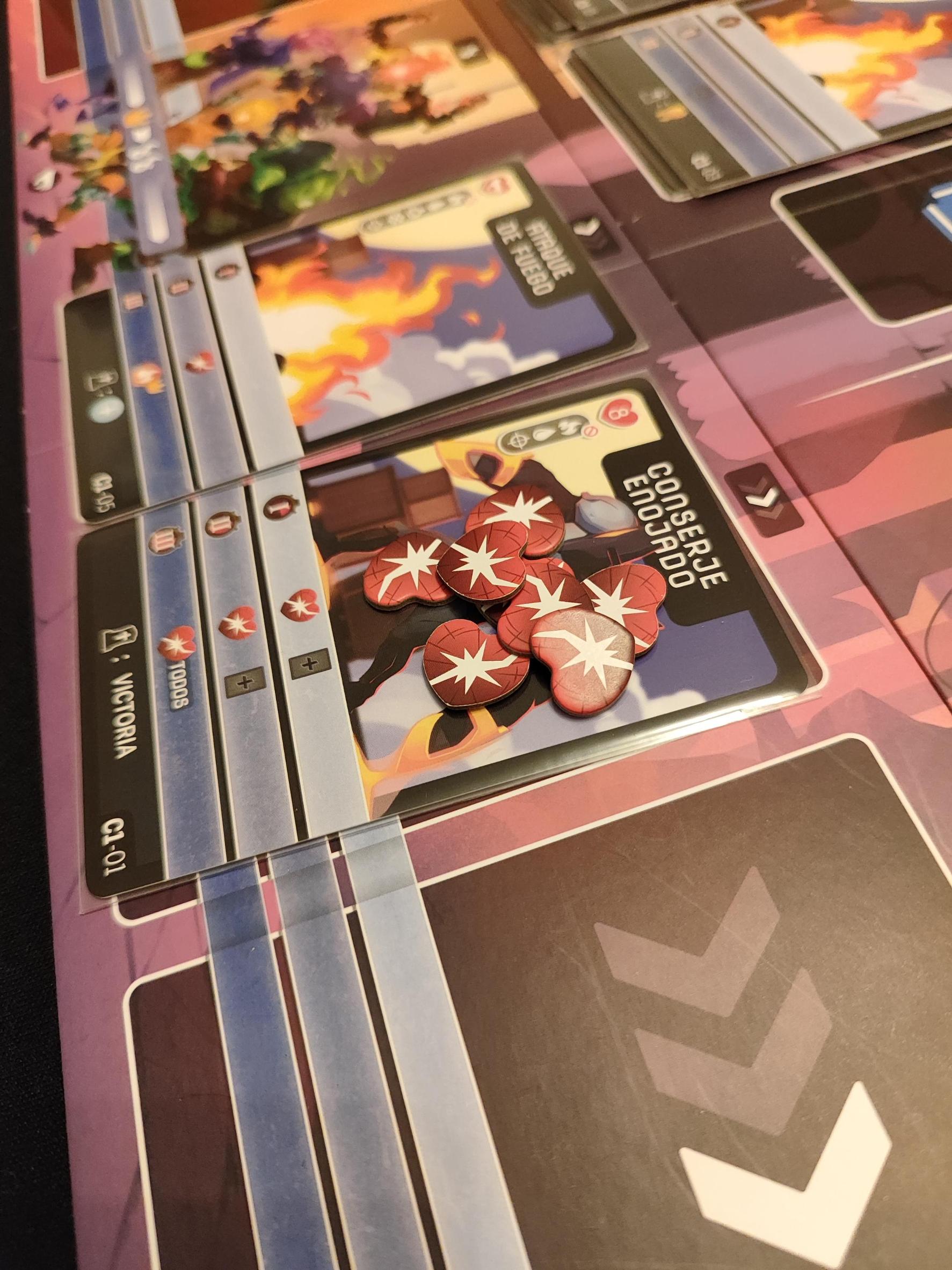
Photos from Ludoya tables
All photos in Ludoya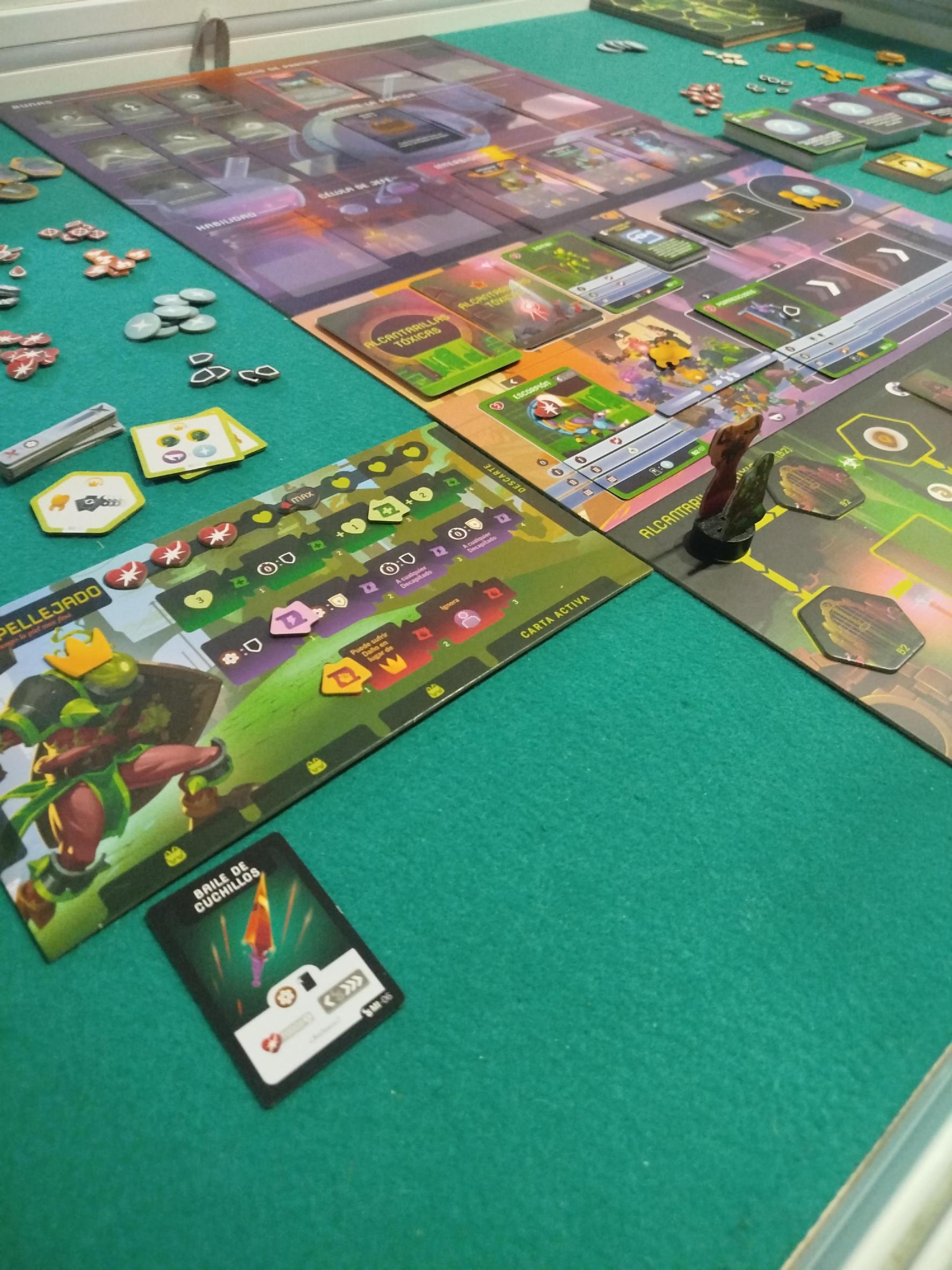
Where to buy it
Shop prices and second-hand copies, checked every day.
On Ludoya's tables
Full stats in Ludoya- 319
- Plays logged
- 87
- Players
- 46m 52s
- Average play
- 37
- In collections
- 12
- On wishlists
- 2
- Pre-ordered
8.8/10
from 13 Ludoya reviews
Absolute banger. One of the best games I have in my library, specially for solo play. But it also works great in multi. Games can be quick or last as long as you like, and setup time is super quick once you're used to it and optimise. The box greatly helps for this. The campaign is fantastic. You feel the progression death by death. It's not a difficult game once you get the snowball running and trim down the deck as you play. The only thing I would say needs rethinking is the Immolator. He's absolutely useless against bosses. Not a great experience if you chose to use it as your solo character with the sword as a companion. For bosses, everyone needs to do a lot of damage, or there's no way to beat it. Fire effects don't work in any of them. They could have adapted that to "instead of insta-kill, does x damage". I greatly enjoy playing it with its combination of: great progression, you can put as much time as you have, great setup time, and nice mechanic gameplay experience. For the money, it has provided me a lot of value. Also the components are of great quality too.
Realmente un buen juego. Muy sencillo y fácil de aprender, y que te da un exceso de dopamina cuando lo juegas (sobre todo acompañado) descubriendo nuevas cartas e intentando mejorar tu "build" para poder llegar más lejos. El juego gana más por lo que no puedes ver, que por la sencillez de sus mecánicas, pero es esta sencillez la que le da el toque suficiente para que no te de la suficiente pereza de seguir jugando una y otra vez a la misma celda de los prisioneros abatido por los mismos zombies. Lo único que esperas es ganar las suficientes células para poder mejorarte y así llegar un poco más lejos la próxima vez. Un port del juego de PC muy logrado, donde el mismo juego se hacía de igual manera igual de repetitivo, pero que siempre te acababa enganchando en repetir para mejorar tus habilidades y tus objetos.


Rules questions
Answered from the rulebook by Ludoya's rules assistant.
Do I shuffle decks that show a 'prohibited shuffle' symbol?
The rulebook says do NOT shuffle any deck showing the prohibited-shuffle icon; those cards must stay in their printed order (if mixed up they can be replaced by their letter/number), so leave them as dealt. (p.4)
How do Hand Checks and Deck Checks work — do we draw before checking, and when do we refill to 3 cards?
For a Hand Check the First Player must discard a Combat card from their hand with the required symbol to pass; for a Deck Check the First Player draws the top Combat card and checks its icons (then discards it). After performing Checks, players refill their hands to 3 (shuffle your discard into the draw pile if needed). (p.8)
When do player and enemy actions resolve in combat — who goes first?
Combat resolves left-to-right on the Combat board: the leftmost Enemy acts first, then the Group (players act starting with the First Player clockwise), then the next Enemy to the right, and so on, for each Combat Round. (p.11)
Does a Shield token block Poison or other State effects?
No — Shield tokens only block damage (they cancel one damage each) and do not block States such as Poison, Bleeding, On Fire, or Frozen. (p.11)
If I Loot during combat, do Equipment and Scrolls go to me immediately?
A Loot action takes the indicated items into the Group's Bag immediately, but looted Scrolls and Equipment are assigned to Beheaded at the End-of-Combat Upkeep (and players who passed cannot receive Loot). (p.11–12)
If a Beheaded dies during a Run, is the Run over and what happens to our stuff?
If any Beheaded's Health Track becomes full of Damage tokens the Beheaded is dead and the Run ends (if death occurs during Combat you still finish that Combat); at end of run you discard items in the Group Bag except Cells, return Blueprints/Equipment as instructed, and reset scrolls per the end-of-run steps. (p.13–14)
Similar games
 Regicide Legacy2025
 Rogue Dungeon: 2nd Edition2024
 Kinfire Chronicles: Night's Fall2023
 Gloomhaven2017
 Gloomhaven: Jaws of the Lion2020
 Oathsworn: Into the Deepwood2022
 Gloomhaven (Second Edition)2025
 Slay the Spire: The Board Game2024
 Invincible: The Card Game2025
 Pandemic Legacy: Season 12015
 Aeon's End: Legacy2019
 Aeon's End: The Descent2024
People who own it also own
 Tainted Grail: Kings of Ruin2024
 Andromeda's Edge2024
 Airborne In Your Pocket2019
 FateFlip: By Royal Decree2025
 Monopoly: Ultimate Banking2016
 Frostpunk: The Board Game2022
 Unstoppable2025
 Kinfire Delve: Callous' Lab2024Slay the Spire: The Board Game2024
 Monopoly: Cheaters Edition2018
 Tranquility: The Ascent2024
 Voidfall2023
Free, on web, Android and iOS
Play Dead Cells: The Rogue-Lite Board Game with Ludoya
- Keep it in your collectionTrack your copy and its expansions, lend it to friends, or put it on your wishlist and get told when the price drops.Add it to your collection
- Log every playScores, winners, timers and photos, then your stats: win rate, favourite player count, best score.Log a play
- Settle rules questionsAsk anything about the rules and get an answer from the rulebook, with the page to check it on.Ask the rules assistant
- Find people to play it withClubs, game nights and events near you that bring this game to the table.See events
Game facts (players, playing time, age, credits) from BoardGameGeek.