
1990 · Political
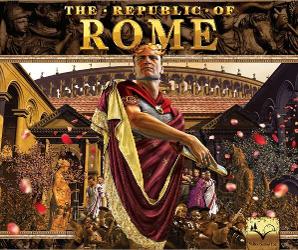
The Republic of Rome
Players represent rival aristocratic factions maneuvering for influence in the Roman Senate across a simulated stretch of Republican history. On each turn players propose and vote on Senate actions—assigning offices, sending governors and generals to provinces, raising armies, pursuing prosecutions, and addressing public crises. Influence and voting power depend on the number and rank of Senators each player controls, while Offices determine who may make proposals. External threats such as wars, famine, unrest and financial collapse force temporary cooperation; if Rome fails, all players lose. Victory comes from turning a faction’s Senators and commanders into the dominant force in the state.
- Players
- 1–6 best 5
- Playing time
- 300 min
- Age
- 14+
- Complexity
- 4.4 / 5










Where to buy it
Shop prices and second-hand copies, checked every day.
On Ludoya's tables
Full stats in Ludoya- 57
- Plays logged
- 92
- Players
- 3h 54m
- Average play
- 43
- In collections
- 4
- On wishlists
- 1
- Pre-ordered
7.8/10
from 27 Ludoya reviews
The most immersive, emotional and fun game of all; what the players decide or vote, how they behave toward each other, everything counts. The most enjoyable point of this game is that it allows you to do endless things. It's about politics, after all, and that's what makes the game shining: the emotional factor. You can convice the others to vote or support you, and then betray them. Or you can make the others don't see you as a threat, and instead judge another senator and execute him. Or send him to a war. And it has a right sense of Roman history. For a history lover, it is even more enjoyable. The only flaws are the length (more than 5 hours ruling Rome may be exhausting), the big amount of rules and the optimal number of players, which prevents it being more played as it would deserve.
Ultralong game about diplomacy. Historically it's awesome, but you need a lot of time to play and to learn a massive messy rulebook
andycted8.0 Seems like a gem firmly planted in old style RPG vibes


Rules questions
Answered from the rulebook by Ludoya's rules assistant.
How does a Persuasion (bribe/counter-bribe) attempt work—can I spend my faction treasury to stop someone and who gets the money?
The persuader may spend Talents from his Personal Treasury to raise the Base Number and then rolls vs. 2d6; all other players may irrevocably spend Talents from their Faction Treasuries to subtract from the Base Number as counter-bribes. All Talents spent (bribes and counter-bribes) are placed into the target Senator’s Personal Treasury after the Attempt regardless of success or failure (see p.9, 1.07.412–1.07.414).
If one of my senators dies, what happens to his markers, concessions and my faction—am I eliminated?
When a Senator dies all markers except a Faction Leader marker are removed, his Concessions return to the Curia and his Province (if governor) goes to the Forum; Family (black-text) cards without a Faction Leader go to Repopulating Rome (p.5, 1.05.3). A faction is only eliminated if it has no Senators left as a result of a failed Assassination; otherwise the player may draw the top Senator from the Curia to replace his leader or wait for the next Curia entry (p.5, 1.05.4).
What's the difference between Personal Revenue, Provincial Spoils and the Faction Treasury, and when can money be moved between them?
Personal Revenue is income each Senator generates (base income plus Knights, Concessions and optional Provincial Spoils); Provincial Spoils are optional die-roll results collected by Governors (p.5, 1.06.1–1.06.13). During Redistribution (end of the Revenue Phase) players may freely move Talents between Personal Treasuries and their own Faction Treasury (except Rebels cannot transfer to non-Rebels) and may give Talents to other players (p.5, 1.06.3).
When does a Governor return to Rome and does a returning Corrupt Governor keep his Corrupt marker?
At the end of the Revenue Phase the term dial of non‑Rebel Governors is advanced and when it moves off “1” the Governor returns to Rome and the Province card goes back to the Forum; returning Corrupt Governors keep their Corrupt marker (p.6, 1.06.6).
How do prosecutions work and what are the consequences of a Minor vs. Major Prosecution?
The Censor may conduct up to two Minor or one Major Prosecution per turn; voting is for conviction and the Accused gains additional votes equal to his Influence, with Popular Appeal possible (p.12, 1.09.41–1.09.42). A successful Minor Prosecution strips 5 Popularity, 5 Influence, any Prior Consul and returns Concessions to the Forum; a successful Major Prosecution results in execution (p.13, 1.09.43–1.09.44).
What immediate game states cause everyone to lose—what must we avoid to keep Rome alive?
The game ends in defeat for all players if at the end of a Combat Phase there are four or more Active Wars, if the People Revolt with no Rebel in play, or if the State Treasury goes bankrupt with no Rebel in play (p.2 and p.19, 1.12.3).
Similar games
 John Company: Second Edition2022
 John Company2017
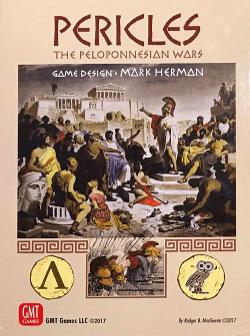 Pericles: The Peloponnesian Wars2017
 Pendragon: The Fall of Roman Britain2017
 Hegemony: Lead Your Class to Victory – Extended Edition2023
 Falling Sky: The Gallic Revolt Against Caesar2016
 Imperial Elegy: The Road to the Great War 1850-19202025
 Hegemony: Lead Your Class to Victory2023
 Sword of Rome: Conquest of Italy, 362-272 BC2004
 Here I Stand: 500th Anniversary Edition2017
 Europa Universalis: The Price of Power (Deluxe Edition)2023
 SPQR (Deluxe Edition)2008
People who own it also own
 Revolution: The Dutch Revolt 1568-16482004
 Flying Colors2003
 1714: The Case of the Catalans2014
 Hannibal: Rome vs. Carthage1996
 Virgin Queen2012
 By Swords and Bayonets2025
 Plantagenet: Cousins' War for England, 1459 - 14852023
 Here I Stand2006
 Holland '44: Operation Market-Garden2017
 Norman Conquests: Men of Iron Volume V2023
 Condottiere1995
 Kingmaker1974
Free, on web, Android and iOS
Play The Republic of Rome with Ludoya
- Keep it in your collectionTrack your copy and its expansions, lend it to friends, or put it on your wishlist and get told when the price drops.Add it to your collection
- Log every playScores, winners, timers and photos, then your stats: win rate, favourite player count, best score.Log a play
- Settle rules questionsAsk anything about the rules and get an answer from the rulebook, with the page to check it on.Ask the rules assistant
- Find people to play it withClubs, game nights and events near you that bring this game to the table.See events
Game facts (players, playing time, age, credits) from BoardGameGeek.