
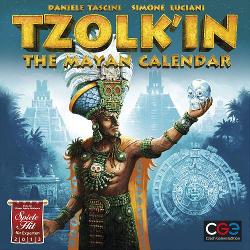
2012 · Mythology
Tzolk'in: The Mayan Calendar
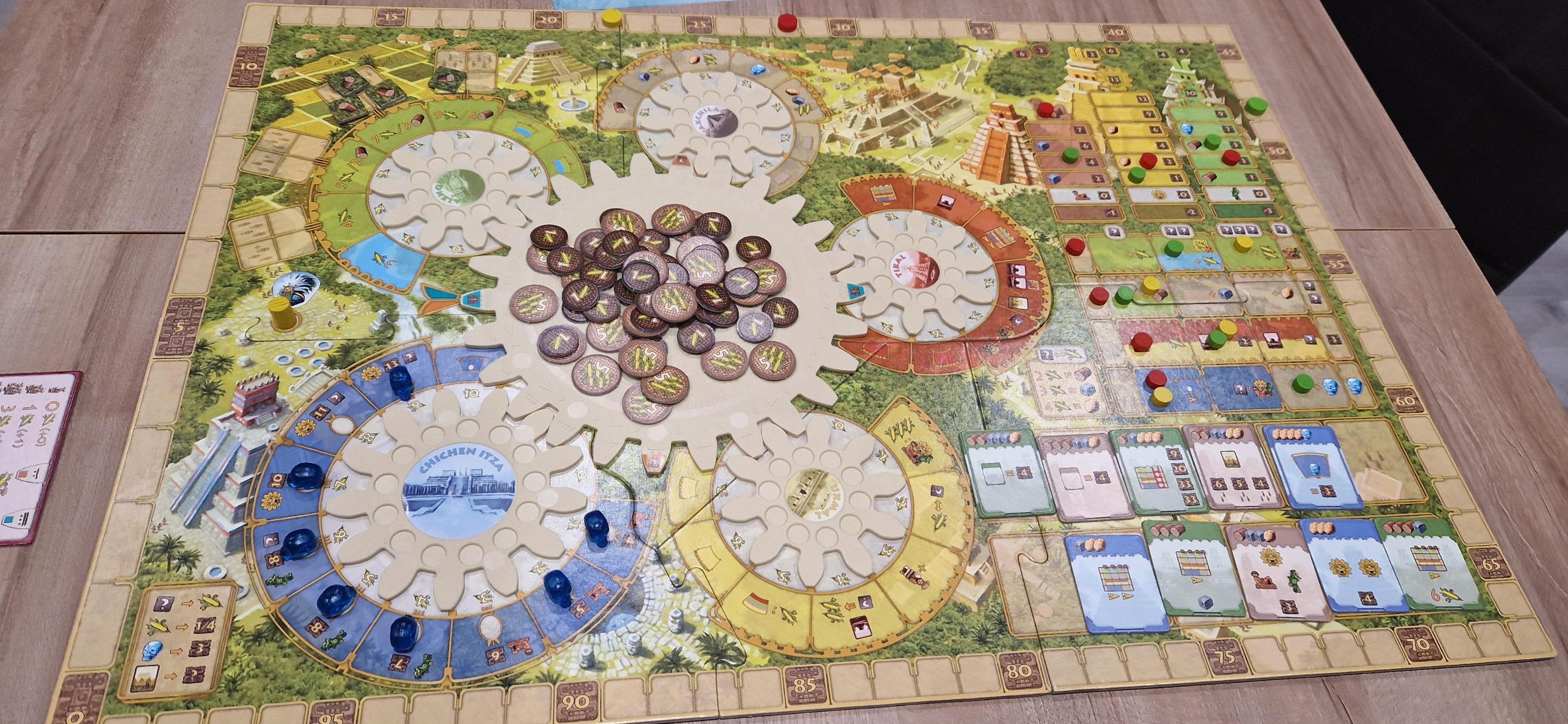
Players lead rival Mayan tribes, place workers on a network of interlocking gears, and time actions as the gears rotate to reach different action spaces. On a turn, players either place one or more workers on the lowest visible gear positions (paying corn as a resource) or pick up one or more workers and resolve the action associated with their current gear position. Later positions yield stronger effects, so players balance delaying workers for bigger rewards against being forced to retrieve them. The round structure advances as the central gear completes a revolution and the game ends then. Players score by building structures, making offerings, collecting resources and fulfilling other objectives to earn points.
- Players
- 2–4 best 4
- Playing time
- 90 min
- Age
- 13+
- Complexity
- 3.7 / 5
About the game
- Art
- Publisher



Expansions
See them in Ludoya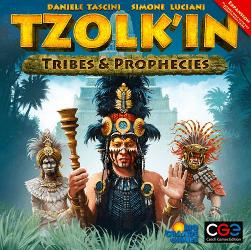
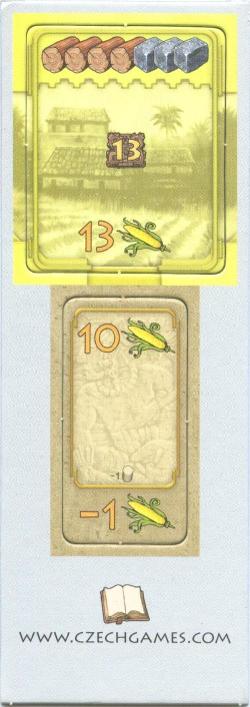
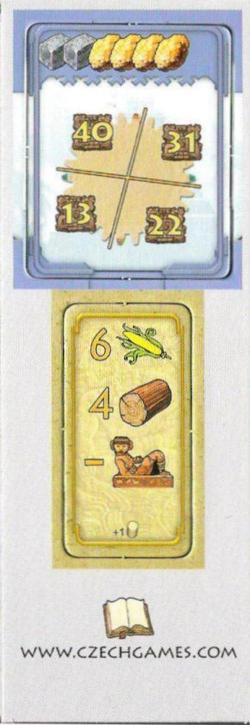
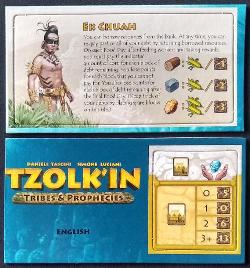
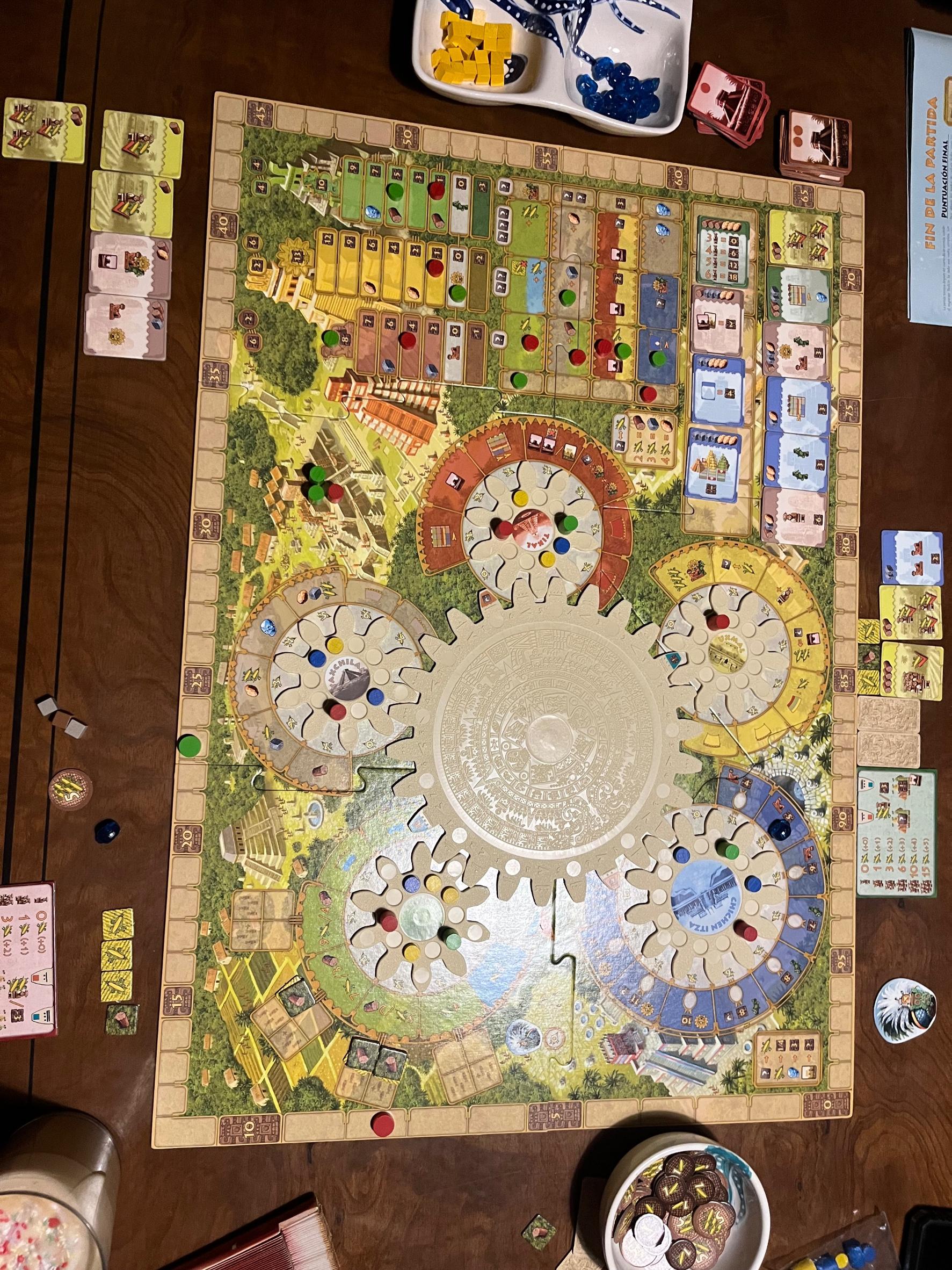
Photos from Ludoya tables
All photos in Ludoya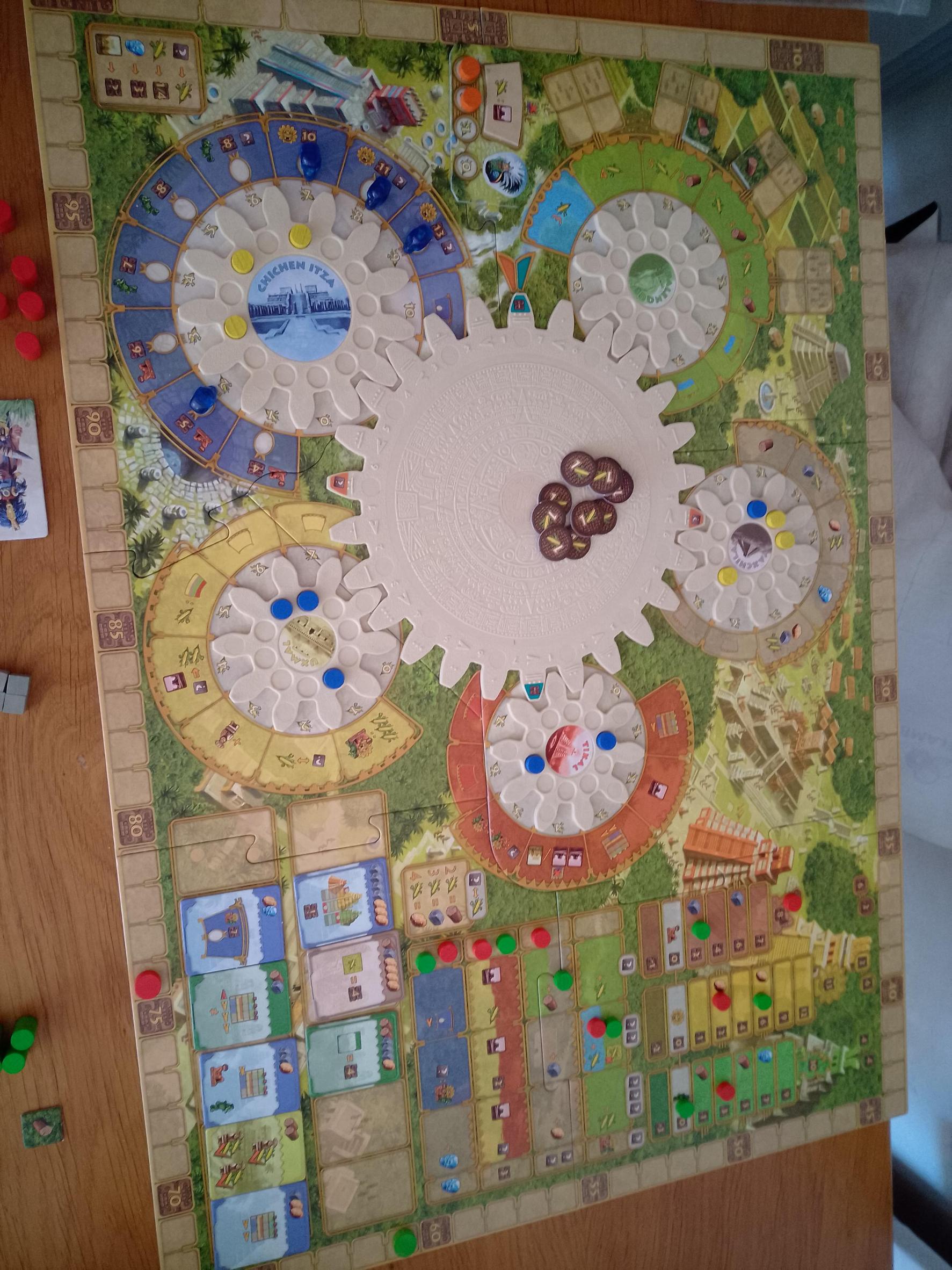
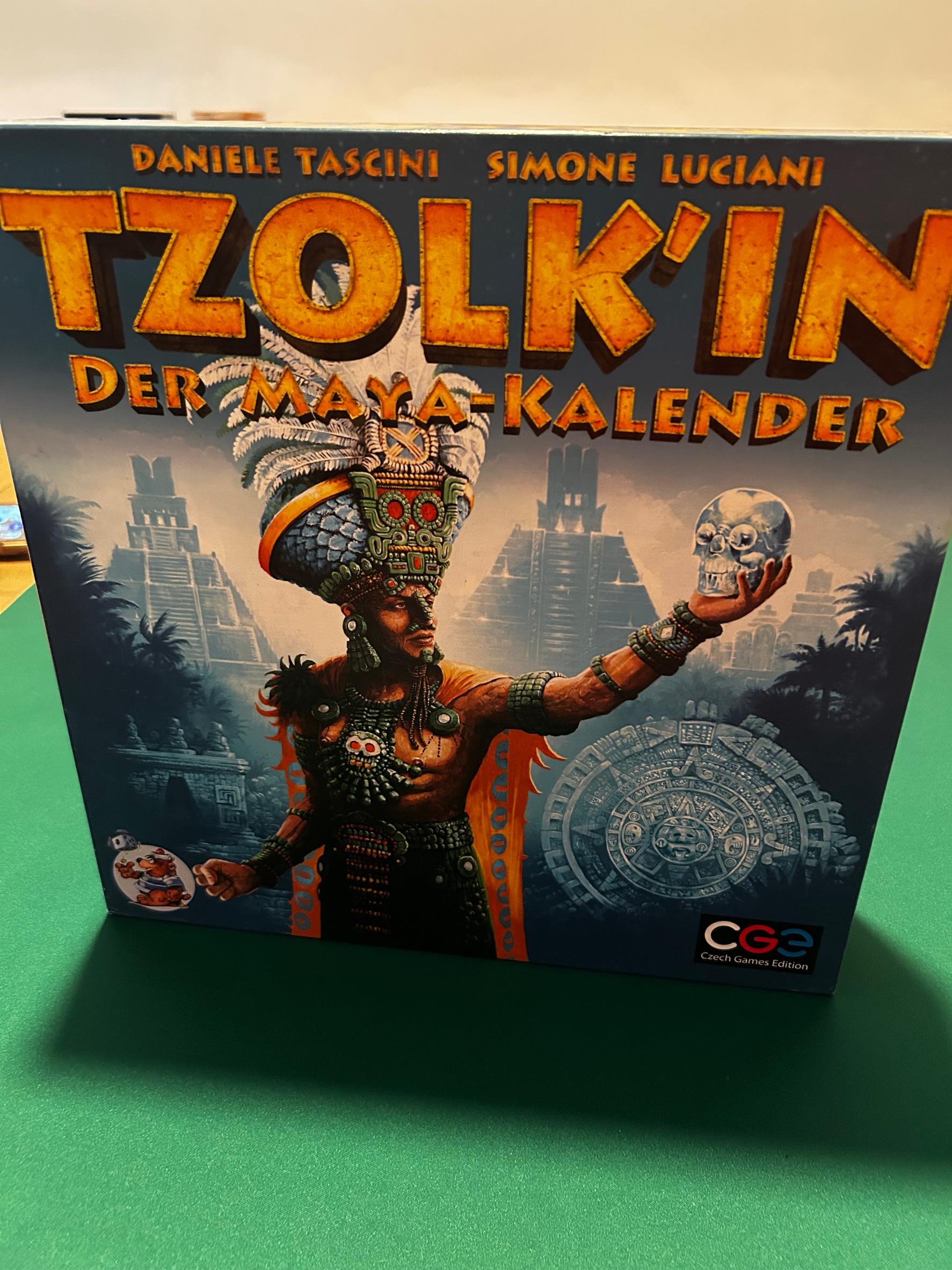
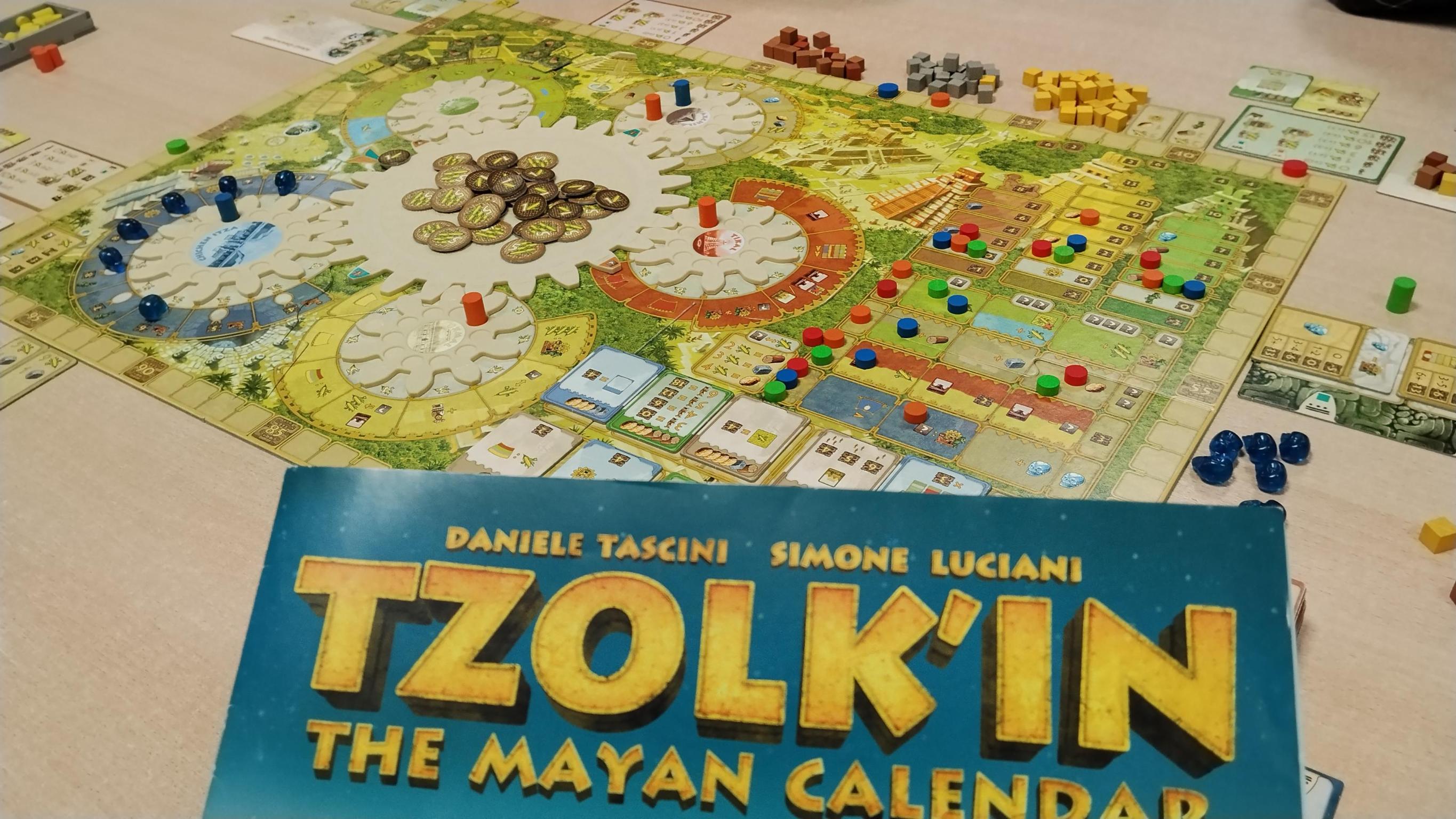
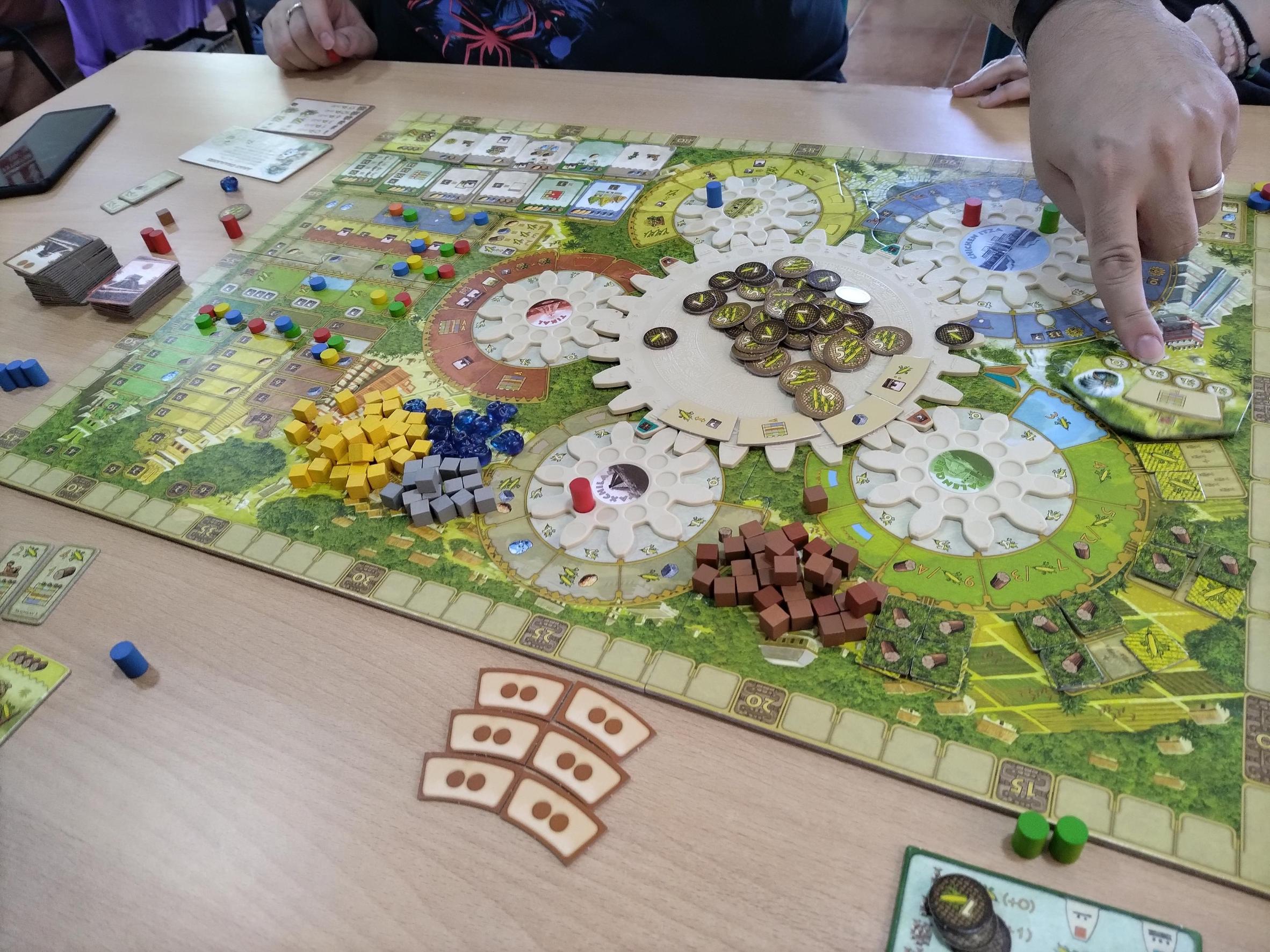
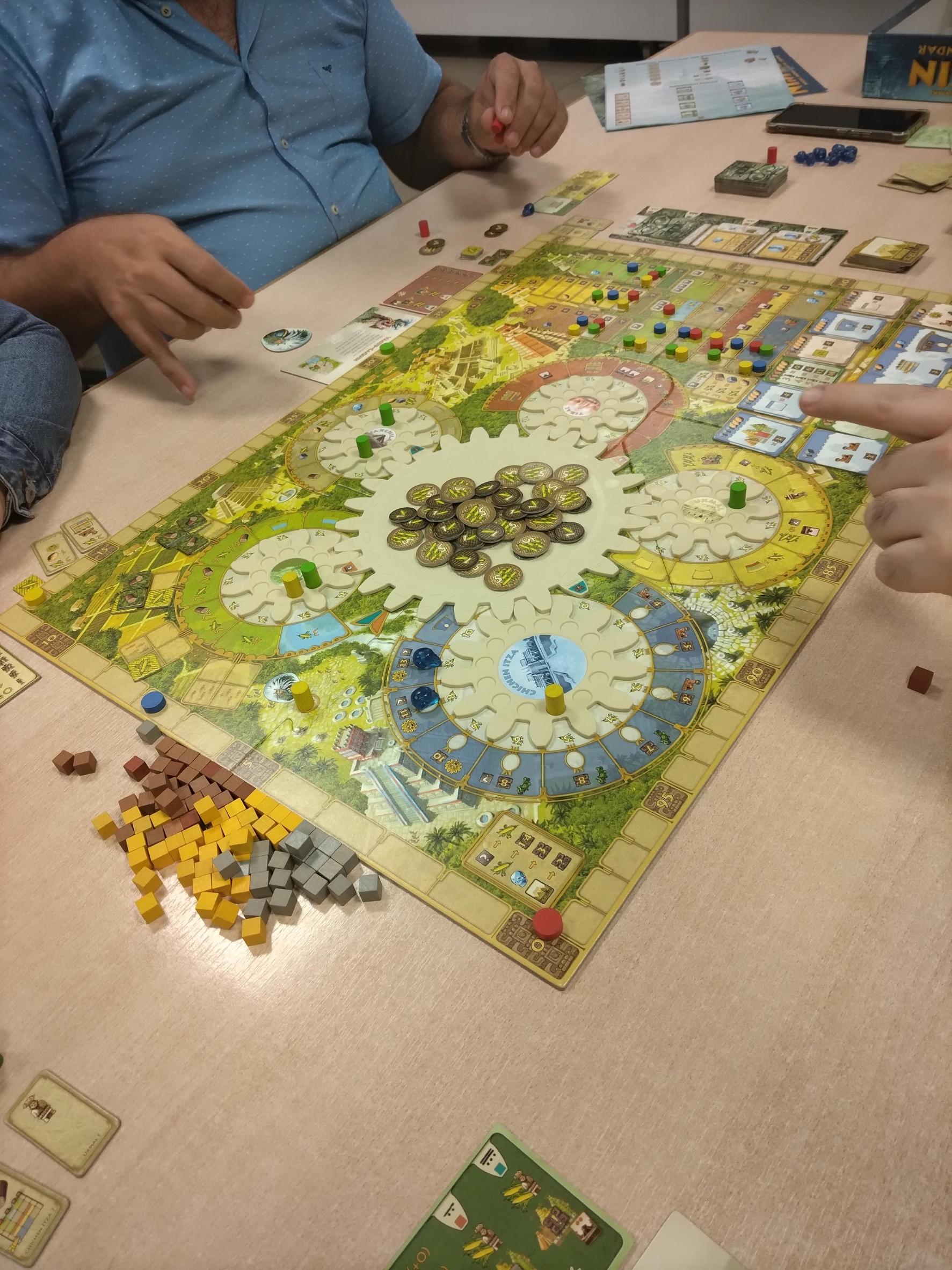
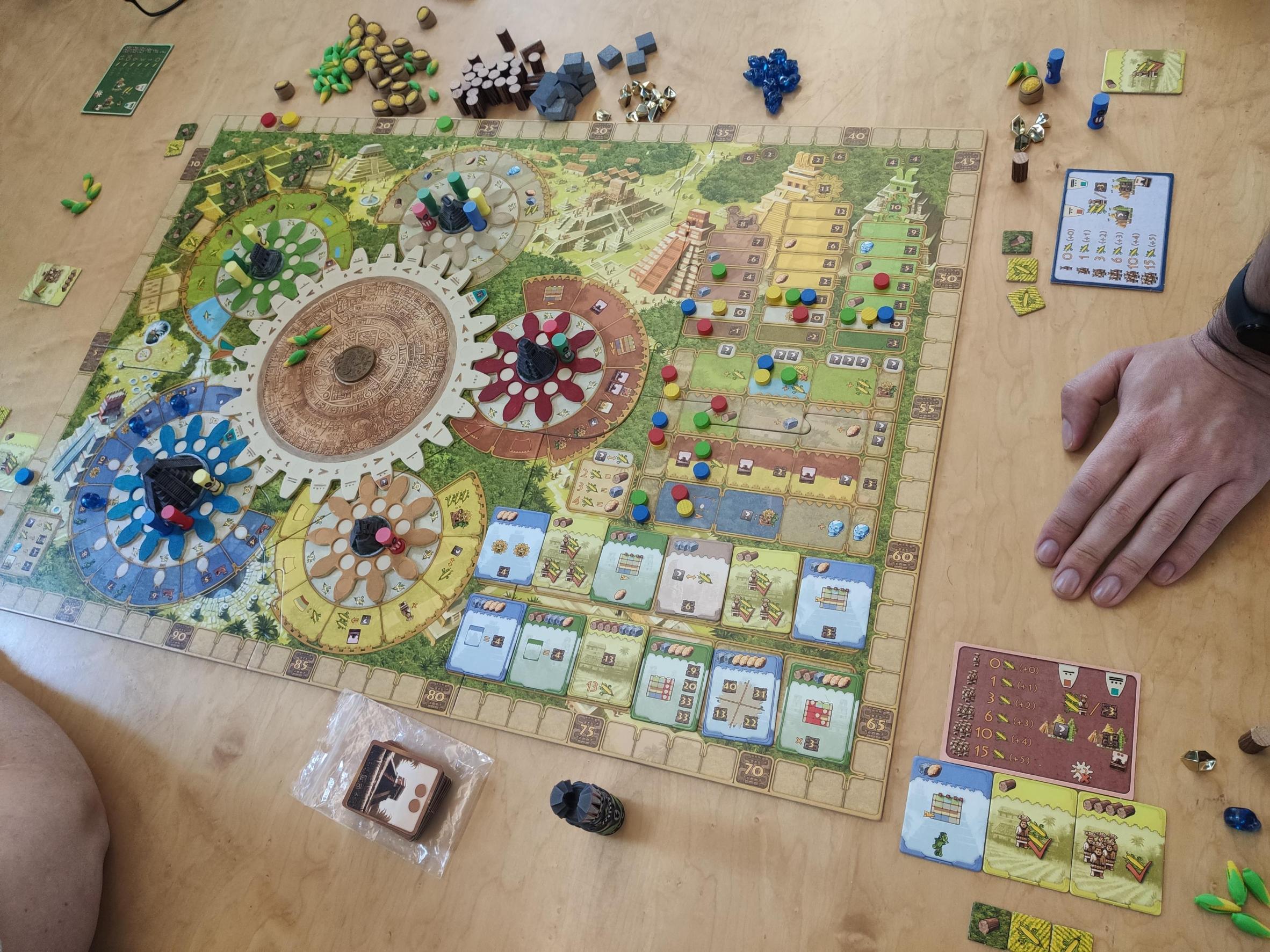
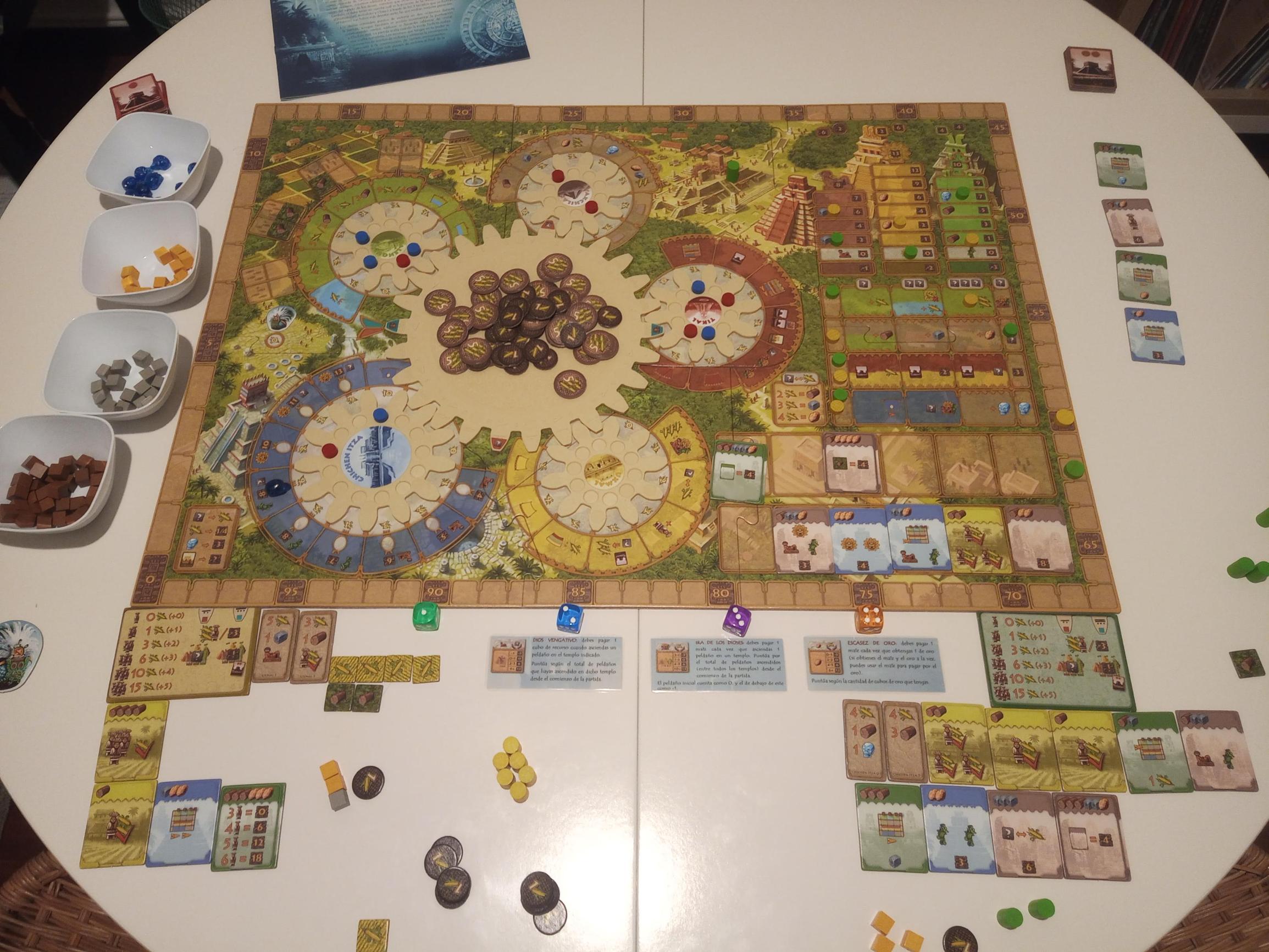
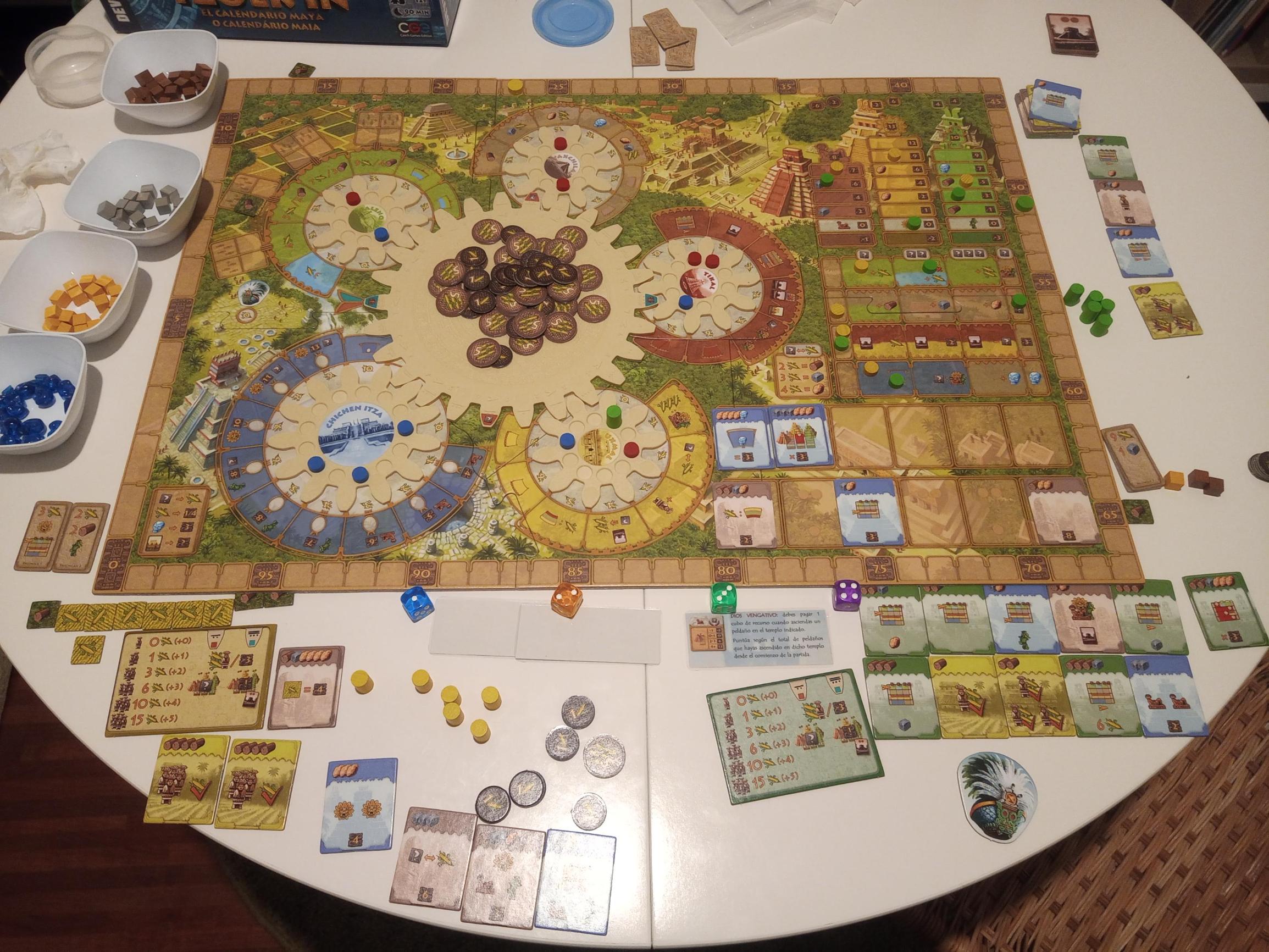
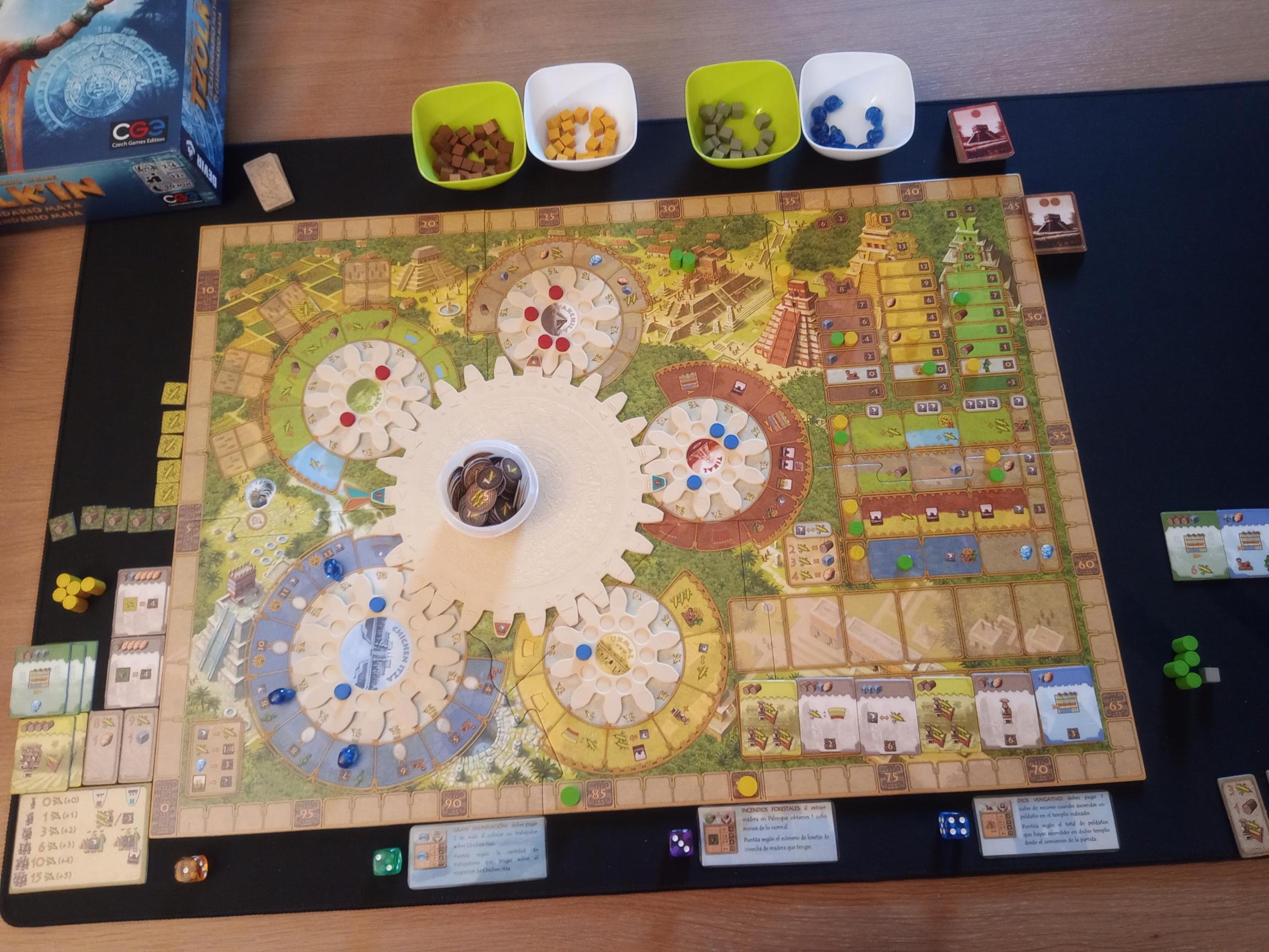
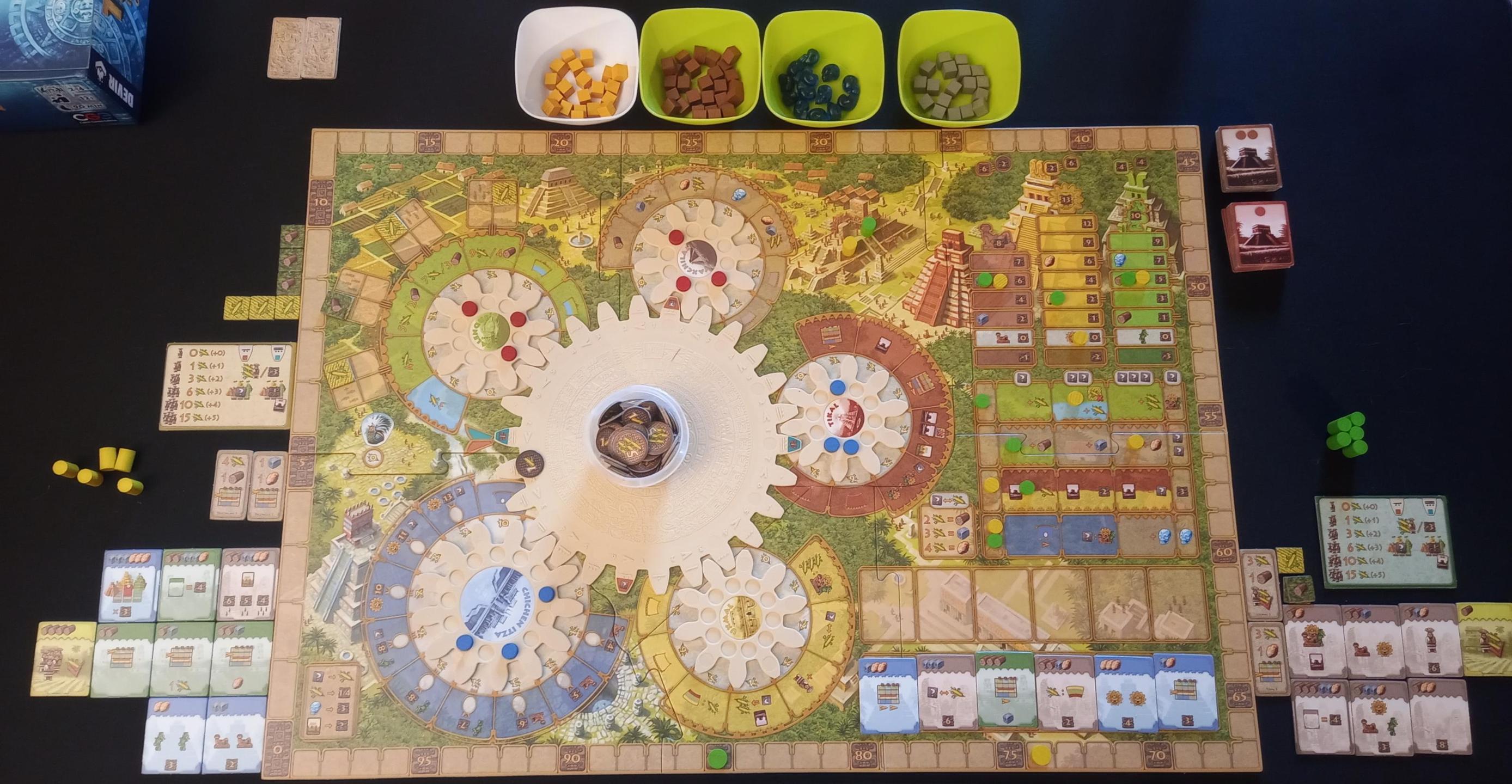
Where to buy it
Shop prices and second-hand copies, checked every day.
On Ludoya's tables
Full stats in Ludoya- 1,232
- Plays logged
- 1,036
- Players
- 1h 42m
- Average play
- 329
- In collections
- 48
- On wishlists
- 1
- Pre-ordered
7.9/10
from 185 Ludoya reviews
Jan Solo8.0 Espectacular juego de mecánicas originales e interesantes. Un desafío muy entretenido aunque con curva de aprendizaje pronunciada. Impro-Reseña⇒ https://youtu.be/6u02yJuDH5k
Pepe Gotera9.0 31€ Goblintrader
Mestremuten9.0 Rating: 5/5 Production value: 3/4 Is the game in my collection/Love to have?: 1/1


Rules questions
Answered from the rulebook by Ludoya's rules assistant.
Do I have to place workers or pick up workers on my turn — can I do both or skip my turn?
You must either place one or more available workers or pick up one or more of your workers; you cannot do both or skip your turn (your first turn will always be a placement turn). (page 6)
How much corn do I pay when I place workers onto the gears?
You pay corn equal to the action-space number for each worker placed, plus an additional cost based on how many workers you place that turn as indicated on your player board (the board shows the cumulative and per-worker breakdown). (page 6)
When I pick up workers, what actions can I take and can I use a lower action space?
For each worker picked up you may either perform the action where it stood, perform a lower-numbered action on the same gear by paying 1 corn per step back, or do nothing; you pick them up and resolve the chosen effects sequentially, so order matters. (page 6)
When do we feed workers and how much corn does each worker need?
On a Food Day (there are four per game) after everyone has taken a turn you must pay 2 corn for each worker in play (on the gears or in front of you); you must feed as many workers as you can and lose 3 victory points for each worker you fail to feed, while farm buildings can reduce feeding costs. (pages 13, 11)
What happens if I don't have corn to place workers — can I beg for corn and are there penalties?
At the start of your turn, if you have 2 or fewer corn you may beg: discard all your corn and take 3 from the bank, but this angers the gods so you must move down one step on a temple; if you must place but cannot and have no workers on gears you must beg (with a rare special case if you are already at the bottom of every temple). (pages 6, 11)
What does the Starting Player Space do and what are the temple top-step rules?
The Starting Player Space gives you all corn accumulated on the gear tooth immediately, returns that worker to you at the end of the round, transfers the Starting Player Marker, and may let you advance the calendar 2 days with restrictions; temple top steps are exclusive to one player and when you reach a top step you flip your board lighter-side-up (granting calendar-speed privileges). (page 10)










Free, on web, Android and iOS
Play Tzolk'in: The Mayan Calendar with Ludoya
- Keep it in your collectionTrack your copy and its expansions, lend it to friends, or put it on your wishlist and get told when the price drops.Add it to your collection
- Log every playScores, winners, timers and photos, then your stats: win rate, favourite player count, best score.Log a play
- Settle rules questionsAsk anything about the rules and get an answer from the rulebook, with the page to check it on.Ask the rules assistant
- Find people to play it withClubs, game nights and events near you that bring this game to the table.See events
Game facts (players, playing time, age, credits) from BoardGameGeek.